
In 2026, Kanye West functions as a cultural stress test: commercially massive yet too controversial for sponsors. Booked for all three nights of London’s Wireless festival behind his album Bully, he drew the crowds while corporate backers withdrew, illustrating the widening gap between an artist’s drawing power and his sponsorship toxicity.
Bully is moving numbers almost no one in rap can match right now. Wireless booked him for all three nights. The sponsors left anyway. Here’s what that tells us.
There’s more to this story. See what every hip-hop outlet is saying →
The Festival Wants Him. The Money Doesn’t.
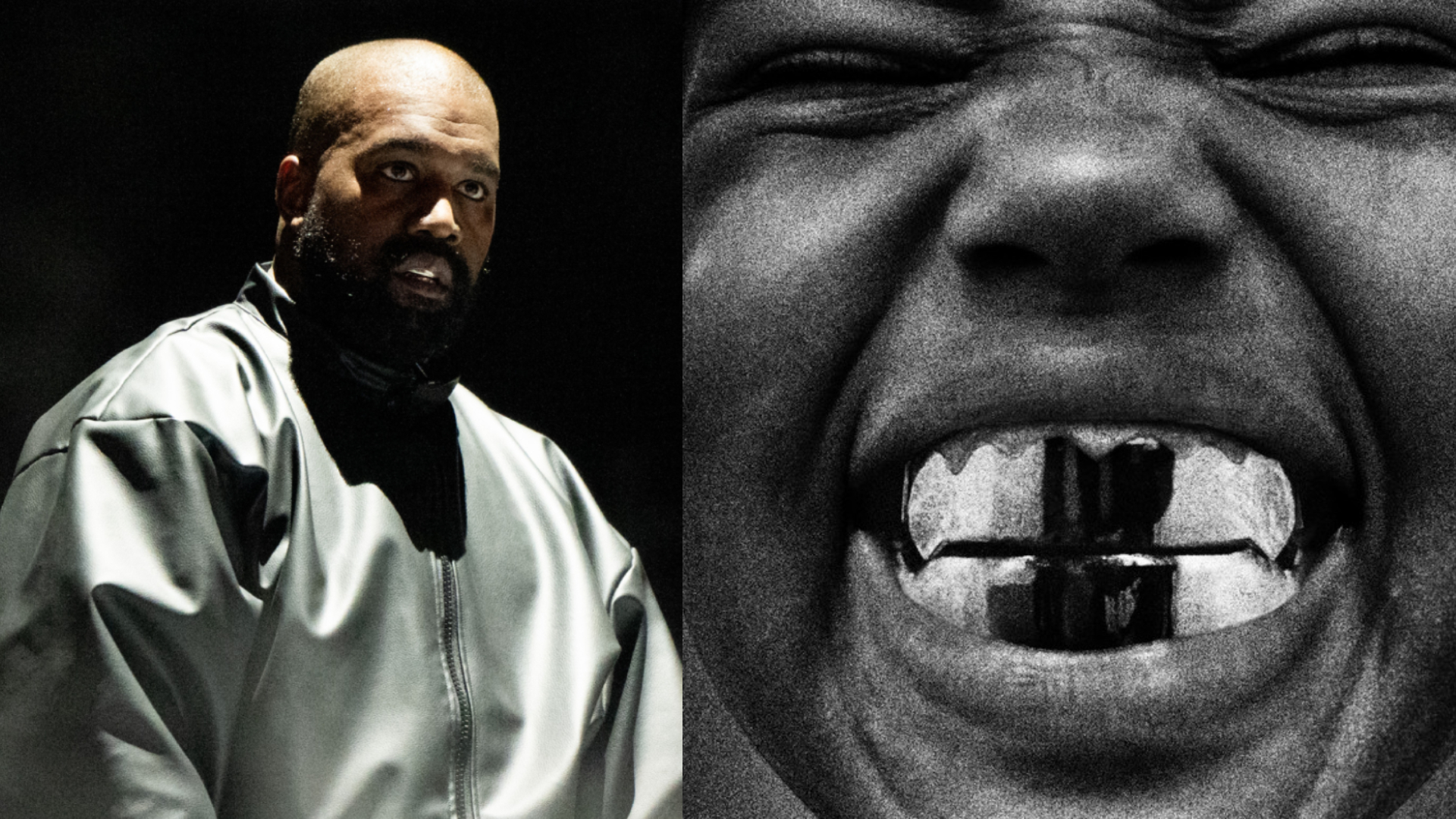
In 2026, Kanye West isn’t a comeback story so much as a stress test. On one side, he’s doing what only a handful of artists on earth can still do — his 12th studio album Bully delivered the biggest Spotify streaming day any hip-hop artist has seen this year, with distributor Gamma claiming “close to 50 million” streams in its first full day. First-week projections sit in the 250,000–275,000 range with around 100,000 pure sales — a huge number in the current environment. [Rap Industry] [HotNewHipHop] He sold out two nights at SoFi Stadium — his first LA performance since 2021 — with career-spanning sets that reminded you exactly how deep the catalog still runs. [HotNewHipHop]
On the other side, every institution that usually orbits that kind of star power is folding its arms. Wireless Festival, a Live Nation flagship UK event, booked Ye to headline all three nights in July at London’s Finsbury Park — his first UK performance in 11 years. [HotNewHipHop] Within days, the UK Prime Minister, London’s mayor, Jewish communal leaders, and former cabinet members were publicly condemning the decision. Then the sponsors started walking. Pepsi out. Diageo out. Rockstar Energy out. PayPal out. Adidas already cut ties years ago. Australia already blocked him at the border.
That’s the contradiction at the center of the Bully era: Ye is still too big to cancel in any simple way. Wireless proves that putting him at the center of a festival still makes economic sense. The sponsor exodus proves he may now be too toxic to stand next to without paying a price.
Wireless Bets the Summer on Ye
Wireless isn’t treating Kanye like a risky one-off. They’re treating him like the tentpole. He’s headlining all three nights — July 10, 11, and 12 at Finsbury Park — with no alternating headliners and no shared top line. The comparison made directly in coverage: Drake ran three nights the year before, and Ye is the 2026 replacement. [HotNewHipHop] The booking was also timed with live Bully momentum: record streaming days on Spotify, [The Source] a No. 1 on Apple Music in more countries than any other rap release this year, [HotNewHipHop] and a quarter-million-plus first-week projection. [HotNewHipHop] Wireless is trying to harness both the legacy and the new heat.
The problem is the past decade doesn’t disappear when you print a new lineup poster. Jewish organizations and UK politicians reacted immediately. The Jewish Leadership Council called the booking “deeply irresponsible,” pointing to Ye’s history of antisemitic rhetoric, his “Heil Hitler” track, and swastika merch released after a prior apology. [HotNewHipHop] That context landed harder in the UK given record levels of antisemitic incidents nationally, including a deadly Manchester synagogue attack in October that killed multiple people.
London mayor Sadiq Khan’s office said Ye’s past comments “are offensive and wrong and are simply not reflective of London’s values,” while making clear City Hall has no formal role in Wireless’s booking decisions. [HotNewHipHop] Prime Minister Keir Starmer called the inclusion “deeply concerning” and framed it as a broader question about Britain’s responsibility to Jewish people. Former health secretary Sajid Javid called it “disgraceful” and suggested the Home Office consider denying Ye entry entirely, likening it to prior bans on extremist preachers.
Festival Republic, the Live Nation company running Wireless, declined to comment. The silence was its own statement: they’re not defending Ye. They’re not walking away from him. They’re betting the show goes on.
The Sponsors Blink First
If Wireless is the high-stakes bet, the sponsors are the first ones to show you where their risk line actually sits.
Pepsi’s relationship with Wireless ran over a decade, deep enough for co-branded naming rights. In the wake of the Wireless announcement and the wave of criticism from Jewish organizations and UK politicians, Pepsi issued a short, clean statement to XXL: they’re done. They didn’t mention Kanye by name. They didn’t use the word antisemitism. The coverage drew the straight line for them. [AllHipHop]
Diageo — Johnnie Walker, Captain Morgan, the spirits conglomerate — followed quickly, saying they’d “informed the organisers of our concerns” and would not sponsor the 2026 festival. Rockstar Energy pulled out as well. PayPal, which had been embedded in the presale infrastructure for Live Nation’s UK festivals, became the latest to distance itself, removing itself from Wireless branding entirely. [AllHipHop] None of them issued a press release that read, “We are leaving because of Kanye West.” They didn’t have to. The timing did the work.
Zoom out and the pattern is bigger than one festival. Adidas ended the Yeezy partnership in 2022, a move that stripped him of billionaire status and closed one of the most lucrative artist-brand deals in history. [HipHopDX] Australia barred him from entry in 2025 following “Heil Hitler” and continued Nazi-coded behavior, treating him as a public safety issue rather than an entertainer. [Rap Industry] Wireless 2026 is simply the latest node. Corporations and governments keep arriving at the same conclusion: whatever upside Kanye brings, they don’t want the smoke that comes with underwriting him.
The festival specific problem: their revenue depends on both ticket sales and brand money. Kanye still secures the first. The second is suddenly wobblier than at any point in his career.
Bully Is the Floor That Keeps Getting Higher
All of that only matters because of what Bully actually does in the market. This isn’t a marginal project propped up by nostalgia.
Gamma’s public response to early stream count debates put the number at “close to 50M” in the first full day — enough to make it “one of the biggest first weeks of the year on Spotify alongside BTS and Harry Styles” and the biggest hip-hop release of 2026, “far exceeding J. Cole.” [Rap Industry] “Father” with Travis Scott pulled 4.1 million global Spotify streams on its first full day and hit No. 1 on Apple Music. [HotNewHipHop] First-week pure sales projected around 100,000 — extraordinary for a 2026 hip-hop album from an artist whose last several years were defined by public implosion and brand exile. [HotNewHipHop]
The live side confirmed it further. SoFi Stadium sold out two nights. The setlist stretched from early classics to new cuts; guest appearances included Travis Scott, Lauryn Hill, and his daughter North West. [HotNewHipHop] A broader world tour is booked across the US, Europe, and Asia. Whatever he’s lost, Ye still commands an audience that dwarfs most of his peers.
That’s what makes the Wireless situation structurally different from a small venue quietly dropping him. Live Nation knows he’ll move tickets. Sponsors know he’ll move tickets. The question isn’t “Can he still sell?” It’s “Who wants to sit next to him while he does?”
The Apology, the Album, and Why Institutions Aren’t Buying It
Ye isn’t coming into this cycle pretending nothing happened. Earlier this year, he took out a full-page ad in The Wall Street Journal apologizing for his antisemitic remarks and other harmful behavior. In the letter, he writes that he “lost touch with reality… said and did things I deeply regret,” attributes some of it to untreated bipolar disorder, and specifically addresses Jewish and Black people he says he hurt. He writes about loved ones who endured “fear, confusion, humiliation, and the exhaustion of trying to have someone who was, at times, unrecognizable.”
That apology doesn’t land in a vacuum. It lands on top of a decade of “slavery was a choice” on TMZ Live, MAGA hat Oval Office visits, chaotic 2020 presidential rallies, antisemitic tirades, Hitler praise, and a previous apology that was quickly undercut by “Heil Hitler” merch and swastika T-shirts. Jewish leaders specifically cite that prior sequence to explain why they don’t consider the current contrition credible. [HotNewHipHop] For brands, the calculus is simple: sponsoring Wireless doesn’t earn moral credit with anyone. Staying in just guarantees getting dragged into another cycle of Ye discourse they don’t control.
Then there’s the album itself. Ye’s own framing of the title — from an alleged 2024 text that’s been widely circulated:
“Sometime you the BULLY. Sometimes your partner is the BULLY. Your boss. Your kids. Society. The devil. Even God can be your BULLY. God Why you beating me down like this… So nothing directly about me. Something a high school [kid] can relate to.”
The critical read on Bully is that it largely sidesteps the reckoning it gestures toward. Writers note that earlier Ye albums bent controversies back into the work; Bully “barely addresses backlash, public implosions, or the damage he caused,” offering instead nostalgia, vague flexes, and surface-level defiance. [HotNewHipHop] One review argues the album “misses the mark because it fails to fully embrace the messiness that has historically been part of Ye’s charm.” The sharpest critique: it feels less like a comeback and more like “another touring opportunity” — the bare minimum musically, positioned as a pretext for stadium returns rather than a true artistic reckoning. [HotNewHipHop]
From Outrage to Exhaustion
Kanye has been polarizing since “George Bush doesn’t care about Black people.” What’s changed isn’t the polarization — it’s the temperature. One of the sharpest reads from this cycle puts it plainly:
“Outrage keeps an artist in conversation, and indifference removes them from it. Right now, the culture doesn’t sound angry with Kanye. It sounds tired.”
You can hear the fatigue in how people engage with Bully. HotNewHipHop users give the album 3.69 out of 5 based on 13 reviews, with the top-rated comment: “You can do better than that. SMH.” [HotNewHipHop] Critics describe the production as atmospheric but the themes as evasive. Fan reaction on social splits predictably: “gross who still supports this lunatic in 2026” versus “SoFi finna gooooo upppppp!!” [The Source] The consensus is thin in both directions.
J. Cole’s recent comment that the “universal classic” in hip-hop is dead helps frame what’s happening. [Rap Industry] Cole’s argument is that streaming fractured our shared references — even a great album can’t gather the culture into one room the way My Beautiful Dark Twisted Fantasy did. The infrastructure doesn’t allow for it anymore. Bully is a textbook 2026 album in that sense: the math is strong, [The Source] but the meaning is thinner. Nobody is seriously arguing this is the defining statement of the decade, or even of Ye’s own catalog. [HotNewHipHop]
Festivals and ticketed shows can monetize that fragmentation. They book Ye knowing tens of thousands will still show up, even if he’s not culturally central the way he once was. Sponsors and governments have to answer to everyone at once — fans, critics, activists, shareholders, voters. For them, the fragmentation is a liability: there’s no shared narrative to hide behind, only a messy ongoing argument where they’re guaranteed to get pulled in if they stay.
So What Does “Too Big to Cancel” Actually Look Like?
Strip away the emotional noise and the picture that emerges around Bully and Wireless is clear. Commercially, Ye is fine. Bully isn’t Donda in terms of event status, but it’s still moving numbers almost no one else in rap can touch right now. [HotNewHipHop] The SoFi shows and global tour confirm fans will pay stadium money to see him. [HotNewHipHop]
Culturally, the cushion is gone. There’s no automatic benefit of the doubt anymore. Each project gets judged not just on musical terms but on how convincingly it grapples with years of damage. Bully largely punts on that, and critics are calling it what it is. [HipHopWired] The excitement is more “Ye still knows how to make a moment” than “Ye has something new to say.”
Institutionally, the risk calculus has flipped. For Live Nation and Wireless, Ye’s value proposition still outweighs the downside — at least for now. For Pepsi, Diageo, Rockstar, PayPal, Adidas, and the Australian government, he’s already past the point where they’re comfortable sharing space with him. UK leaders are making clear they’d be happy if Wireless quietly solved the problem for them.
The open question is how far that line can be stretched. If more sponsors leave, if Wireless struggles to backfill, if the Home Office actually moves to keep Ye out of the country — does he eventually become too expensive to book even for festivals that believe in his draw?
We aren’t there yet. Right now, the Bully era is showing us a different kind of late-stage superstar: one who can still trigger record streaming days and sold-out stadiums, but who drags enough political and ethical baggage that the corporations and governments around him are building new escape hatches in real time.
Too big to cancel, too toxic to sponsor. The next few months will tell us which side of that equation has more leverage — the fans filling Finsbury Park, or the logos quietly disappearing from the stage.
There’s more to this story. See what every hip-hop outlet is saying →