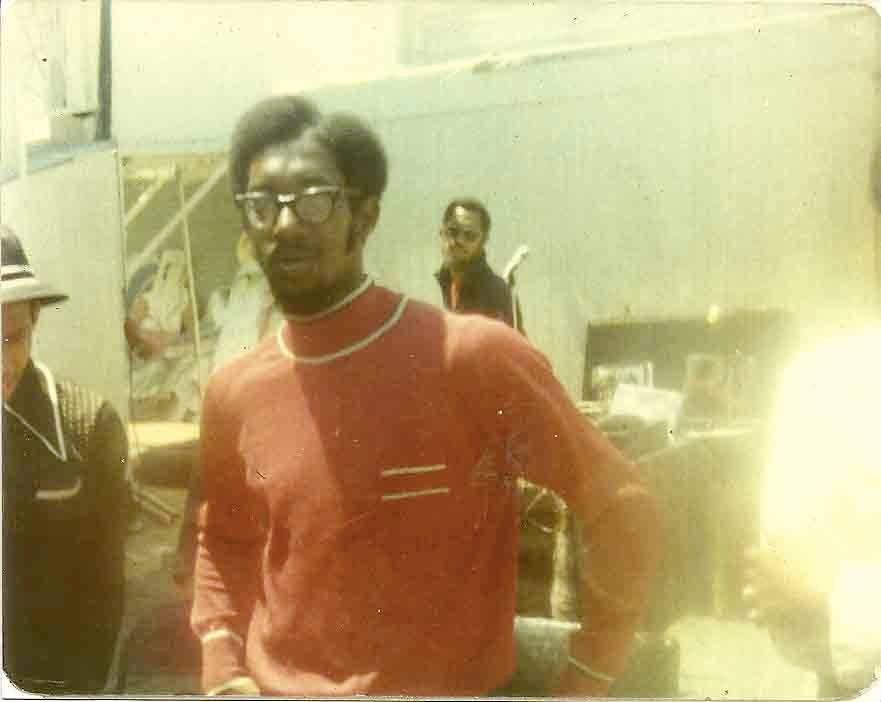

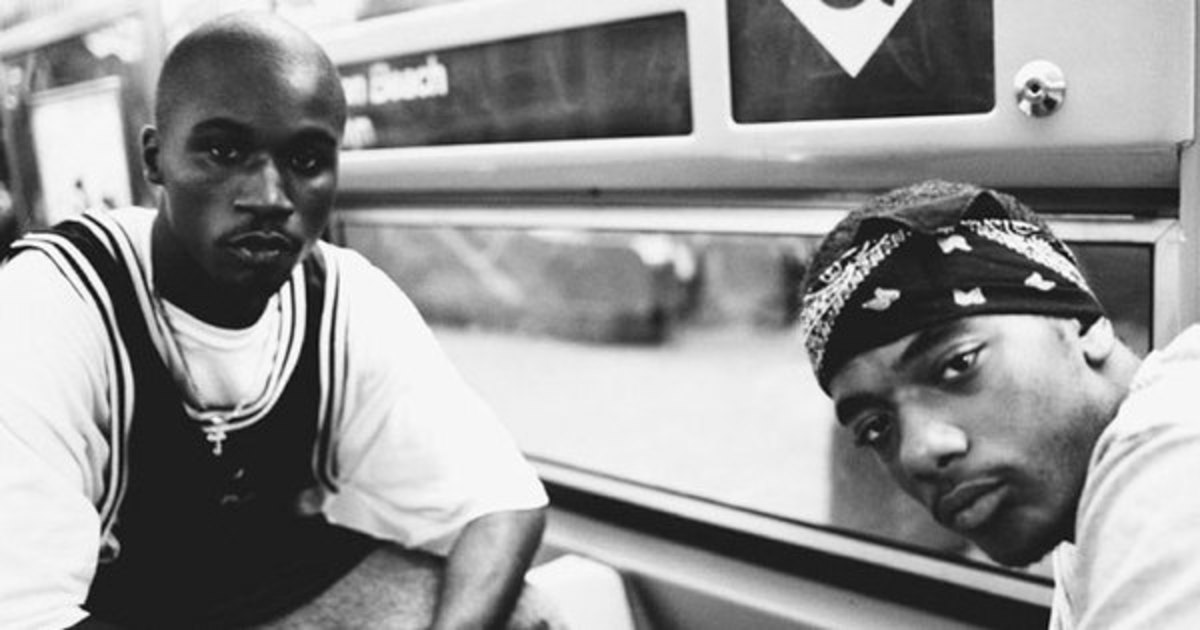
‘Dun language’ is the distinctive Queensbridge slang popularized by Mobb Deep, built around the term ‘dun’ as a greeting for a close associate. Like other artists who introduced private vernacular to fans, Prodigy and Havoc spread their coded, street-rooted dialect through their music, embedding Queensbridge’s voice into hip-hop’s wider vocabulary.
Dun Language: The Queensbridge Slang That Mobb Deep Turned Into Hip-Hop Code
“You’se a d**k blower, tryin’ to speak the Dun Language / What the drilly with that though? It ain’t bangin’ / You hooked on Mobb-phonics, Infamous-bonics / Lyin’ to the Pop Dog like you got it!”
— Prodigy, “Quiet Storm” (1999)
Hip-hop has always generated its own language. E-40 built a dictionary out of Bay Area slang. Ghostface Killah wired Iron Man with street poetry that required a second listen. Snoop Dogg made the “-izzle” suffix a national punchline. But the Dun Language — the coded vocabulary that Mobb Deep built from a Queensbridge speech quirk into one of the most imitated dialects in ’90s hip-hop — operated differently. It wasn’t about catchphrases. It was a private system, with its own logic and its own gatekeeping, and it came from a specific place at a specific moment that produced more concentrated hip-hop talent than almost anywhere else in the genre’s history.
Queensbridge: The Block That Built the Language
To understand Dun Language, you have to understand where it came from. The Queensbridge Houses, located in Long Island City in the Queens borough of New York, is the largest public housing development in North America — a 3,142-unit complex of six-story redbrick towers where tens of thousands of people lived in close proximity, layered with the kind of dense social texture that generates its own customs, codes, and speech. [1]
Queensbridge’s contribution to hip-hop is generational. The first wave came in the ’80s through the Juice Crew: Marley Marl, MC Shan, Roxanne Shanté, Craig G., and Kool G Rap built the original QB artistic identity, with Marley Marl’s pioneering production work and MC Shan’s “The Bridge” (1986) planting the borough’s flag in hip-hop history. [2] The second wave, in the early ’90s, arrived through Nas — whose 1994 debut Illmatic turned the housing project into literature — and then Mobb Deep, who took the same environment and rebuilt it in a darker register. A third wave followed with Cormega, Nature, Big Noyd, Screwball, and Capone-N-Noreaga, all pulling from the same block. [2] No housing project in America has produced a comparable lineage. The Dun Language belongs to that specific ecosystem.
Mobb Deep: Havoc and Prodigy
Mobb Deep is Kejuan Muchita — Havoc — and Albert Johnson — Prodigy. Both grew up in Queensbridge in the late ’80s and early ’90s, and both attended the High School of Art and Design in Manhattan, where they met and began recording together. They released their debut album, Juvenile Hell, in 1993 on Fourth & Broadway, but it was their 1995 sophomore LP The Infamous on Loud Records that established them as a defining voice of East Coast hip-hop’s second golden era and launched the Dun Language into the culture. [3]
Prodigy brought additional weight to the language’s development: he was born with sickle cell anemia, a condition he managed throughout his life and that shaped his relationship to his own mortality in ways that ran directly into his writing. The disease gave his verses a specific urgency — he wasn’t performing darkness as an aesthetic exercise; he was someone who genuinely confronted death as a daily reality. That context matters for understanding why the Dun Language felt so alive. It wasn’t costume; it was the dialect of a community that had very specific reasons to speak in code. [4]
The Infamous: The Album That Carried the Language
Released on April 25, 1995, The Infamous arrived in the middle of the East Coast-West Coast tension that defined mid-’90s hip-hop and immediately established a sound and worldview that felt unlike anything else in the genre. Produced almost entirely by Havoc, with contributions from Q-Tip, DJ Premier, and Stretch Armstrong, the album buried its vocals in murky, minor-key loops that made Queensbridge sound like a place where sunlight didn’t fully reach. Tracks like “Shook Ones, Pt. II” — which many regard as one of the greatest rap tracks ever made — “Survival of the Fittest,” “Temperature’s Rising,” and “Eye For a Eye (Your Beef Is Mines)” delivered Prodigy and Havoc’s vocabulary directly to an audience that immediately began absorbing it. [5] The album went platinum and is still regularly cited as one of the defining records of the decade. [6]
The Origin: Bumpy and the Speech Impediment
The official story of where “dun” came from is both mundane and oddly perfect for the culture that adopted it. Prodigy explained it directly: there was a figure from Queensbridge the crew knew named Bumpy who had a severe speech impediment that prevented him from correctly pronouncing words beginning with the letter “s.” When he meant to say “son” — the standard New York term of address among close associates — it came out as “dun.” [7]
In Prodigy’s words: “He used to talk kind of crazy… but certain things he said, it was like cool to us. So, it became popular. Everybody started mimicking how he talked.” [8] The crew began using “dun” deliberately, then built outward from there. Prodigy described the system as “our version of Pig Latin” — a way of communicating in public spaces where being overheard was a real concern, replacing standard terms with alternatives that only the initiated would decode. [7]
The relationship to “son” itself is worth noting. “Son” as a term of address had deep roots in the Five Percent Nation — the Nation of Gods and Earths — whose influence ran through ’90s New York hip-hop from Wu-Tang to Rakim to Nas. In Five Percenter culture, calling someone “son” was a form of recognition, an acknowledgment of shared knowledge and standing. “Dun” carried that same relational weight by accident of phonology: a speech impediment had accidentally generated a new word that did the same cultural work as the original. [7]
What Dun Language Actually Sounds Like
“Dun Language” and “Mobb-phonics” (as Prodigy called it in “Quiet Storm”) were not limited to the single word “dun.” The system included a broader vocabulary of coded terms that recurred across Mobb Deep’s catalog and the affiliated artists who adopted it. “Dun” or “dunn” served as a universal address — a substitute for “son,” “homie,” or “man,” applicable to anyone in the circle. “Drilly” (“what the drilly with that though?”) meant something like “what’s the deal” or “what’s really going on” — a compressed, coded version of the question. “Clap” meant a gunshot. “Pop” functioned similarly. “Thorty” referred to a woman. The system worked precisely because each term was recognizable to the inner circle and opaque or confusing to outsiders, creating the kind of linguistic exclusivity that Prodigy described — a private channel broadcast publicly. [9]
The beauty of it, as the original article noted, was that it forced active listening. Hearing “what the drilly with that though?” for the first time required the listener to pause, parse, and infer — which meant engaging more deeply with the verse than a straightforward line would demand. The language was a test as much as a communication tool, and Prodigy was entirely aware of that dynamic: “Quiet Storm”’s opening lines directly call out those who try to “speak the Dun Language” without having earned the right. [10]
The Spread: Nas, Capone-N-Noreaga, AZ, and the QB Orbit
Mobb Deep were the heaviest users of the language but they were not the only ones. The overlap was partly geographical — all of these artists drew from the same Queensbridge community — and partly the result of the dense collaborative relationships that characterized the QB scene in the mid-’90s. Nas, who had been recording since the early ’90s and released Illmatic a year before The Infamous, moved in adjacent linguistic territory; the two projects came from the same block and the same moment even as Nas’s style diverged significantly from Mobb Deep’s bleaker register. [11]
Capone-N-Noreaga, whose 1997 debut The War Report was one of the harder albums of the era, imported Dun Language directly — songs like “Neva Die Alone” carried the vocabulary into their material with the same fluency that came from being embedded in the same community. [12] AZ, who had contributed a verse to “Life’s a Bitch” on Illmatic, used the language on his own debut Doe or Die (1995) with the same natural fluency. [13] As the original article notes, none of these artists — including Nas himself — took the language to the level Mobb Deep did. They were users; Prodigy and Havoc were the architects.
The Death of Prodigy
Prodigy — Albert Johnson — died on June 20, 2017, in Las Vegas. He was 42 years old. He had been hospitalized at a Las Vegas hospital following a performance at the Vegas Untapped festival for complications arising from his sickle cell anemia, the condition he had battled his entire life. The coroner ruled his death an accident: he choked on an egg while hospitalized. [14] He was the primary voice of Mobb Deep, the inventor of the Dun Language vocabulary, and one of the most distinctive lyricists New York hip-hop produced. Havoc has continued recording under the Mobb Deep name and released Infinite Mobb in 2025, keeping the Queensbridge tradition active. [15]
Why It Mattered
Hip-hop slang typically travels upward: a word gets used on a record, gets heard, gets repeated, eventually gets absorbed into mainstream speech and loses its edge in the process. The Dun Language worked differently because it was specifically designed to resist that journey. Prodigy’s “Quiet Storm” verse is, among other things, a warning to anyone who thinks they can adopt the language from outside: you can hear the words without understanding the system. The gatekeeping was built in.
What made it significant beyond Queensbridge was the quality of the music carrying it. The Infamous was not a regional curiosity; it was a landmark record that shaped how an entire generation of rap listeners understood what New York sounded like at a specific, unrepeatable moment. The language traveled with the music. Artists who had no connection to Queensbridge absorbed it because they were absorbing the album, and the album was absorbing. That’s the mechanism by which local speech becomes culture. Prodigy took a friend’s speech impediment, turned it into a private system, wrapped it in some of the most vivid and threatening verses the ’90s produced, and watched it spread to listeners on every coast. The word “dun” moved the way all durable slang moves: not because anyone planned it, but because the right context made it inevitable.
Sources
[1] Queensbridge Houses — Wikipedia
[2] Deep Inside Queensbridge: Birthplace of Nas & Mobb Deep — Blackout Hip Hop
[3] Mobb Deep — Wikipedia
[4] Prodigy, One-Half of Queens Rap Legends Mobb Deep, Dies at 42 — NPR
[5] Mobb Deep’s The Infamous: A 25th Anniversary Retrospective — Dart Adams / Medium
[6] The Infamous — AllMusic
[7] Mobb Deep and the Origin of the Dunn Language Explained — Revolt TV
[8] Mobb Deep Explains Origins of Dun Language, Working With Q-Tip — HipHopDX
[9] A Deep Dive Into the Dunn Language That Mobb Deep and Their Peers Made Iconic — Yahoo Entertainment
[10] Mobb Deep — “Quiet Storm” — Genius
[11] How Nas Turned America’s Largest Housing Project Into a Historic Landmark — Complex
[12] Capone-N-Noreaga — “Neva Die Alone” — Genius
[13] AZ — “How Ya Livin’” — Genius
[14] Mobb Deep’s Prodigy Died of Accidental Choking, Coroner Rules — Billboard
[15] For Mobb Deep’s Havoc, Love for Queensbridge is ‘Infinite’ — NPR Illinois