
Jay-Z Fires at Drake, Ye, Nicki, Dame and Tory — Drake’s Response? A Hair Joke
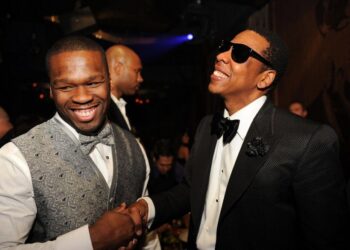
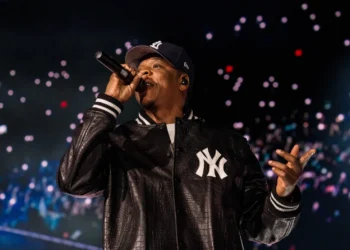
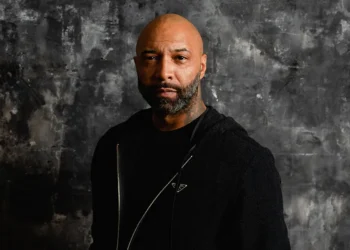
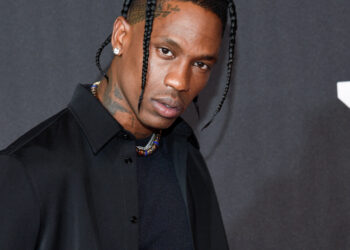
Jay-Z used Roots Picnic as a live press conference on Saturday, dropping a freestyle with shots at Drake, Kanye West, Nicki Minaj, Dame Dash, and Tory Lanez and reminding the culture that he still sets the terms around rap power rankings. [Rolling Out] The crowd decoding was instant, but Drake’s first reported response was notably understated — he hit up HOT 97’s Mal to joke about Hov’s hair, not the bars. [HotNewHipHop] That deflection was itself a move: by treating the freestyle as a fashion moment rather than a battle, Drake kept his unbothered image intact while the internet spent 48 hours doing his reacting for him.
Jay-Z’s Braid-Out Wasn’t Accidental — His Stylist Broke Down Every Step
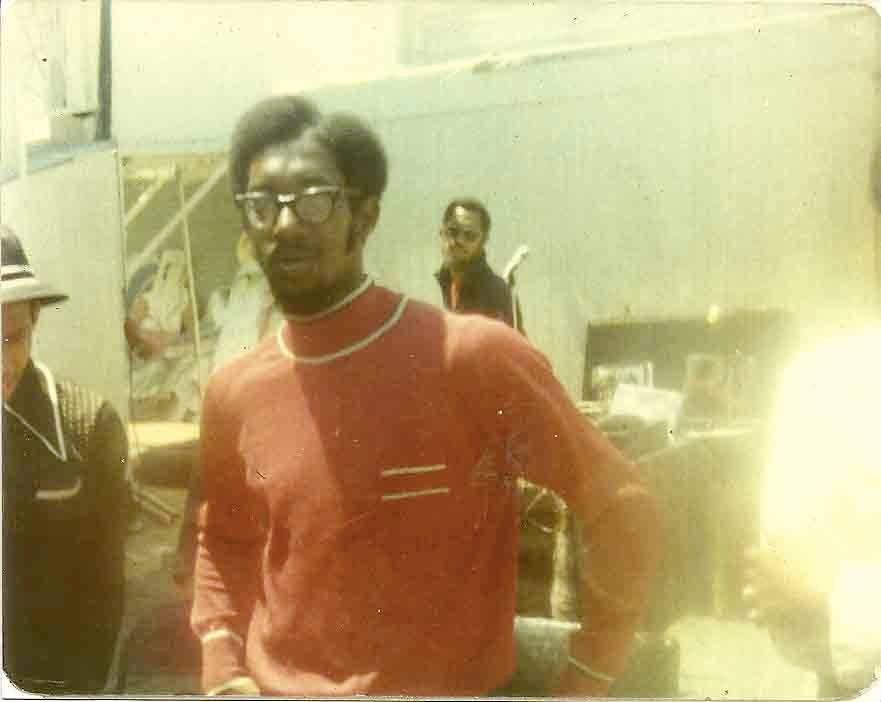
The afro everyone was talking about had a whole process behind it. Jay-Z’s stylist revealed that he had been wearing freeform locs — sometimes called wicks — which were carefully taken down before the show, then his scalp was given a full week to “breathe” before they hit the Roots Picnic stage with a fresh braid-out. [The Root]
Nicki Minaj Called Herself Trump’s “Most Devoted Supporter” — the Barbz Are Not Unified
Nicki Minaj’s political positioning has been building for over a year, but publicly appearing alongside Donald Trump and describing herself as his “most devoted supporter” marks a new level of commitment to a side that a significant portion of her own fanbase finds hostile to their identity and interests. [Rolling Out] Her framing is that she’s standing with someone she believes is unfairly attacked — a defense that echoes a similar argument she’s made about herself — but the optics of a once-countercultural Black woman artist aligning this publicly with a figure many of her fans see as directly threatening to communities like theirs have generated real costs inside her base, not just from critics outside it.
M.I.A.’s $2.8M Fight With Kid Cudi’s Camp Is About Politics as Much as the Money
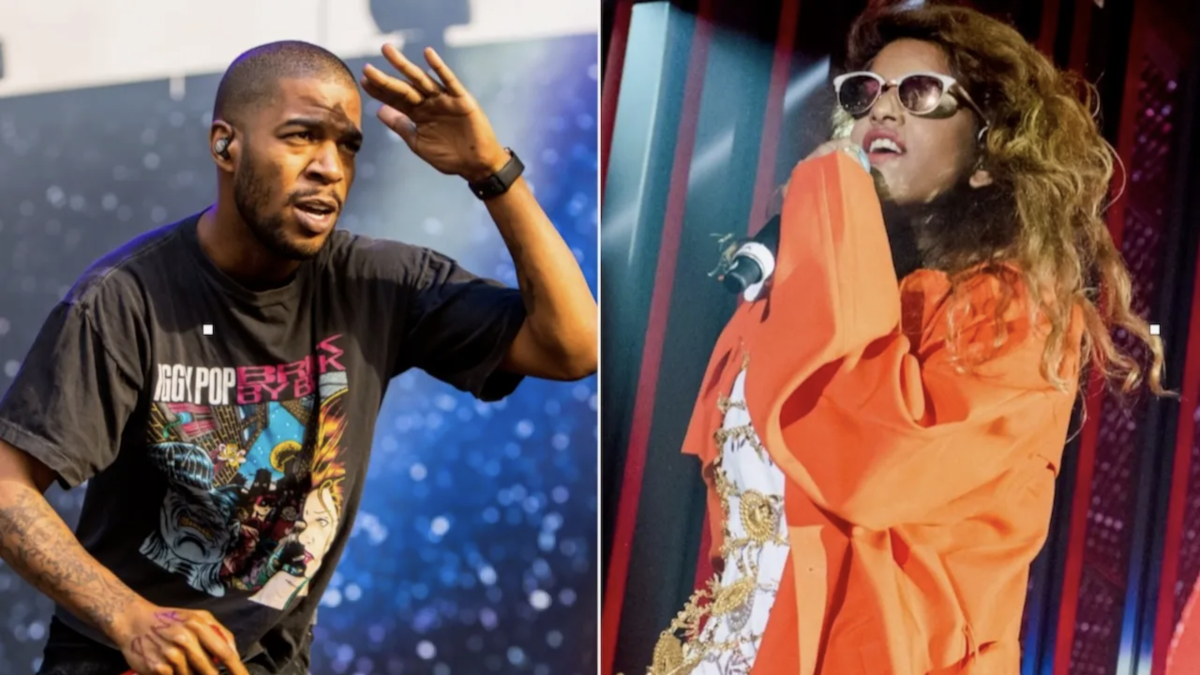
M.I.A. is pushing back hard on a $2.8 million legal dispute with Kid Cudi’s camp and Live Nation, and her defense goes well beyond a contract argument. She maintains that her refusal to perform “Illygirl” wasn’t a morals-clause violation but a combination of visa issues and artistic conviction — and she used her public response to double down on the themes she’s been building for years around faith, immigration, and what she sees as unjust laws. [Rolling Out] In the same breath she reworked her “I predicted Trump” line into an endorsement of Rep. Thomas Massie, signaling that her political pivot isn’t a PR slip but a real ideological position she’s willing to fight for in court and in public at the same time.
The case pulls together a few threads that the music industry is still working out: what happens when an artist’s political stance becomes the reason a festival performance doesn’t happen, and who bears the financial liability when that line between artistic conviction and breach of contract gets blurry. M.I.A. has always positioned herself as someone who doesn’t separate her art from her politics, which makes this lawsuit a pressure test of what that actually costs when the other side has a contract and $2.8 million on the table. [Rolling Out]
A Florida Principal Is on Leave Because a Yearbook Printed a “Trap Queen” Lyric
A Florida school principal has been placed on administrative leave after a yearbook printed a lyric from Fetty Wap’s 2015 hit “Trap Queen” with her name attached. [HOT 97] “Trap Queen” is an eleven-year-old song that has been in commercials, TV soundtracks, and everyday speech long enough to register as practically institutional — which is probably exactly why a student committee dropped it into a staff quote without anyone flagging it. The fact that it passed through multiple rounds of review is the real data point: rap language is that normalized, even inside school buildings.
The administration’s response tells the other side of the story. The same lyric that felt unremarkable to the students who picked it became a cause for leave the moment it hit official channels — a reminder that institutional panic around hip-hop can coexist with total cultural saturation. The gap between how embedded rap is in everyday American life and how fast institutions retreat when they notice it in a formal space is the same tension that the PACE Act and “Rap on Trial” conversations are circling from a legal angle. Here it plays out in a yearbook. [HOT 97]
Dexter Wansel Died at 75 — and His Family Said Keep Sampling His Music
Philly soul architect Dexter Wansel died at 75 after a 17-year health battle, and the tributes arriving across hip-hop are essentially a master class in how deeply one musician’s work can run through a genre he never recorded in. His track “Theme from the Planets” became backbone material for Eric B. & Rakim’s “I Ain’t No Joke,” Ice-T’s “O.G. Original Gangster,” J. Cole’s “Lights Please,” and more — a catalogue of synths and chords that shaped the sonic vocabulary of multiple rap generations without most listeners knowing his name. [The Grio] His family’s explicit statement — all-caps, “KEEP SAMPLING HIS MUSIC” — hit differently in that context: not a legal warning or a licensing notice, but an invitation from the people who knew him best to let his work keep building new things.
Wansel was part of the Philadelphia International Records era that produced Teddy Pendergrass’s “Love TKO” and defined a particular strain of sophisticated, orchestrated Black music in the late ’70s. Hip-hop found that world through the crate and never let go. Today’s producers sampling “Theme from the Planets” are inheriting a tradition that runs from PIR studios to boom bap breaks to Cole’s introspective soul samples, and the chain is unbroken. The family’s blessing keeps it moving. [The Grio]
Jimmy Jam Wants an AI Sticker on Your Records — and He’s Got a Point
Jimmy Jam is approaching AI in music the same way the industry eventually had to approach sampling: as something genuinely exciting that will cause serious damage if the legal and compensation infrastructure doesn’t catch up. He calls the technology “wonderful” but insists the industry needs to get permission and payment locked in now, before the patterns calcify — drawing an explicit parallel to the Wild West era of sampling that required decades of lawsuits and landmark cases to resolve. [The Root] His specific proposal — an “AI sticker” on releases to disclose when artificial tools were used in the creation process — is the kind of practical, consumer-facing solution that comes from someone who’s been inside the machine long enough to know that transparency is the first step before any other protection is possible.
The sampling parallel is exact and instructive. Early producers sampled freely because nobody had decided yet whether it was legal or how to price it; the music was made, the money came in, and the lawsuits followed. AI is moving through the same arc, but faster, with more actors and higher stakes. Jimmy Jam’s sticker idea is a 2026 version of checking liner notes to find out who actually made the sound you’re hearing — a basic disclosure standard that the industry resisted on sampling for years and eventually had to accept. [The Root]
PowerHouse Summer Academy at Morehouse Is Teaching Hip-Hop’s Hustle as a Formal Curriculum
Jash’d Belcher’s PowerHouse Summer Academy is putting young Black boys in a residential HBCU setting at Morehouse and teaching them storytelling, cinematography, branding, social media strategy, and financial literacy — all of it explicitly tied to ownership, IP creation, and building generational wealth. [Rolling Out] The skill set is essentially the same independent-creator playbook that hip-hop has been romanticizing since Master P built No Limit from a record store, but now it’s formalized, campus-based, and delivered in an environment designed to signal to the students that this kind of ambition belongs here.
There’s something significant about this happening at Morehouse specifically. The HBCU context surrounds the curriculum with a legacy of Black excellence and institution-building that reinforces the message at every level: the hustle, the craft, the ownership mindset. Programs like PowerHouse are what it looks like when hip-hop’s core values — self-determination, creative ownership, community investment — get taken seriously enough to be turned into structured education rather than left as informal knowledge passed down through the culture. [Rolling Out]
Tyler Perry Handpicked Porscha Coleman for a Character She Calls Her Alter Ego
Porscha Coleman says Tyler Perry chose her specifically to play Naomi in Divorced Sistas — a messy, emotionally direct straight shooter she describes as an alter ego, someone who says what she means and doesn’t apologize for how it lands. [Rolling Out] It’s exactly the archetype hip-hop helped normalize in popular culture over the past three decades: the unapologetically real Black woman who speaks her truth without performing softness for anyone’s comfort. That energy used to be confined to rap verses and reality TV; now it’s a marquee role on a prestige streaming drama.
Perry’s decision to build the character and handpick the actor says something about where the market is. The outspoken, flawed-but-real Black woman — the one who doesn’t code-switch for the audience, who leads with feeling and owns the consequences — is one of the most commercially powerful archetypes in TV right now, and hip-hop’s decades of centering that voice is a big part of why that’s true. Naomi is a streaming character. Her DNA traces back to a lot of rap records. [Rolling Out]