
Every few years, someone with a platform announces that hip-hop is over. They did it in 1979, when the first rap record felt like a novelty. They did it again when the sampling lawsuits hit, when CD sales cratered, when streaming upended the old metrics. The announcement is always wrong, and it is always made by people who never understood what they were looking at in the first place. To call hip-hop a fad wasn’t just a bad prediction. It was a coherent worldview — built on assumptions about race, class, and who gets to make lasting culture — and tracing exactly where that worldview came from is the only way to understand why it was so persistent, and so wrong.
Born in the Wrong Zip Code
Hip-hop’s origin story is a 1520 Sedgwick Avenue rec room in the Bronx: DJ Kool Herc looping breakbeats for neighborhood kids in the summer of 1973, MCs talking over records, a culture built on park jams and borrowed streetlight power. [Grammy] That is not how the music business of the 1970s expected a durable genre to announce itself. Labels were built around studios, A&R scouts, live bands, and radio formats with clear demographic maps. Hip-hop was built around community, improvisation, and systems the industry didn’t own and couldn’t immediately monetize.
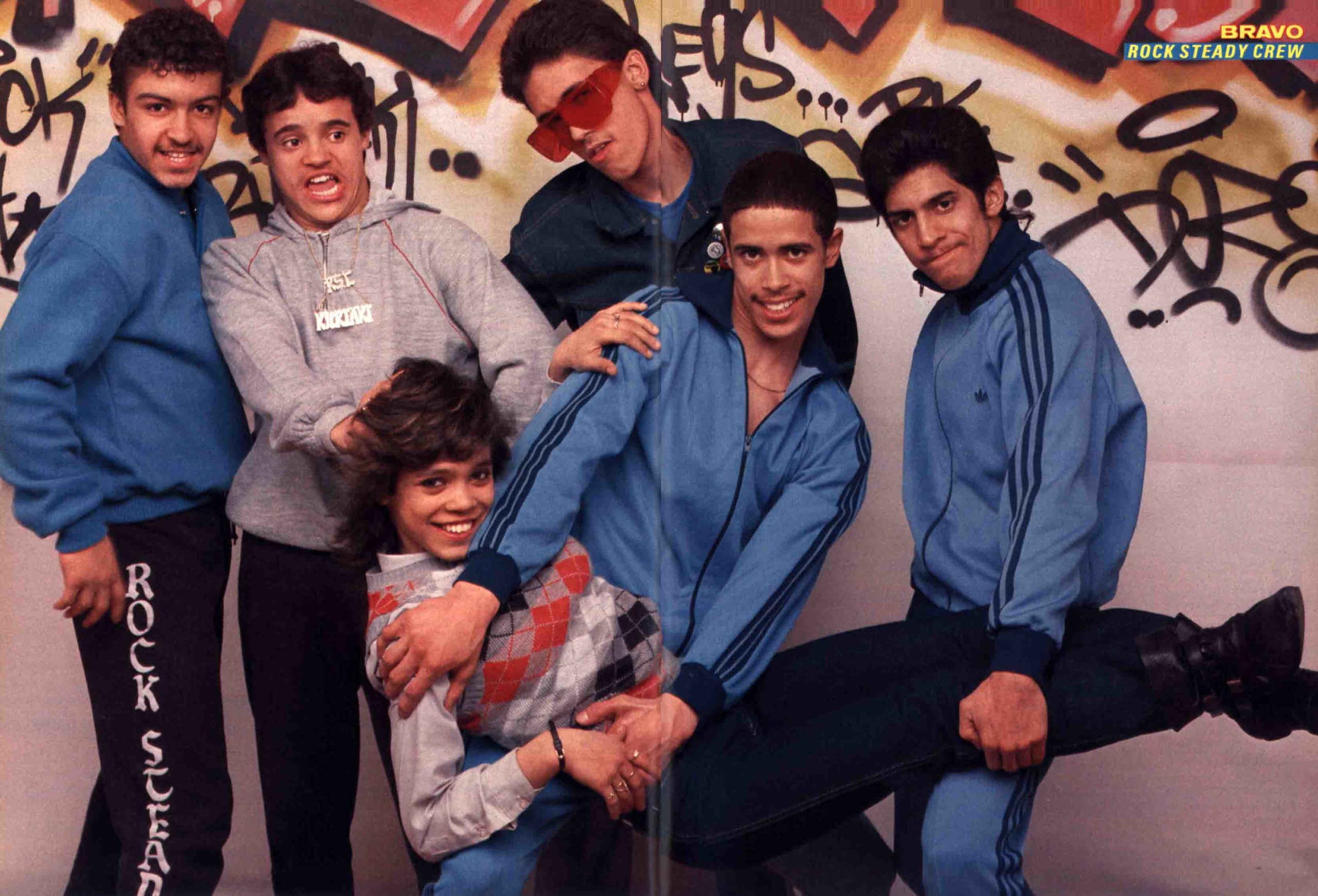
From the beginning it was framed as youth culture rather than music culture — African American and Latino teenagers using sound, movement, and visual art to document conditions nobody else bothered recording. [The Source] To older executives and editors, that read as a scene that would age out with the block parties, not a foundation that would eventually reorganize the entire global entertainment industry. The Bronx in 1973 was not supposed to be the origin point of anything lasting. That preconception — about place, about class, about whose creativity gets treated as art — is where the “fad” label actually begins.
Even New York radio needed convincing a decade later. When Greg Mack pitched all-rap programming at KDAY in Los Angeles, management treated it as a risky experiment and signed off largely by accident. Once they did and the ratings spiked, KDAY became the first 24-hour rap station — not through industry vision but through reluctant concession to what listeners already wanted. [Los Angeles Times] The gap between what programmers believed and what audiences proved was already clear. Gatekeepers weren’t reading the culture; they were tolerating it until they expected it to dissolve.
The Race and Class Code Hidden in “Fad”
The “fad” label was never purely aesthetic. It carried a code: this is Black and poor, so it cannot last. Hip-hop emerged from neighborhoods that had been redlined, disinvested, and administratively abandoned. [Time] Questlove has framed hip-hop’s founding impulse explicitly as a counter to Studio 54 opulence — a culture made by people locked out of the mobility spaces that defined prestige in that era. [Time] The tradition of dismissing grassroots Black creative movements as regional novelties before absorbing their innovations under different branding has a long American history. Hip-hop was not the first genre to go through it. But the speed and ferocity of that dismissal — even as the records were charting — reflected something specific about how power reads culture that doesn’t look like itself.
The tells are in the institutional responses. Law enforcement and politicians framed political rap as a civic threat, not protected expression. When N.W.A. released “Fuck Tha Police” in 1988, the FBI sent a letter to Priority Records expressing concern — an extraordinary intervention that treated a rap group’s first album as a matter of national security. [MTSU First Amendment Encyclopedia] You don’t mobilize the Bureau against something you truly believe is a passing fad. You do it when you think you might be able to suppress a voice before it becomes canonical. That the suppression failed, and that “Straight Outta Compton” is now discussed as one of the defining American albums of the 20th century, is the historical verdict.
How the First Big Records Reinforced the Novelty Frame
When rap finally reached vinyl in a way the mainstream noticed, it arrived in the form most likely to confirm the doubters’ priors. “Rapper’s Delight” — a 15-minute disco-rap hybrid recorded by a group assembled specifically to capitalize on what Sugar Hill Records saw as a moment — became the first rap Top 40 hit in 1979. [The Source] The song was huge, but its form reinforced exactly the wrong interpretation: this is a novelty product that borrows from an established genre (disco) for a pop moment. It was easier to call “Rapper’s Delight” a gimmick than to read it as the surface of something structural.
The industry had a tested playbook for Black musical innovations: generate quick revenue, then move on before the infrastructure catches up. Early rap albums were marketed like curiosities. Even when Whodini’s Escape became rap’s first platinum LP in 1984 — a genuine commercial milestone — critics and programmers still discussed hip-hop as a wave rather than a tide. [DJBooth] The breakdancing craze, the graffiti in fashion spreads, the “breakdance contest” segments on local TV — all of it was mined through the same short-term lens. Trend reporting for trend money, with no expectation of permanence.
This is why KRS-One and DMX spent years having to spell out the distinction that felt obvious from the inside. “Rap music is something we do, but hip-hop is something we live,” KRS-One stated on The Sneak Attack — a formulation he’d been developing since at least 1994. [Blackout Hip Hop] DMX echoed it years later, breaking hip-hop into music, dance, art, and lifestyle and arguing that you cannot kill something that is already generational and embodied. [Hip-Hop Hero] The repetition was necessary because the institutional default — “this is just a style of records” — kept reasserting itself every time the market shifted.
What the Lawyers and the FBI Revealed
If any sector’s behavior reveals what power actually thought about hip-hop’s longevity, it is the legal system’s. Early producers sampled James Brown, Parliament, and funk records with almost no formal licensing structure in place. T La Rock has described entire foundational tracks built on lifted grooves; EPMD’s Erick Sermon has acknowledged that the group simply did not clear samples on their first album and settled with rights holders after the fact as the money came in. [PopMatters] That Wild West condition existed in part because the legal infrastructure hadn’t mobilized around rap yet — because the people who owned the machinery hadn’t decided whether this was worth fighting over.
Once hip-hop albums started generating serious money, the machinery kicked in fast. Lawsuits multiplied. Clearance costs spiked. Chuck D famously calculated that producing another It Takes a Nation of Millions to Hold Us Back-style sample collage in the mid-1990s would have required selling CDs at something like $159 per unit just to cover all the royalty obligations. [PopMatters] That shift — from tolerant neglect to aggressive monetization — is the sound of an industry acknowledging, belatedly, that this was not a fad but a major and permanent revenue stream. The tightening of the screws was a form of recognition, even if it came at a cost to the culture that had built the value being fought over.
The FBI letter is the same logic in a different key. Censorship campaigns — from local bans to parental advisory hearings to the attempts to criminalize specific lyrics — don’t target things that power genuinely believes will vanish on their own. You pressure a voice when you think it might last long enough to matter. [MTSU First Amendment Encyclopedia] The effort to contain hip-hop legally and politically was, paradoxically, an institutional acknowledgment that it wasn’t going anywhere — even if nobody wanted to say that out loud.
Market Swings and the Recycled “It’s Over” Narrative
Even after hip-hop had clearly become the dominant commercial form in American popular music, its market volatility kept reviving the old dismissal in updated packaging. The specific cadence changed — “hip-hop is dead” replaced “this is a fad” — but the underlying logic was the same: use a temporary dip to declare permanent decline.
When digital disruption cratered CD sales in the mid-2000s, hip-hop was hit harder than most genres. The numbers gave critics what they’d been waiting for — ammunition to announce that the culture had maxed out. [Wikipedia] But the decline tracked with the collapse of physical media, not the collapse of rap’s cultural relevance. While album sales fell, rap artists were still topping the Billboard 200 and generating massive digital single numbers — Flo Rida moving millions of downloads off an album that didn’t even reach gold certification. [Wikipedia] The metrics had changed; the culture had not.
The gap between what the data showed and what the discourse claimed is important because it was the same gap that existed in 1979. Business kept proving hip-hop’s staying power while commentary kept reaching for the exit. KRS-One framing The Sneak Attack as a “textbook,” built for longevity rather than club cycles, [Blackout Hip Hop] was a direct counter to that pattern — an insistence that the culture did not measure itself in market quarters.
The Quiet Embedding Nobody Tracked
Part of why successive generations of outsiders thought hip-hop would vanish is that they only watched the foreground: chart positions, TV performances, scandals, sales data. They missed how deeply the culture was soaking into everything else — the background layer that never appears in a Billboard report.
Hip-hop has always operated as what The Source describes as a “companion culture”: not a destination you visit but a presence layered into your day — in the car, in the hallway, in the advertising that borrows its cadence without attribution. [The Source] That proximity is how rap’s phrases, aesthetics, and attitudes embedded themselves into everyday speech, global fashion, film scoring, and streaming culture long before most executives were willing to publicly acknowledge the debt. By the time they were borrowing the style, they had often forgotten — or preferred not to name — where the style came from.
The institutional recognition, when it finally came, arrived decades after the streets already knew. By 2026, museums like Seattle’s MoPOP were describing themselves as among the largest collectors of hip-hop material in the world, mounting major retrospectives to document a culture they once wouldn’t have scheduled a panel about. [Rolling Out] The lag between lived cultural reality and institutional acknowledgment is, itself, the story — and it is a story that has been replaying on a roughly 20-year delay since 1973.
What the Label Actually Said
People called hip-hop a fad because they misread who was making it, where it came from, and what it was trying to do. They saw records when the culture was already a full built environment — language, fashion, visual art, dance, politics, and ethics bound together by a shared sensibility. They focused on the moment and missed the movement; focused on the novelty and missed the necessity.
The “fad” label was never really about hip-hop. It was a readout of the limits of the people applying it — their assumptions about which communities make lasting things, which art forms deserve infrastructure, and which voices the system is obligated to take seriously. Every time the label got recycled — as “urban novelty,” as “dying genre,” as “it had a good run” — it revealed the same limits, dressed in updated language.
The same forces that once shrugged off hip-hop as a passing youth craze are now rearranging museums, fashion houses, streaming algorithms, and political debates around its logic. [The Source] That’s not a correction of the original prediction. It’s a 50-year refutation of the worldview that produced it.
Timeline: How Hip-Hop Was Dismissed — and Why It Survived
Click any event to expand. Filter by phase below.