
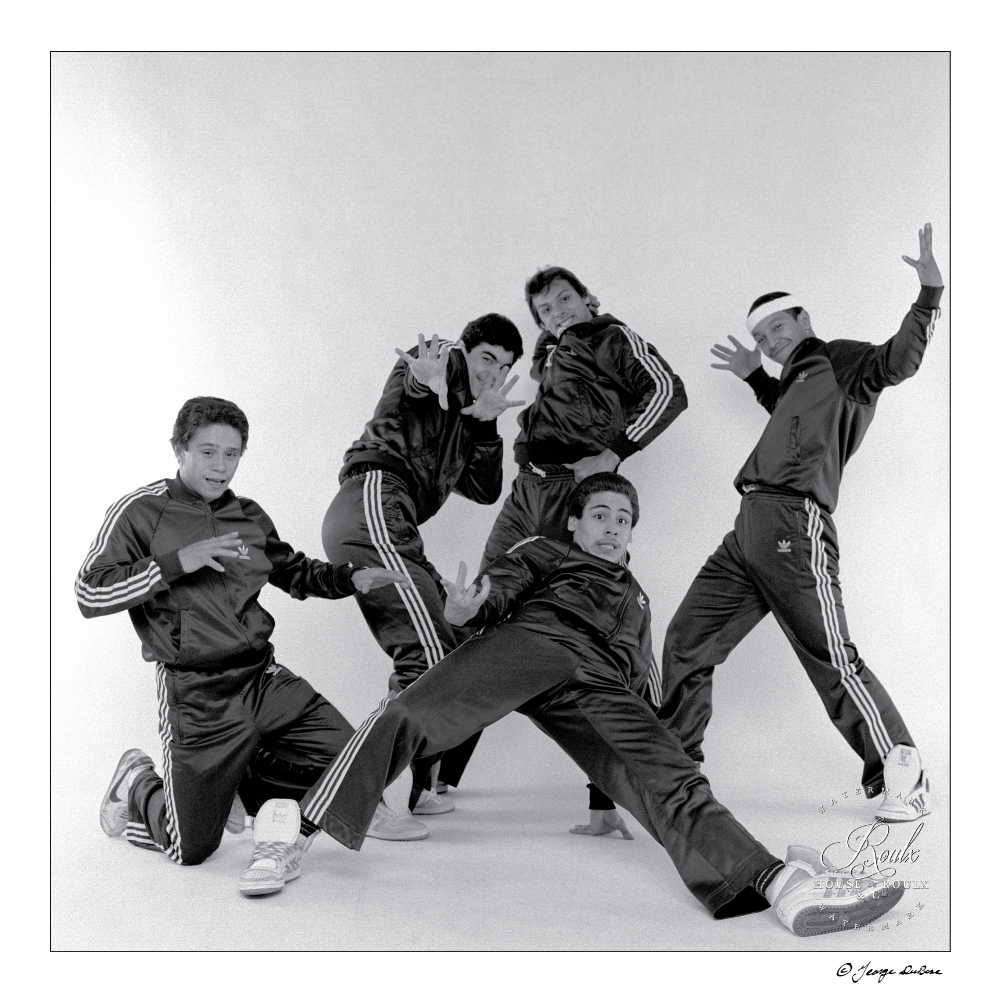
The New York City Breakers were a pioneering breaking crew founded by Michael Holman in 1981, assembled from top b-boys to rival the Rock Steady Crew. Featured in films and major performances, they helped carry breaking into the mainstream during the early-1980s explosion of hip-hop dance culture.
Key Facts
- Type: Breaking crew
- Founded: 1981 by Michael Holman
- Rival: Rock Steady Crew
- Known for: Films + major performances; mainstreaming breaking
- Foundational element: Breaking
The New York City Breakers: How a Bronx Dance Crew Took Breaking From the Streets to the President’s Stage
In the early 1980s, the New York City Breakers accomplished something that seemed impossible for a group of Black and Latino dancers from the Bronx: they turned a street art form into a national television spectacle, performed for royalty, appeared in front of a sitting president, and made breaking visible to an audience that had never seen it. They did it in roughly four years. Their window was short, their impact was permanent, and the art form they helped legitimize would eventually land at the Paris Olympics — a trajectory they helped set in motion.
Michael Holman: The Bridge Builder
The New York City Breakers did not emerge organically from the Bronx B-boy scene. They were assembled by design. Michael Holman was a music journalist, filmmaker, artist manager, and one of the earliest connectors between hip-hop culture and mainstream media — a figure who understood the cultural significance of what was happening in the parks and clubs of New York before most gatekeepers acknowledged it existed. [1] Holman had been producing live hip-hop shows in the early ’80s, particularly at downtown New York venues, and had positioned himself as someone who could translate the culture for mainstream audiences without stripping it of what made it vital. He went on to create Graffiti Rock — the first hip-hop television program — and his management of the NYCB was part of a larger project of making hip-hop visible. [2]
The Floor Masters and the Birth of the Crew
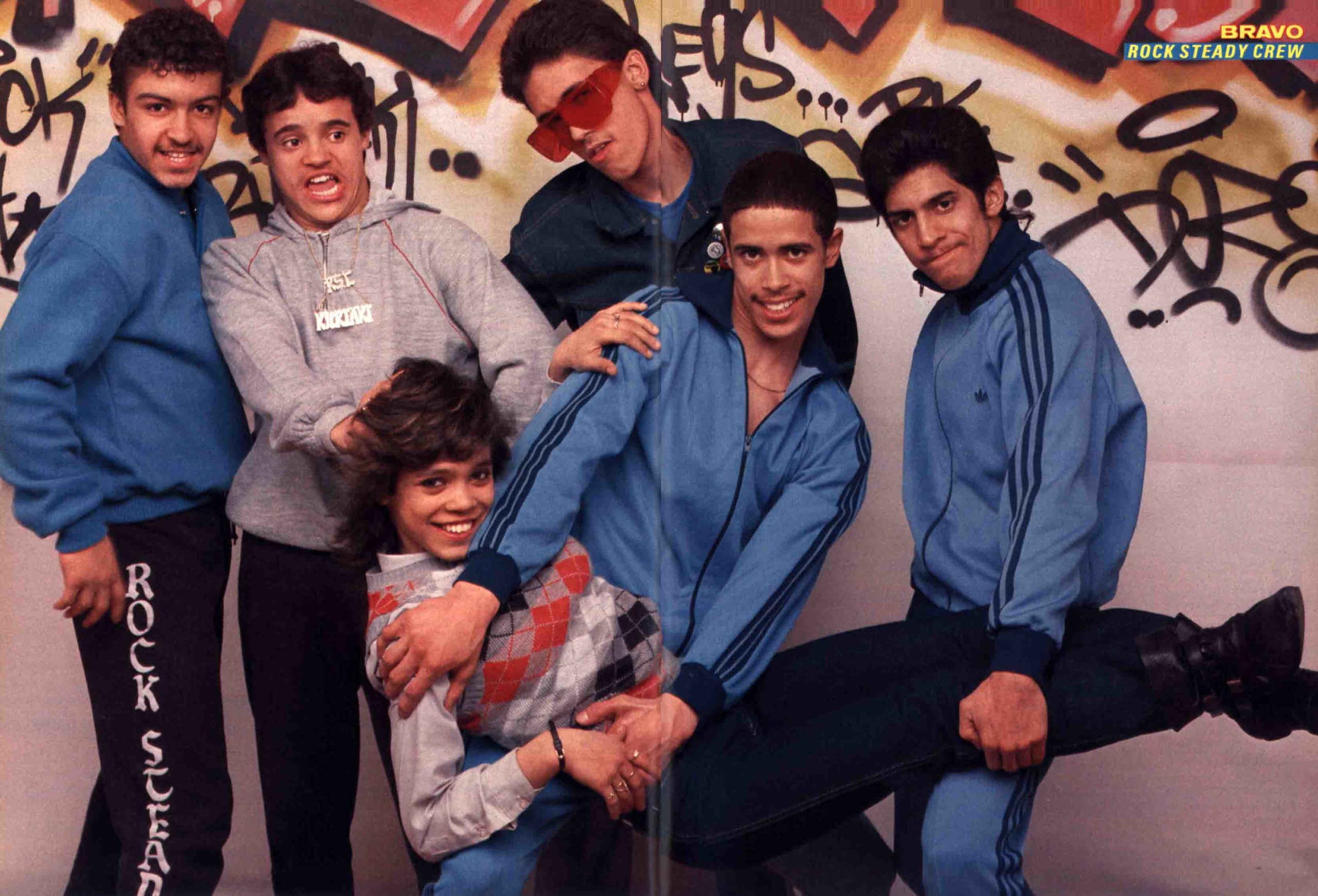
Holman’s original intention in 1981 was to manage Rock Steady Crew, who were already the most respected breaking crew in New York. He needed a rival crew for a hip-hop night he was organizing and asked Rock Steady’s Crazy Legs to suggest someone to invite. Crazy Legs recommended the Floor Masters — a crew already known in the B-boy underground. What happened next changed Holman’s plans entirely. [3]
The Floor Masters did not just hold their own against Rock Steady Crew — they outperformed them. Holman, watching the battle, recognized that the Floor Masters had something specific and extraordinary: a combination of raw power, technical precision, and visual spectacle that could translate beyond the B-boy world into the kind of presentation he was imagining for mainstream audiences. He decided on the spot to form his own crew around those qualities. He recruited the Floor Masters’ strongest dancers, combined them with other talent he scouted across New York, and placed the original leader Chino “Action” Lopez in charge of cutting members who didn’t measure up and finding those who did. [3] The result was the New York City Breakers — a crew built not from a neighborhood but from the best available talent in the city, assembled around a specific competitive vision.
The Members and Their Specialties
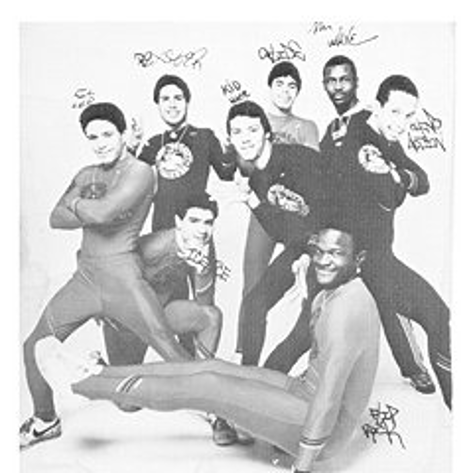
The crew Holman assembled had genuine technical diversity — each member brought a distinct specialty that made the collective more formidable in competition and more compelling as a performance. Chino “Action” Lopez led the group with authority and drove its recruitment standards. Noel “Kid Nice” Mangual used his height as an asset, making his head glides and choreography visually commanding in ways that shorter dancers couldn’t replicate — he was also regarded as one of the better breakdance choreographers in the scene. Matthew “Glide Master” Caban was considered the world’s leading practitioner of the fist glide — a move demanding extraordinary upper-body control — and later became the instructor who taught “Lil’ Alex” the skills that made their presidential performance memorable. [3]
Tony “Mr. Wave” Draughon was a body contortionist and electric boogie specialist whose physical flexibility was so extreme that Bob Hope, watching him perform, remarked that he “couldn’t possibly have any bones in his body.” Ray “Lil Lep” Ramos was the crew’s head spin specialist and its link to old-school foundational technique. Tony “Powerful Pexster” Lopez brought fast, high-impact power moves. Bobby “Flip Rock” Potts was the aerial specialist, known for flips and footwork that required both gymnastic ability and rhythmic precision. Corey “Icey Ice” Montalvo built his identity around trademark air moves and freeze poses. Together, the eight members covered virtually every technical dimension of competitive breaking, which is exactly what Holman’s concept required. [3]
From the Bronx to the Television Screen
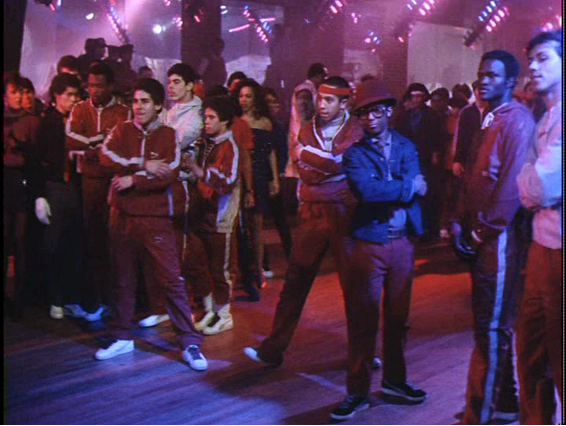
Holman moved with unusual speed. Within days of forming the NYCB, he had booked them on the nationally aired Merv Griffin Show — a booking that gave the crew immediate national exposure at a scale no breaking crew had accessed before. [3] Appearances on Soul Train, Ripley’s Believe It or Not, Good Morning America, and NBC’s Salute to the Olympics followed, each one placing breaking in front of audiences that largely hadn’t encountered it. The crew also battled Rock Steady Crew in Beat Street (1984), the Warner Bros. feature film that — alongside Wild Style and Breakin’ — became one of the primary vehicles through which mainstream audiences discovered hip-hop culture in the early ’80s. [3]
Graffiti Rock: The First Hip-Hop Television Show
In 1984, Michael Holman created and hosted Graffiti Rock — the first hip-hop-based television program ever produced. The pilot aired on June 28, 1984 on WPIX Channel 11 in New York, broadcasting to 88 markets across the country and drawing strong Nielsen ratings for a first-run music show. [4] The show was conceived as a hip-hop answer to Soul Train and American Bandstand — a weekly program that would document and celebrate the four elements of the culture for mainstream television audiences. The pilot featured Run-D.M.C., Kool Moe Dee and Special K of the Treacherous Three, Shannon, and the New York City Breakers in a showcase performance that demonstrated how fully formed the culture already was. [4]
Despite those ratings, the network chose not to order the series to continue. The pilot remained the show’s only episode, and Holman’s vision for an ongoing hip-hop television institution would not be realized. The footage, however, survived — and Graffiti Rock has since become one of the essential archival documents of early hip-hop, studied alongside Wild Style and Beat Street as a record of the culture at its founding moment. [4]
From the Kennedy Center to the President’s Inaugural Stage
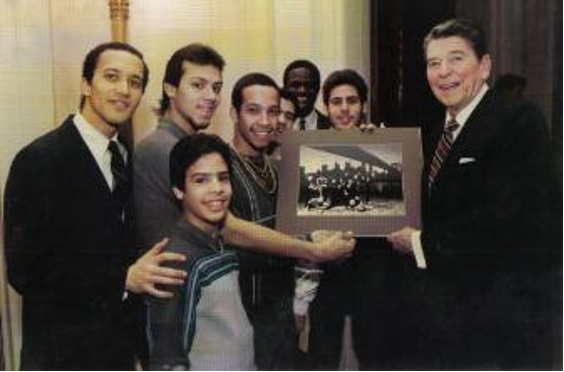
The New York City Breakers’ path to performing for President Reagan began not at the White House but at the 1983 Kennedy Center Honors, where their performance caught the attention of Frank Sinatra — who was so impressed that he hired the crew back for further engagements. [3] When Sinatra was named chairman of the 50th Presidential Inaugural Gala for Reagan’s second inauguration in January 1985, he personally invited the NYCB to perform — making them the first hip-hop group ever to perform for a sitting American president. The event was broadcast nationally on CBS, reaching an audience exponentially larger than anything the crew had previously accessed. [5]
The political context of that moment is worth sitting with. Reagan’s policies — the cuts to federal housing programs, the defunding of urban infrastructure, the War on Drugs that was already beginning to devastate Black and Latino communities — were falling hardest on exactly the neighborhoods that produced the NYCB and the culture they represented. A crew of Black and Latino dancers from the Bronx performing in front of the president whose administration was doing the most damage to their world is one of the genuinely strange ironies of the ’80s hip-hop mainstream moment. The performance was a cultural legitimization of breaking. What that legitimization meant in the broader political landscape was a question the culture would spend years working through. [6]
A ten-year-old performer known as “Lil’ Alex,” trained by Matthew “Glide Master” Caban specifically for the occasion, appeared alongside the crew and became one of the most discussed moments of the broadcast — a child prodigy demonstrating moves that audiences watching at home had largely never seen before. [3]
Break-Master, Gladys Knight, and the Global Reach
In 1984, the NYCB released Break-Master — the first instructional breakdancing video and album ever produced. The release went gold, serving both as a commercial product and as a formal documentation of breaking technique for audiences who wanted to learn rather than just watch. [7] By breaking down the steps and structure of competition, Break-Master effectively democratized the knowledge that had previously been transmitted only through community practice and battle observation. They also appeared in Gladys Knight and the Pips’ music video for “Save the Overtime for Me” in 1983, and performed internationally for Prince Andrew of England and the King and Queen of Norway — carrying breaking to audiences in Europe before most of those countries had any direct exposure to the culture. [3] They shared stages with Grandmaster Flash and the Furious Five, the Cold Crush Brothers, KRS-One, Doug E. Fresh, MC Shan, and Dr. Dre, placing them squarely at the center of hip-hop’s most active performance ecosystem.
The Loss of Glide Master
At the height of the crew’s career, Matthew “Glide Master” Caban died in a motorcycle accident. [3] His death removed the crew’s most technically distinctive member — a dancer widely considered the best fist-glide practitioner in the world, and the trainer who had prepared “Lil’ Alex” for the presidential performance. The loss struck both the group and the broader breaking community. Caban represented the kind of irreplaceable technical innovation that built the NYCB’s reputation; his absence left a gap in the crew that wasn’t filled.
The 2024 Olympics and What the Breakers Set in Motion
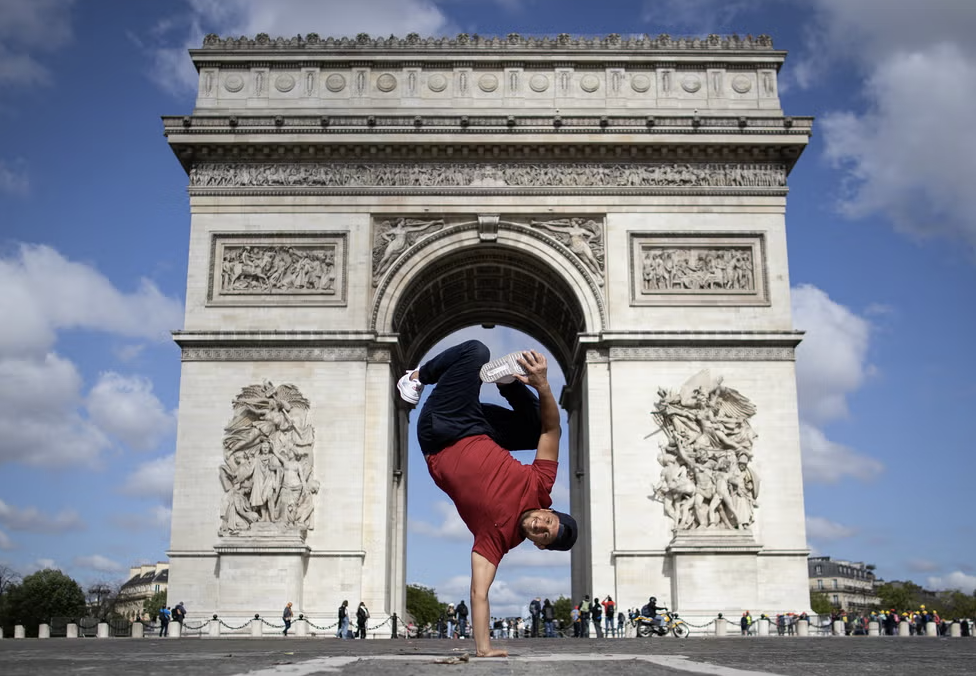
The arc that the New York City Breakers helped trace — from Bronx parks to mainstream television to the president’s inaugural stage — eventually reached its furthest point with breaking’s debut at the 2024 Paris Olympics, where 16 B-boys and 17 B-girls competed at Place de la Concorde in front of a global audience. [8] The NYCB were not the only crew responsible for that trajectory — Rock Steady Crew, the Dynamic Rockers, and dozens of regional groups contributed — but they were among the earliest and most effective at moving breaking from subcultural practice into mainstream visibility. The Kennedy Center Honors. The Merv Griffin Show. The presidential gala. Graffiti Rock. Beat Street. Each appearance expanded the audience for breaking and built the cumulative legitimacy that made an Olympic debut forty years later imaginable.
The Legacy
The New York City Breakers operated at full intensity for roughly four years, from their formation in 1981 through the mid-1980s when the commercial breaking wave receded. In that window, they appeared on more mainstream platforms than any other breaking crew, performed in more politically charged contexts, and produced more instructional material than anyone else in the culture. Michael Holman’s vision — that breaking could be presented to mainstream audiences without losing what made it vital — was proven right by every television booking, every royal performance, every presidential appearance.
What distinguishes the NYCB from other crews of their era is precisely that combination of grassroots excellence and strategic visibility. The members were genuinely among the best breakers in New York at their peak — their origin in defeating Rock Steady Crew at battle established their credentials within the culture — and they were also willing to carry the culture to venues and audiences that other crews weren’t positioned or prepared to reach. That willingness to bridge the street and the stage is what made them singular, and it is why their name surfaces whenever the history of how breaking reached the world gets told correctly. [6]
Sources
[1] Early Hip-Hop Evangelist Michael Holman on New York, Basquiat and Graffiti Rock — Red Bull Music Academy Daily
[2] Michael Holman (filmmaker) — Wikipedia
[3] New York City Breakers — Wikipedia
[4] Graffiti Rock — Wikipedia
[5] 50th Presidential Inaugural Gala (1985) — IMDb
[6] History of Breakdancing: Key Events & Evolution — Red Bull
[7] Break-Master ft. The New York City Breakers — Space Monkey X
[8] Breaking at the 2024 Summer Olympics — Wikipedia
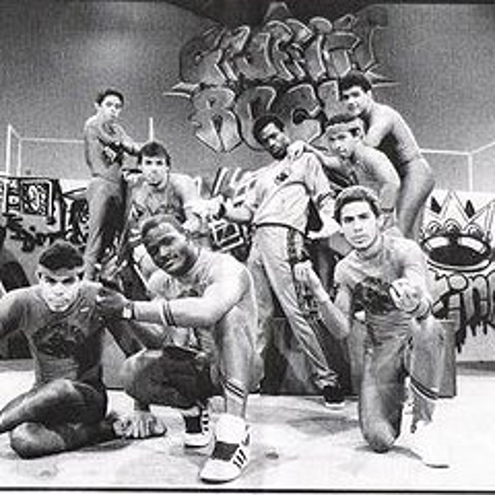
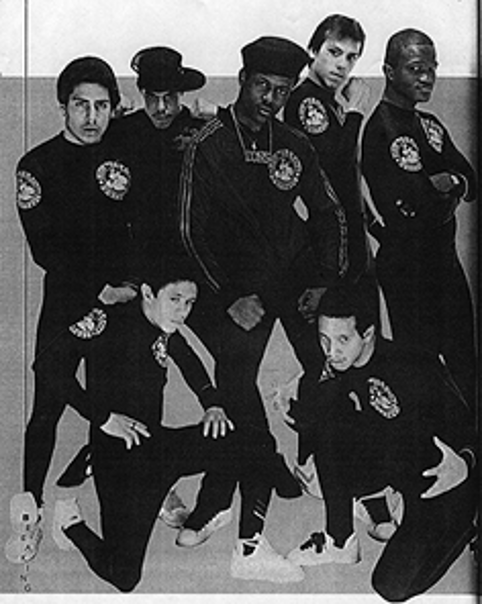
Style/Technique:
- Chino LOPEZ AKA “ACTION”
The leader of the NYCB.
- Noel Mangual AKA (As Known As) “KID NICE”
Used his height as an asset in moves like his infamous head glide. Also known for being a good breakdance choreographer.
- Tony Draughon AKA “MR. WAVE”
Body contortionist and electric boogie dancer. Bob Hope once said that “Mr. Wave” couldn’t possibly have any bones in his body.
- Ray Ramos AKA “LIL LEP”
The head spin and old school master.
- Matthew Caban AKA “GLIDE MASTER”
The world grand master of the fist glide. Corey Montalvo AKA “ICEY ICE”
Known for his trademark air moves and unique freeze poses.
- Tony Lopez AKA “POWERFUL PEXSTER”
Known for his fast, power moves.
- Bobby Potts AKA “FLIP ROCK”
Master aerialist known for his flips and footwork.
NYC Breakers Videos
Archived footage of the NYCB
http://wn.com/New_York_City_Breakers
Gladys Knight & the Pips – “Save the Overtime for Me”
http://www.youtube.com/watch?v=P-PXZtPT_54
Graffiti Rock Pilot
http://www.youtube.com/watch?v=5dJ76l_Xtis
Beat Street: NYCB vs. Rock Steady Crew http://www.youtube.com/watch?v=NpdLz0WFbQM&feature=player_embedded
NYCB Performing at Ronald Reagan’s Inaugural Gala
http://www.youtube.com/watch?v=kW5d_YjQZyM&feature=player_embedded
Cited Sources
[1] https://www.msu.edu/~okumurak/dancers/nycb.html
[2] http://en.wikipedia.org/wiki/New_York_City_Breakers
[3] Ibid.
[4] http://www.bombhiphop.com/newbomb/bombpages/articles/Bboy/nycbreakers.html
[5] http://en.wikipedia.org/wiki/New_York_City_Breakers
[6] http://www.bombhiphop.com/newbomb/bombpages/articles/Bboy/nycbreakers.html
[7] http://en.wikipedia.org/wiki/New_York_City_Breakers
[8] Ibid.
[9] Ibid.
[10] Ibid.
[11] http://en.wikipedia.org/wiki/Graffiti_Rock
[12] Ibid.
[13]Ibid.
[14] http://en.wikipedia.org/wiki/New_York_City_Breakers
[15] Ibid.
[16] Ibid.