
Dr. Dre was asked to name the greatest hip-hop producer of all time. He passed over himself and Rick Rubin and named the Queens bass player who built the sound Dre grew up chasing.
Larry Smith produced the records that turned rap from a party novelty into an album format: Run-DMC’s first two LPs, Whodini’s best work, and a run of Kurtis Blow sides that put hip-hop on the pop charts. Then he mostly disappeared from the story. Dre’s comments this month are less a surprise pick than a correction to the record, and the lineage he’s pointing at runs straight from St. Albans to Compton.
The Answer Nobody Expected
Dre was the first guest on the debut episode of Listen & Laugh, the new podcast from Ice Cube and Mike Epps. [HotNewHipHop] Asked about his favorite producer during a conversation about Quincy Jones, he said that outside of Quincy, the one who really inspired him was Larry Smith, and that Smith “does not get his flowers.” [Complex]
He went further, calling Smith the best hip-hop producer ever, “point blank,” and crediting him with the Whodini and Run-DMC records that inspired his generation when they were coming up. [HotNewHipHop] Cube admitted he expected Dre to say Quincy Jones and had never known Smith was someone Dre looked up to. [Complex]
The Quincy framing is not accidental. Back in 1987, Whodini’s John “Ecstasy” Fletcher called Smith “the Quincy Jones of rap.” [Wikipedia] Dre is not discovering Smith. He is co-signing a reputation that the people who worked with Smith settled decades ago, and that DJ Premier echoed in 2009 when he put Smith first on his list of top producers, ahead of Marley Marl and Rick Rubin. [Wikipedia]
A Bass Player From St. Albans
Smith came up in St. Albans, Queens, taught himself bass off James Brown records, and left Andrew Jackson High School to work the road as a touring player. [Complex] By the time rap records existed, he was already a working musician with session, jazz, and theater credits.
His entry point was Kurtis Blow. In 1979, Robert “Rocky” Ford recruited him to play bass on “Christmas Rappin’,” and Smith went on to co-write and play on “The Breaks,” one of the first hip-hop records to reach the Hot 100 and go gold. [Wikipedia] He was credited as a writer, not a producer, on those early Blow sides, which is the first sign of how often his fingerprints would outrun his credits.
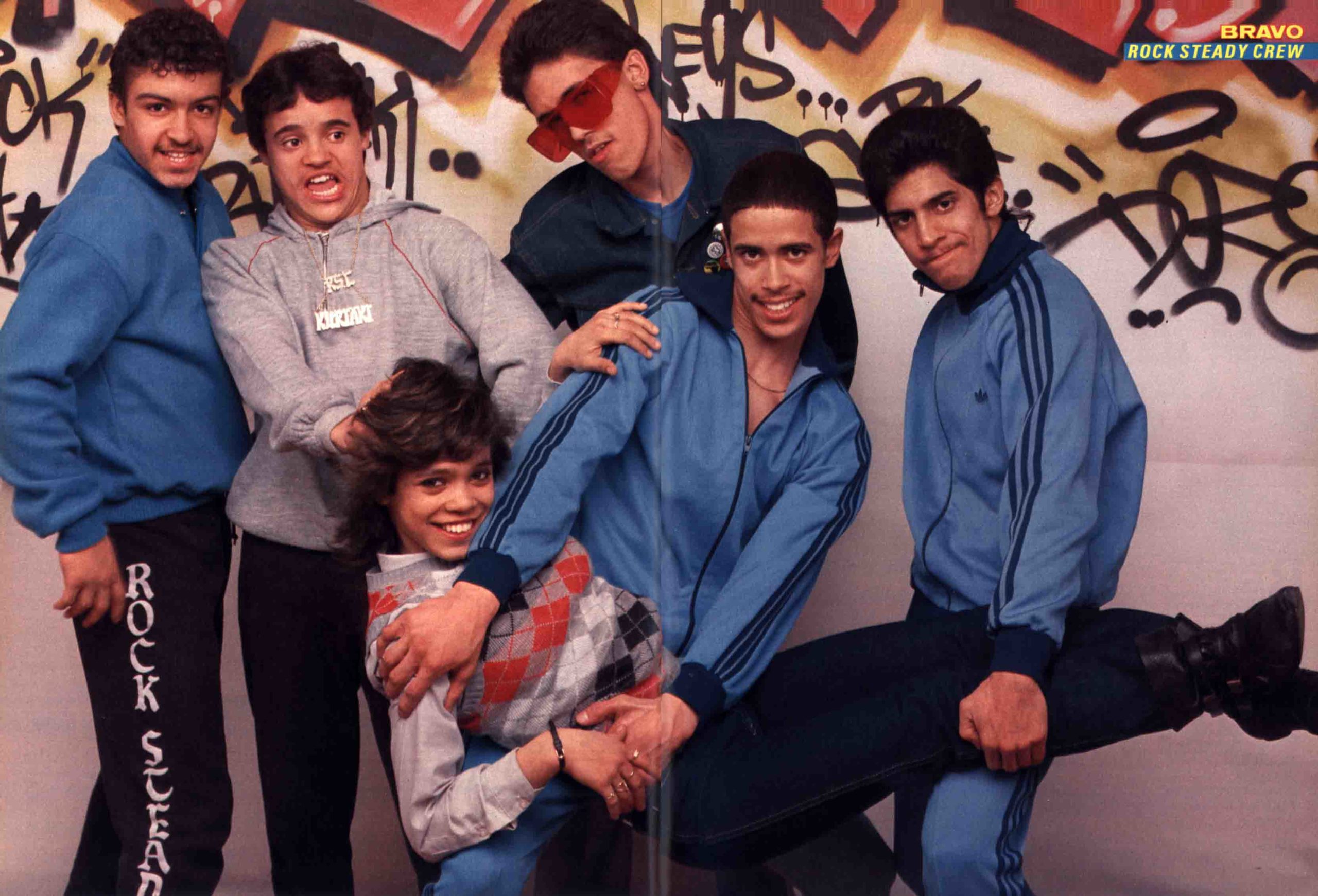
Through Blow, he met the rapper’s manager, Russell Simmons. The two formed Rush Groove Productions and cut records for Jimmy Spicer, including “Money (Dollar Bill Y’all).” [Complex] Smith also co-founded Orange Krush, a band built to back a rapper live, whose drum pattern on “Action” became the bones of Run-DMC’s rhythm. [Cuepoint]
Building Run-DMC
The move that changed everything was subtraction. Smith was a working musician, but for Run-DMC he chose not to use live studio players, building the sound on drum machines instead. [Wikipedia] On “Sucker M.C.’s,” he replayed a drum pattern on an Oberheim DMX, a decision that helped open rap’s drum machine era. He later said he would have hired live players with a bigger budget, which makes the result even more interesting: constraint, not ideology, produced the template. [Cuepoint]
Critic Jesse Serwer described “It’s Like That” b/w “Sucker M.C.’s” as the blueprint for hip-hop records from 1983 into 1987. [Wikipedia] Then Smith pushed the other way. On “Rock Box,” he overruled a skeptical studio owner and brought in guitarist Eddie Martinez, and he is generally credited with introducing the electric guitar to rap. [XXL]
Smith and Simmons co-produced Run-D.M.C. (1984) and King of Rock (1985). [Wikipedia] The debut was certified gold in February 1985, alongside Whodini’s Escape and the Fat Boys’ debut, which Smith played bass on, among the first hip-hop albums ever to go gold. [Wikipedia] Run even put him in a lyric: “Larry put me inside his Cadillac.” [Cuepoint]
The Whodini Side of the Ledger
If Run-DMC was the hard edge, Whodini was proof Smith had range. He tailored sounds to each act: stripped street beats for Run-DMC, fuller and more musical productions for Whodini.
Escape was recorded at Battery Studios in London in 1984, and it delivered “Friends,” “Five Minutes of Funk,” and “The Freaks Come Out at Night.” [Cuepoint] “Friends” b/w “Five Minutes of Funk” reached No. 4 on Billboard’s R&B chart, and Escape was certified platinum in 1987.[Wikipedia] Reservoir Media’s catalog page credits it as the first hip-hop album to break the Billboard 200 Top 40, peaking at No. 35. [Reservoir]
The people around Smith say “Friends” is the record that made hip-hop grow up, and D.M.C. admitted that on tour, “Larry was kicking our ass every night with ‘Friends.’” [Grantland] He went on to produce Whodini’s Back in Black (1986) and Open Sesame (1987).
The Full Credit Sheet
Beyond the two flagship groups, Smith’s hand shows up across the early-’80s catalog: the Fat Boys’ “Jail House Rap,” Dr. Jeckyll & Mr. Hyde’s “Fast Life,” and even Rodney Dangerfield’s “Rappin’ Rodney.” [Cuepoint]
Grantland’s Dave Tompkins put the scale of it plainly: the 1984 Swatch Watch Fresh Festival was basically a Larry Smith mixtape. [Grantland] One footnote on Dre’s list: he also named LL Cool J, but none of the Smith credit sheets we reviewed include LL. Those records came out of Def Jam, the Rubin and Simmons venture that pulled Simmons away from Smith. [Cuepoint] Read it as Dre crediting an era, not a discography.
How the Blueprint Reached Compton
Dre’s own early output sits squarely inside the world Smith built. In the mid-’80s he was programming drums in the World Class Wreckin’ Cru, whose 1985 album lists him on vocals, drum programming, and production. [Wikipedia] By then, the harder, drum-machine-and-rock sound exemplified by Run-DMC was pulling rap away from electro. [Wikipedia]
DJ Yella told Rolling Stone that when Run-DMC came through their club, the Cru saw how simple the show was and looked at each other: “We can make records.” [Rolling Stone] The same piece notes Ice Cube ghostwrote a Run-DMC-style track, “Cabbage Patch,” for the Cru. [Rolling Stone] That is the real inheritance. Smith’s stripped template, two MCs and a machine, told a generation of DJs in Los Angeles that the barrier to entry was lower than they thought.
The influence shows up in Dre’s catalog too. He sampled Whodini’s “Friends” on “A Nigga Witta Gun” from The Chronic (1992). [Wax Poetics] And the deeper parallel is method. Smith refused to sample, preferring sounds he created himself. [Cuepoint] Dre built G-funk by having live musicians replay sampled material so the result was his own sound. [Wikipedia] Both are musicians first and beatmakers second. In 2010, D.M.C. made the comparison directly: Smith’s “musical arsenal equals Dr. Dre’s.” [Wikipedia]
Why the Flowers Never Came
Smith’s exit from the center of the story was part business, part sound. When Def Jam formed, he felt Simmons chose the Rubin and LL Cool J money over loyalty, and he signed a separate publishing deal with Jive. [Cuepoint] D.M.C. later said Smith was forgotten because of Raising Hell, the Rubin-era album that eclipsed everything before it. [Grantland]
The music moved too. Sampling took over in the late ’80s, and Smith’s refusal to sample put him at odds with the sound that followed. [Cuepoint] His most visible credits thin out after the mid-’80s, even as producers kept sampling his Whodini records. [Cuepoint]
In November 2007, Smith suffered a stroke that left him unable to speak. [Wikipedia] When writer Robbie Ettelson found him, he was in a bare-bones nursing home as a ward of the state of New York. [Cuepoint] He died in December 2014; journalist Reggie “Combat Jack” Ossé relayed the family’s word that he passed the night of December 18, though some references list the 19th. Rev Run called him the greatest hip-hop producer of all time. [The Boombox]
What Dre’s Shout-Out Actually Corrects
Hip-hop history tends to credit the people who owned the label, the brand, or the next era. Smith owned none of those. He owned a sound, and the sound got absorbed so completely that it stopped looking like anyone’s idea.
When the most decorated producer of the West Coast says the greatest ever is a bass player most fans can’t name, it re-frames the producer conversation away from hits and toward architecture. Dre was not naming the producer with the biggest catalog. He was naming the one who drew the floor plan everyone else built on. That is what flowers look like when they arrive 12 years late.