

Hip hop’s news cycle today moved like a playlist: legacy debates, new-money flexes, quiet revolutions, and the ghosts who still shape how the music feels. From Megan retooling “Hot Girl Summer” into a real-world fashion engine to Dame Dash trying to spin bankruptcy into a fresh label era, the culture kept showing how much of rap now happens off-wax—through brands, stages, community spaces, and the algorithms we barely see. Even the headlines that didn’t scream “rap” on the surface, like Sonny Rollins’ passing or a Vatican apology for slavery, sat under the same umbrella: Black sound, Black bodies, and who gets to write the official story.
Megan Thee Stallion Is Building A Real “Hot Girl” Empire, Not A Trend
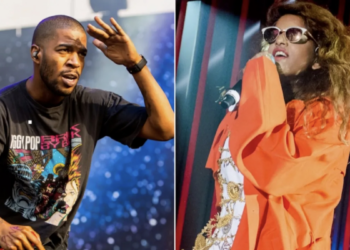
Megan Thee Stallion is taking Hot Girl Summer from caption to canon, pulling her swimwear line back to Miami Swim Week with an expanded, size-inclusive runway and a full production that feels less like a one-off collab and more like a recurring cultural event.[hotnewhiphop] Last year’s show drew celebrity cameos and ended up on a Peacock reality series, boosting the brand far beyond fashion blogs and into mainstream TV, and she even picked up an award on-site for her cultural impact.[hotnewhiphop] Coming back for year two with a bigger footprint sends a message: Hot Girl Summer is a real fashion business, not merch tied to a single album cycle, echoing the Rihanna and Beyoncé playbook where an artist’s world becomes something fans literally wear.[hotnewhiphop]
Learn more about Megan Thee Stallion Building A Real “Hot Girl” Empire
Dame Dash Is Recruiting A Whole Ecosystem With A New Label
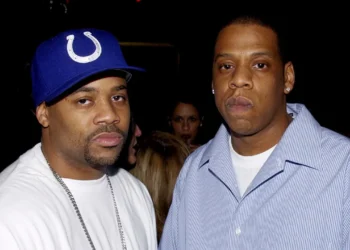
Dame Dash is back in label mode, announcing a new imprint and putting out an open call for “hungry and talented” artists, videographers, engineers, producers, makeup artists, stylists, and digital marketers to email portfolios and tap in.[hiphophero] It’s classic Dame framing—“Come Get With The Hottest Record Label In The World”—but the timing hits different knowing he filed for bankruptcy in 2015 with $25 million in debt, a move his lawyer pitched as a restructuring tool to stop lawsuits and give him room to rebuild his credit rather than a permanent fall-off.[hiphophero] For someone who co-founded Roc-A-Fella in 1994, split in 2004, and watched the company cease operations by 2013, this new label play is another attempt to recreate the independent engine he always preached, only now in an era where creators from glam teams to digital marketers are as vital to a record’s impact as the rapper on the mic.[hiphophero]
Learn more about Dame Dash Recruiting A Whole Ecosystem With A New Label
Ye’s Stadium Era Isn’t Over—He’s Running It Back In Tampa
Ye is locking in another stadium-sized chapter with a newly announced June 26 show at Tampa’s Raymond James Stadium, his second U.S. concert event of 2026 following a three-night run at SoFi Stadium in Los Angeles.[thesource] It’s his first Tampa performance in nearly a decade, and the rollout—presale through his site and Ticketmaster, plus a lottery for free tickets to “a few lucky pre-registrants”—immediately set the fanbase off, speculating about surprise guests, stage design, and which eras of his catalog might dominate the set.[thesource] Even as public debate around him never really dies down, the demand for these huge, unpredictable shows underlines how his live events still function as cultural flashpoints where fans come expecting spectacle, new music, and a night that feels like something more than a standard tour stop.[thesource]
Learn more about Ye Running It Back In Tampa
Drake Owns The Charts While Side-Eyeing The Grammys
Drake’s new triple-drop moment has him operating in his own layer of the ecosystem: ICEMAN has already surged past 500,000 units off the strength of heavy streaming on records like “What Did I Miss?” and “Ran To Atlanta,” and he dropped it alongside HABIBTI and Maid of Honour to the point where he’s now the first artist ever to debut three albums in the top three spots of the Billboard 200 simultaneously.[thesource] The run cements a milestone—he holds 15 No. 1s on the Hot 100, the most for any hip hop act and enough to tie Taylor Swift for the most chart-toppers by a solo artist, while also crossing 500 million RIAA-certified units across albums, singles, and features.[hotnewhiphop] The twist is that on “Make Them Know,” the closer of this 43-track rollout, he appears to take another stance against the Grammys, sparking rumors that he won’t submit ICEMAN, HABIBTI, or Maid of Honour for awards consideration even as they dominate streaming and sales.[thesource]
Learn more about Drake Owning The Charts While Side-Eyeing The Grammys
Cardi B Keeps Turning Awards Into Leverage
Cardi B just notched another brick in her awards wall, taking home Best Hip-Hop Song at the American Music Awards for “ErrTime” and Best Hip-Hop Album for her latest project.[thesource] She beat out a stacked field—Drake’s “NOKIA,” Gunna and Burna Boy’s “wgft,” Playboi Carti and The Weeknd’s “Rather Lie,” and YKNIECE’s “Take Me Thru Dere” on the single side, plus albums from Don Toliver, Gunna, Playboi Carti, and YoungBoy Never Broke Again on the album side—underscoring that she’s not just a viral presence but a consistent awards-season force.[thesource] Those wins feed into a larger picture where Cardi talks openly about the cost of operating at this level, from massive tour production budgets to feeding her family, flipping trophies into proof-of-concept for the next big check rather than just hardware on the shelf.[thesource]
Learn more about Cardi B Turning Awards Into Leverage
MC Jin Turns Battle Rap History Into Infrastructure With Family Style
MC Jin is re-entering the game as an executive with Family Style Records, a label under Pacific Music Group that he co-founded with Ne-Yo, Sonu Nigam, and former Warner Music Asia executive Jonathan Serbin to center Pan-Asian artists in the global market.[thesource] The mission is less about chasing a single crossover hit and more about “bringing people to the table,” as Jin puts it, giving artists both creative freedom and representation that doesn’t flatten their identity for Western consumption.[thesource] Coming from someone whose own career jumped from 106 & Park freestyle fame to a landmark major-label rap deal at a time when that lane barely existed for Asian talent, the pivot into building a pipeline—rather than just being the exception—is a clear sign of how far the industry has moved since his debut, and how much work he thinks is still left.[thesource]
Learn more about MC Jin Turning Battle Rap History Into Infrastructure
La Reezy Keeps Building A Lane With Soulful Singles
On the emerging-artist front, La Reezy is quietly stacking a run of thoughtful singles, following up “Melanate It” with a new track called “How Did You Love Me?” that leans into lush, nostalgic production and a romantic, reflective mood.[hotnewhiphop] The record’s structure—soulful verses grounding the concept, a sung hook that lifts everything up—shows an artist more interested in mood and songwriting than chasing a TikTok dance moment, and critics are already clocking the “fantastic ideas” in his recent work while waiting to see if he strings these drops into a full project later this year.[hotnewhiphop] It’s a reminder that even in a landscape dominated by blockbuster rollouts, incremental single-building still matters, especially when the music has enough craft to stand on its own without a huge marketing machine behind it.[hotnewhiphop]
Learn more about La Reezy Building A Lane With Soulful Singles
The 700-Billion-View Ghost: Tollan Kim And The Era Of Anonymous Influence
The story behind the lo-fi-adjacent producer Tollan Kim is almost anti-industry: born in Brazil, now living in South Korea, he keeps his face mostly offline, avoids loud creator branding, and lets his calming, wordless instrumentals do the work.[allhiphop] That approach has somehow translated into him regularly landing in TikTok’s Global Viral 50 off tracks designed for the in-between moments of life—cleaning, studying, winding down—with his catalog collectively tied to more than 700 billion views on the platform.[allhiphop] In a rap and R&B ecosystem where producers increasingly brand themselves as loudly as artists, his “just be kind and make something that helps people unwind” ethos—and the fact that it actually scales—is a reminder that vibe music can travel across the culture without a face, a tag, or a major-label plan.[allhiphop]
Learn more about The 700-Billion-View Ghost
Sonny Rollins’ Death Closes A Chapter, But His Standard Lives In Rap
The passing of jazz titan Sonny Rollins at 95 lands differently if you see the throughline from bebop to boom-bap: he was a teen phenom playing with Thelonious Monk, Miles Davis, and Bud Powell before addiction nearly derailed him with heroin, jail time, and homelessness in Chicago, until a 1954 stay at a Lexington, Kentucky hospital sparked a spiritual reset.[lasentinel] In the late ’50s he reinvented his sound with a stripped-back, pianoless trio on albums like Way Out West, A Night at the Village Vanguard, and Freedom Suite, then famously vanished from the scene at his peak to practice alone on New York’s Williamsburg Bridge for two years so he could come back sharper, later embracing the chaos of free jazz even as it divided his fanbase.[lasentinel] Rollins toured into his 80s, won a Grammy for his 2001 album This Is What I Do and another in 2006 for his solo on “Why Was I Born?” from the live set Without a Song: The 9/11 Concert, and only stopped performing after pulmonary fibrosis forced him to retire in 2014—all while insisting he was still “a work in progress” and expressing that the real magic for him was the feeling of connecting to something bigger than the crowd when he played outdoors.[lasentinel] That restless pursuit of better, the willingness to walk away from fame to level up, and the idea that improvisation is a kind of spiritual conversation are principles that echo in the way great MCs approach the mic, which is why his death feels like losing an ancestor whose DNA is still in the music even if the horns and the drums changed.[lasentinel]