
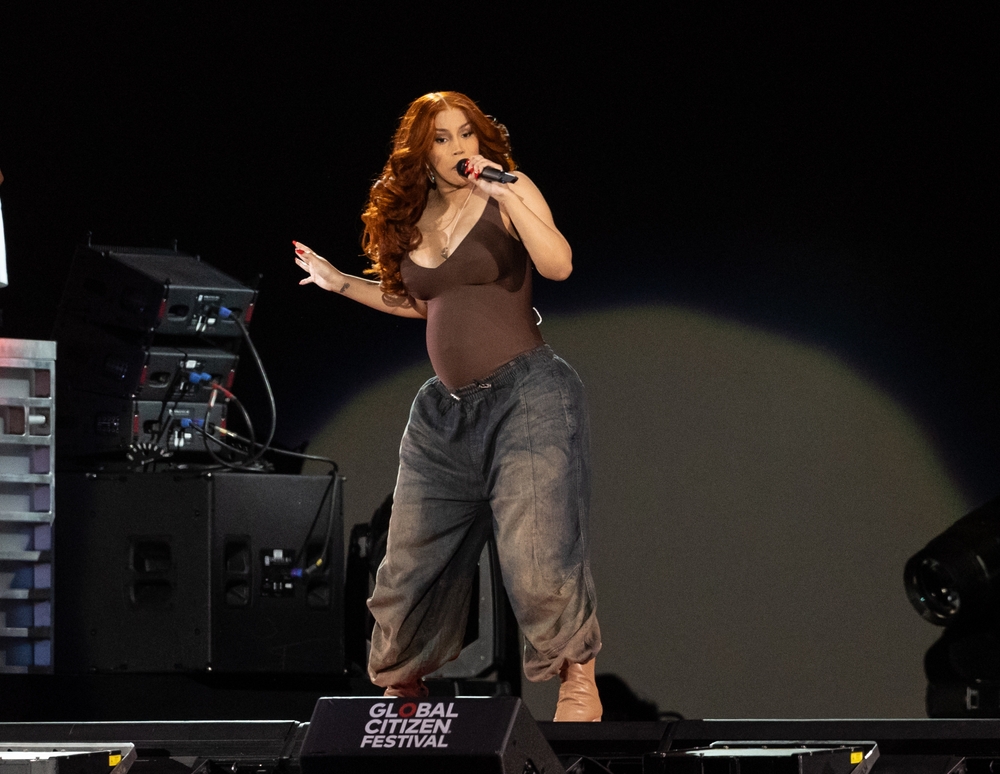
This piece argues women in rap have shifted from a sidebar to the genre’s structural core. It points to figures like Cardi B, whose Invasion of Privacy made her the fifth female rapper to top the Billboard 200, alongside Sexyy Red and Latto, as proof that women now anchor hip-hop’s biggest stages.
Women in rap stopped being a sidebar and quietly became the scaffolding of the genre’s biggest stages.[hotnewhiphop] You can see it in how institutions keep having to update their own record books around Cardi B alone: Invasion of Privacy didn’t just debut at No. 1 on the Billboard 200, it made her only the fifth female rapper in history to top that chart—following Lauryn Hill, Foxy Brown, Eve, and Nicki Minaj—and the most‑streamed album by a woman in a single week at the time.[grammy] Five months later she became the first solo female artist ever to win Best Rap Album at the Grammys, shattering a 30‑year run of that category functioning as an almost all‑male clubhouse.[grammy] Those aren’t just plaques; they’re structural edits to who the industry imagines when it pictures “rap excellence,” a shift that’s echoed in years where Cardi leads BET Hip Hop Award nominations outright and shares the top tier with male stars in later cycles.[wikipedia] When you scan big‑tent award shows now, Kendrick Lamar can lead overall BET Award nominations while women like Doechii and GloRilla sit just a step behind in total nods, signaling that female MCs are no longer quarantined to gendered side categories but woven into the central metrics of success.[rollingout]
Award ballots and power lists are starting to reflect that reality in plain text. Billboard’s 2025 “hottest female rap artists” ranking crowns Cardi B as the undisputed No. 1, citing her unmatched reach, trend power, and cultural impact, but the real story is the depth below her.[allhiphop] Doechii lands in the two‑spot off pure creativity that’s lit up critics, GloRilla grabs No. 3 by flooding the country with high‑energy records, while a fast‑rising YK Niece clocks in at No. 4 and Bunna B at No. 5 after breakout runs.[allhiphop] Meanwhile, the 2026 BET Awards ballot for Best Female Hip Hop Artist reads like a festival poster—Cardi B, Coi Leray, Doechii, Doja Cat, GloRilla, Latto, Megan Thee Stallion, Monaleo, and YK Niece—showing a full ecosystem rather than a token slot.[hotnewhiphop] Those same women are bleeding into the “gender‑neutral” lanes too: Cardi appears in Best Collaboration and Viewers’ Choice for “Outside” and a posse cut with Metro Boomin, Quavo, YK Niece and DJ Spinz, while Latto pops up on both a Cardi remix and an R&B single with Summer Walker and Doja Cat.[hotnewhiphop] The subtext is loud: awards telecasts now need women rappers for ratings as much as those women ever needed awards for validation.
Heavy Rotation: Latto, Sexyy Red and the Sound of the Moment
On the ground, the dominance you hear from women on the radio and in clubs isn’t one‑note, which is why it’s sticking. Latto is a clean case study in that range.[rollingout] Raised in Clayton County, she’s become one of Atlanta’s most visible stars, pairing hit records, big‑name collabs and a confident Southern presence that feels mainstream without losing its drawl.[rollingout] Her 2024 standout “Big Mama,” a double‑sided single from her third album Sugar Honey Iced Tea, plays like a mission statement: in about three minutes, she flips between sensual, melodic singing and aggressive, attack‑the‑beat rapping, all while radiating confidence, sex appeal, and Southern charm.[hiphopdx] Critics ranked it among the best rap songs of 2024, not “best female rap songs,” which is its own quiet form of respect.[hiphopdx] That same list slots in Sexyy Red’s “Get It Sexyy,” a Tay Keith–produced bounce record where her almost deadpan delivery against a bouncy beat creates the perfect hype song—an earworm that became a staple in every DJ’s club set and even turned some naysayers into fans once they heard it in the wild.[hiphopdx] In other words, the records bringing women heavy rotation are doing real technical work: crafting hooks, bending cadence, and figuring out exactly how to detonate a dancefloor.
Zoom out to regional scenes and you see the same pattern of variety and depth. Atlanta, already one of hip‑hop’s most important cities, now has a distinct class of women adding new layers to its legacy: Latto, Anycia, Pap Chanel, Kaliii, Baby Tate, Omeretta the Great, Bktherula and Karrahbooo, some born in the city, some raised in the metro area, and others like Pap Chanel repping Georgia’s broader ecosystem with strong Atlanta ties.[rollingout] Together, they stretch Atlanta’s sound—trap, club, melodic rap—into fresh configurations, with women at the center instead of as guest verses.[rollingout] That’s mirrored nationally when comedian‑turned‑awards‑host Kevin Hart uses his BET platform not to crack easy jokes at rappers’ expense, but to salute Cardi B, Megan Thee Stallion, Latto and Doechii by name for “pushing the goddamn business in music forward,” telling a primetime TV audience, “We all love you, we all see you, we all support you.”[complex] When a mainstream host frames women rappers as the engine of the business, not a novelty, he’s just saying what streaming numbers and club lineups have been screaming for years.
Discourse, Respectability, and Who Gets to Define the Era
With that visibility, the culture war around women in rap has only gotten louder. Complex recently flagged one of the internet’s most exhausting debates as the claim that all modern women rappers “do is sell sex,” a talking point usually aimed at Megan Thee Stallion, Cardi B, Sexyy Red and whoever else is hot that week.[complex] Their response is blunt: as long as entertainment has existed, artists have used specific lenses—mob violence, horror, romance, faith—to pull us into bigger stories, and sex in rap is no different.[complex] It can be about power, dominance, confidence, intimacy; the real question is why women shouldn’t be allowed to articulate that with the same complexity men have enjoyed for decades. That argument sits in real tension with voices inside the culture, though. Lil Mama, for example, recently went on record calling a new crop of artists “musical prostitutes” and directly linking Ice Spice, Sexyy Red, and others to Nicki Minaj’s influence, arguing that for the last 15 years corporate platforms have disproportionately rewarded women who “slut out,” making selling sex feel like the only viable lane to success.[allhiphop] She pushed back at fans who tried to shift blame to Lil Kim, insisting it’s Nicki’s generation that young artists actually watched get rewarded.[allhiphop] It’s messy, but that friction is proof of just how central women are to hip‑hop’s self‑image: the genre is now fighting over their choices as a proxy for what the culture values.
At the same time, some of the media framing around women MCs has matured. Outlets like The Root have called Cardi B one of the smartest rap stars of the 21st century, noting how she turned social media visibility and reality TV into a world‑straddling career without the traditional credentials people sometimes demand of “serious” artists.[theroot] Other coverage has clocked how a new relationship has shifted her famously unfiltered social media presence, with Cardi herself saying romance has redirected her energy away from constant online confrontation.[rollingout] That kind of narrative—treating a female rapper’s emotional growth and public persona as a sincere cultural storyline rather than tabloid fodder—signals that audiences and editors are finally willing to see women in hip‑hop as full, evolving people with interior lives, not just archetypes. When you put that next to Kevin Hart giving flowers to Cardi, Meg, Latto and Doechii on a BET stage, and Complex dedicating column inches to unpacking why the “all they do is sell sex” discourse is lazy, you get a snapshot of a culture still arguing, but at least arguing with women at the center of the frame instead of the margins.[complex]
From Salt‑N‑Pepa to the Sequence: The Lineage Under Today’s Run
None of this is new energy; it’s a new scale on top of old work. Back in the ’80s, MC Lyte’s 1988 debut Lyte as a Rock made her the first solo female rapper to drop an album, with classics like “Paper Thin” and “10% Dis” immediately establishing her as one of rap’s best, male or female.[bet] Salt‑N‑Pepa took that baton and turned it into pop stardom: backed by massive hits like “Push It” and “Shoop,” their debut Hot, Cool & Vicious became the first album by a female rap act to go gold and then platinum, and they later became the first women rappers to win a Grammy, for 1995’s “None of Your Business.”[bet] Queen Latifah’s 1989 All Hail the Queen was quietly radical in another way—she fused jazz, house, reggae, dancehall and straight‑up boom‑bap into one of the most sonically adventurous rap debuts of its era, moving from the house‑infused “Come Into My House” to reggae‑drenched cuts like “The Pros,” while never easing up on the mic.[loc] With Monie Love, she dropped “Ladies First,” a legendary feminist anthem that didn’t just showcase what women could do behind the mic but demanded attention and respect on its own terms, aligning with the Native Tongues’ jazzier, Afrocentric D.A.I.S.Y. Age.[loc] By the ’90s, outlets looking back could comfortably say that Salt‑N‑Pepa, Latifah and Lauryn Hill “dominated” the hip‑hop charts alongside men, a sign that the groundwork had shifted even if the institutions were slower to catch up.[theroot]
Go even further back and you hit Gwendolyn “Blondy” Chisolm and The Sequence, one of the first commercially successful all‑female rap groups.[newsone] Their classic “Funk You Up” became a landmark record, and Blondy’s presence helped lay the blueprint for generations of women rappers by proving from the very beginning that women could rap, create, and move the culture in a male‑dominated space.[newsone] That lineage runs through Da Brat becoming the first solo woman rapper to go platinum with Funkdafied, through Nicki Minaj in 2012 becoming the first female MC to have seven songs chart on the Billboard 200 at the same time, to Cardi B taking that baton into the streaming era and pushing it into historically male‑only territory like Best Rap Album at the Grammys.[bet] When you see today’s landscape—Cardi sweeping hip‑hop categories, Latto and Sexyy Red in constant rotation, Doechii and GloRilla stacking nominations—it’s not an anomaly.[allhiphop] It’s the logical next chapter of a story women have been writing in hip‑hop, bar for bar and chart for chart, since the very beginning.