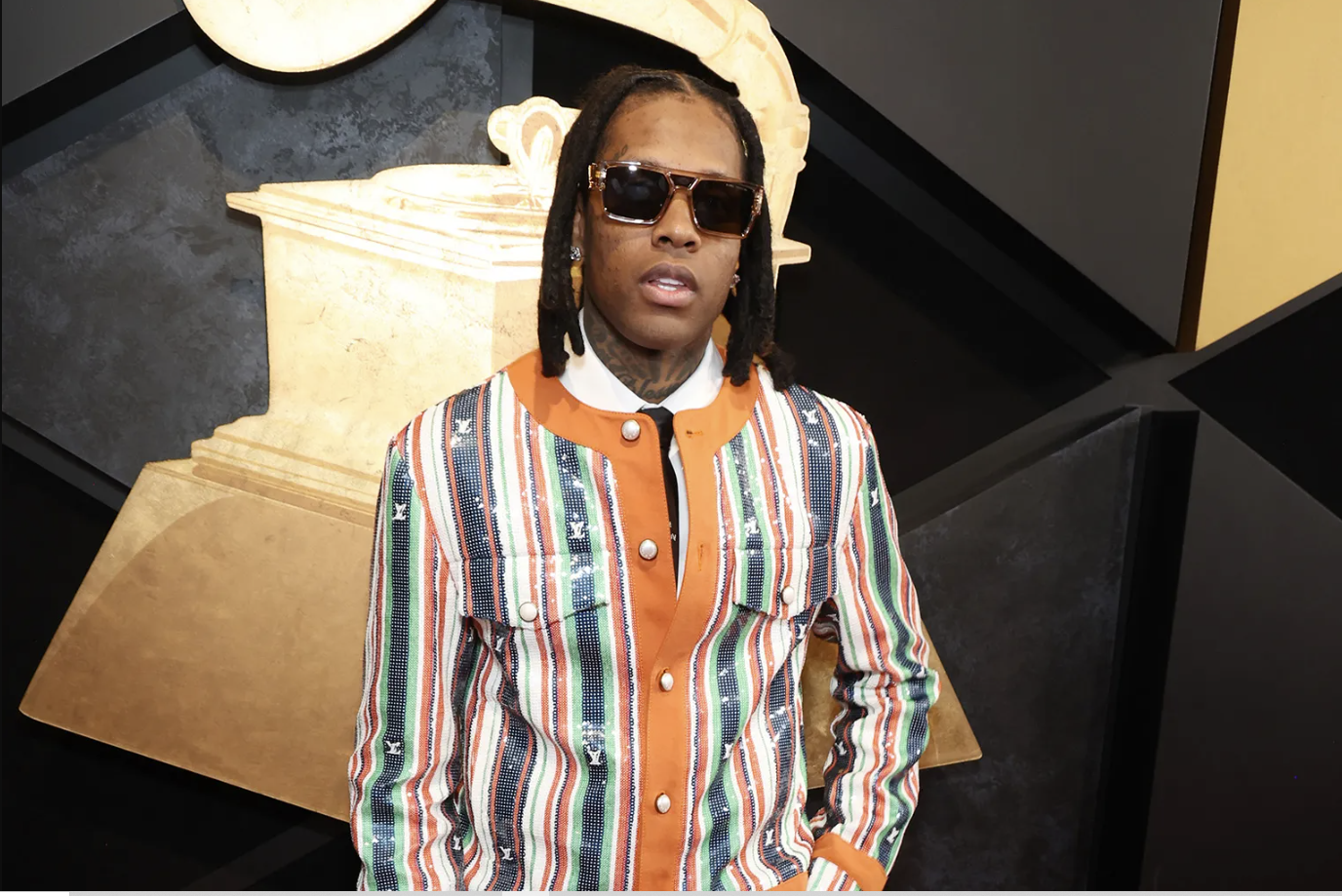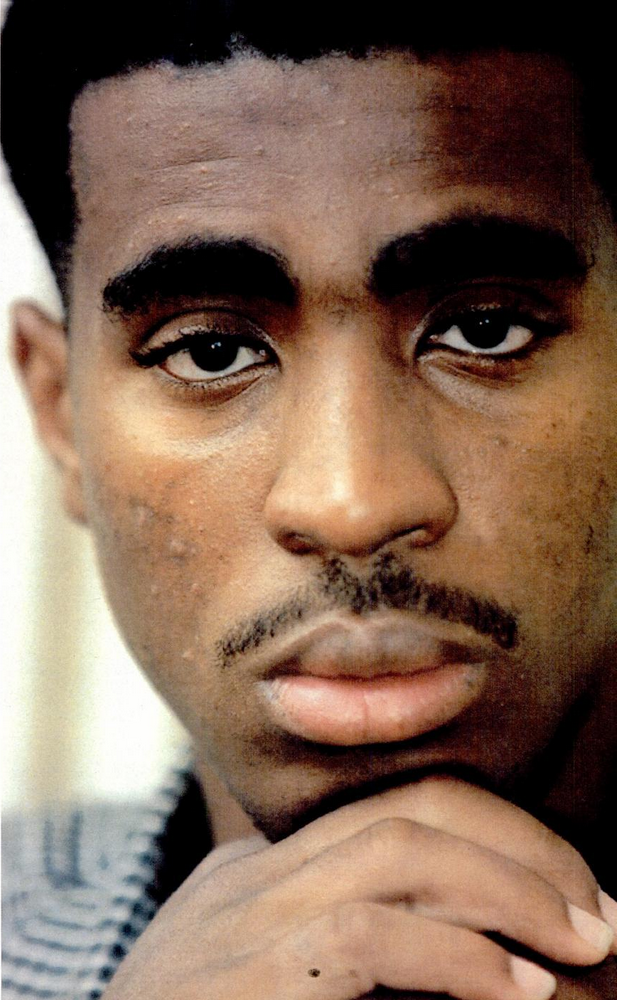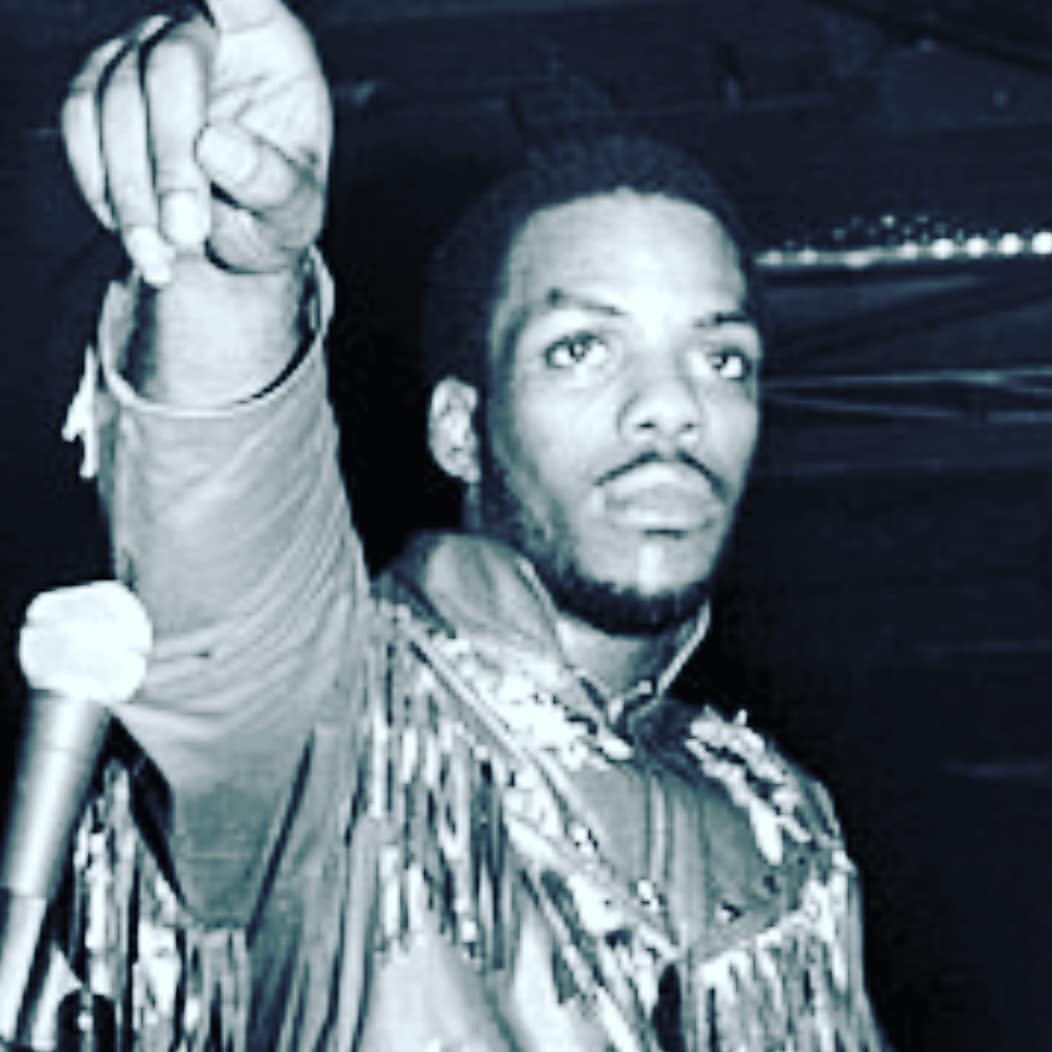

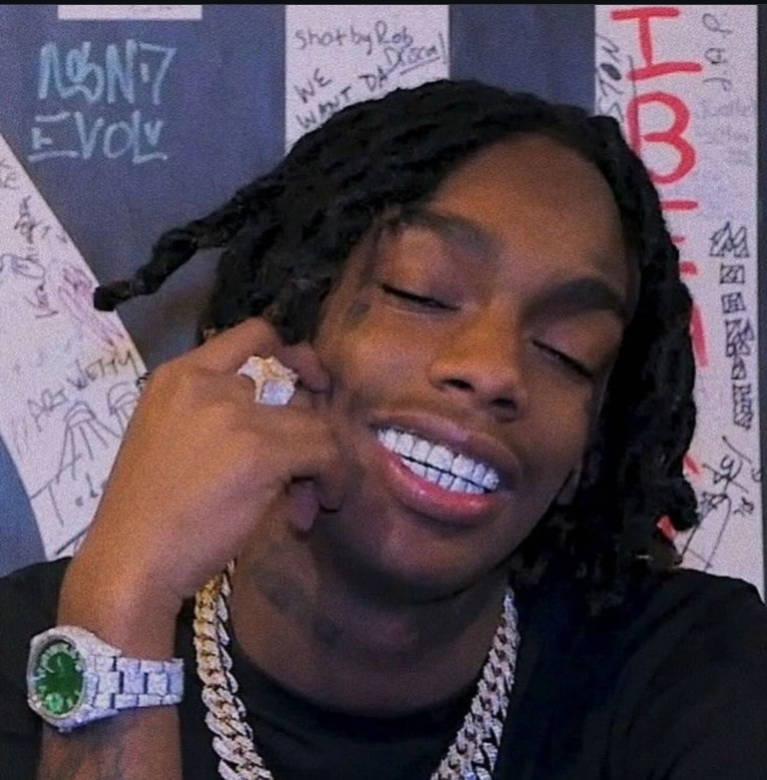
YNW Melly, born Jamell Demons on May 1, 1999 in Gifford, Florida, is a rapper who rose to fame in 2018 with ‘Murder on My Mind.’ After mixtapes like We All Shine, his career was upended when he was charged in a 2018 double murder, a capital case that remains ongoing.
Key Facts
- Real name: Jamell Demons
- Born: May 1, 1999 — Gifford, FL
- Role: Rapper
- Breakout: ‘Murder on My Mind’ (2018)
- Note: Charged in 2018 double murder; capital case ongoing
YNW Melly has been in Broward County Jail since February 13, 2019. By the time his retrial begins on January 6, 2027 — if that date holds — he will have spent more than eight years in pretrial custody on a capital double-murder case that the state has already failed to win once. The legal questions about that night in October 2018 haven’t gotten clearer in the meantime. What has gotten clearer is how the machinery around the case works: the mistrials, the dropped side charges, the denied bonds, the federal lawsuit over solitary confinement, the rumors that fill every silence. This is what a high-profile capital case looks like when it stretches across a decade. It’s also what pretrial power looks like when nothing forces the state to either prove or release.
From Viral Talent to Capital Defendant
Before the arrest, Jamell Demons was part of a melodic Florida rap wave that broke nationally in 2018 — “Murder on My Mind” was the breakout, and its title would, within months, function as a kind of dark omen looped endlessly by tabloids and TikTok. The sources reporting on his case today don’t dwell on the music. They dwell on the machinery.
Melly has been in custody since February 2019, charged with first-degree murder in the October 2018 killings of Anthony “YNW Sakchaser” Williams and Christopher “YNW Juvy” Thomas Jr., both close friends and YNW collective members. [AllHipHop] Prosecutors allege Melly and co-defendant Cortlen “YNW Bortlen” Henry shot the two men inside a car after a Fort Lauderdale recording session and then staged the scene to look like a drive-by. [Billboard] Melly has pleaded not guilty and maintained throughout that he was asleep when the shootings happened. [AllHipHop]
That framing matters, because every later development in the case lives in the gap between two irreconcilable readings: a state theory in which the artist executed his own circle, and a defense narrative in which a famous Black defendant is being slowly worn down by a system that already missed its shot.
The Mistrial That Started the Long Grind
The first trial finally began in summer 2023, more than four years after the arrest. After weeks of testimony, jurors deadlocked — reportedly 9-to-3 in favor of conviction on lesser manslaughter charges, but unable to reach unanimity on the murder counts. [Hip Hop Democrat] Judge John Murphy III declared a mistrial. Florida quickly signaled it would retry rather than walk away.
What followed wasn’t a rapid reset, which is what defendants normally see after a deadlocked jury. It was a slow, public erosion of every assumed timeline. The retrial was initially targeted for September 10, 2025. [AllHipHop] In June 2025, the defense moved to postpone to 2026, arguing Melly’s deteriorating physical and mental health made it nearly impossible for him to stand trial. [The Source] The date then drifted further — first into spring 2026, then, after an evidentiary appeal worked its way through Florida’s appellate courts, all the way to January 2027. [Billboard]
If that date sticks, Melly walks into his second trial roughly eight years after his arrest. Even in the heaviest capital and RICO cases, that timeline is extreme — and it has become the central critique of his confinement.
The Federal Lawsuit and the Question of Conditions
In November 2024, attorney Michael A. Pizzi Jr. filed a 12-page federal lawsuit on Melly’s behalf against the Broward Sheriff’s Office, alleging that his client had been held in conditions that “shock the conscience” and could not be imagined “even in a third-world country.” [HipHopDX] The complaint laid out claims that have shaped public perception of the case ever since: roughly three years in solitary confinement at that point, no phone calls or visits with family — including his mother — over that stretch, and alleged interference with attorney access. [HotNewHipHop]
The suit framed those conditions as violations of the First, Fifth, Sixth, Eighth, and Fourteenth Amendments — a kitchen-sink constitutional argument designed to do two things at once: try to force release, and reframe the case as a civil-rights matter rather than a tabloid story. [HotNewHipHop] Pizzi argued the state’s intent wasn’t just detention but psychological pressure: “They’re attempting to break him psychologically and achieve a result unattainable through the judicial process.” [AllHipHop]
A federal judge initially took the claims seriously. In late 2024, U.S. District Judge Melissa Damian ordered Broward County officials to explain by December 6 why Melly should not be released given the conditions described. [AllHipHop] For a moment, it looked like the conditions argument might do what bond hearings couldn’t.
It didn’t. In August 2025, Judge Damian dismissed the habeas petition, citing the Younger abstention doctrine — the rule that bars federal courts from intervening in active state criminal cases absent bad faith or irreparable harm — and finding that Melly hadn’t exhausted state-level remedies first. [HotNewHipHop] The dismissal was “without prejudice,” meaning Melly could refile after working through state court. [AllHipHop] Procedurally clean. Functionally, it closed the fastest door he had.
The Witness-Tampering Case That Collapsed Overnight
While the murder case crawled, the state had been holding a second knife to Melly’s throat. In October 2023, prosecutors charged him with witness tampering, alleging he had tried to dissuade his ex-girlfriend Mariah Hamilton and her mother from testifying. [WBLK] By the time the case approached trial, it had grown into four charges total: witness tampering, directing the activities of a criminal gang, criminal solicitation to commit murder, and conspiracy to tamper with a witness on a capital case. [Rolling Stone]
Then, on January 20, 2026 — one day before jury selection — Broward prosecutors dropped all four. [Rolling Stone] Melly’s newly retained attorneys, Drew Findling and Carey Haughwout, were sharp in the statement they issued: “As his newly retained legal team, it became immediately apparent to us that no crimes had occurred. Unfortunately, for 652 days while these charges were pending, the State did not reach the same conclusion until the cusp of trial.” [The Source]
That collapse mattered for two reasons. The first is direct: Melly walked away from a parallel capital-adjacent prosecution that had been used as leverage for nearly two years. The second is rhetorical. If the state needed 652 days to figure out that the tampering charges didn’t hold, the defense had a clean talking point to wield going into the main case — and a clean argument for bond, which Findling and Haughwout immediately made: with the tampering case gone, “the premises” of his harshest detention conditions had been “abandoned.” [WBLK]
April 30, May 6, and the Fourth Bond Denial
Online, the dropped tampering charges set off a wave of speculation that Melly would walk free on April 30, 2026. The Source had to write an explainer pointing out, plainly, that no verified information backed the rumor — April 30 was a bond hearing, not a scheduled release, and the double-murder case “has not been dismissed.” [The Source]
The hearing on April 30 was an Arthur hearing — the Florida procedure by which a capital defendant can seek pretrial bond by showing that the state’s evidence isn’t strong enough to justify continued detention. [Artvoice] It ran four hours. Five witnesses took the stand. Melly’s team had also done unusual prep work, designating a specific Broward County residence where he would live under supervision for the eight months until trial — answering, before the judge asked, the practical objections to releasing a death-penalty defendant. [Artvoice] Judge Martin S. Fein deferred his ruling. May 1, the next day, was Melly’s 27th birthday; he spent it in jail. [Artvoice]
The written order came on May 6. It was a denial. Judge Fein concluded that “the State’s evidence is arguably sufficient to convict and is not contradicted in a material respect such that there is a substantial question of fact as to the guilt or innocence of the Defendant.” [Billboard] Under Florida’s Arthur standard, that finding alone closes the door — proof of guilt evident, presumption great, bond denied. It was Melly’s fourth bond denial, and Findling and Haughwout’s response was unusually pointed for a defense team: they invoked the case of Cole Allen, the man accused of opening fire near a White House event, who had been moved through the system rapidly, to draw a sharp contrast with their client’s seven years and counting in solitary. [AllHipHop]
That comparison was strategic. It moved the argument off Melly specifically and onto the question every defense attorney in a long-detention case ends up asking out loud: what makes one defendant worth eight years on hold and another worth a hearing in eight days?
The Wire Rumor and the Modern Rap-Trial Information Climate
In early March 2026, social-media chatter — amplified by AllHipHop contributor illseed — claimed Melly’s mother, Jamie Demons-King, had worn a wire in an attempt to capture statements that would help her son’s defense. [The Source] The story circulated with the texture of a leak — sourcing, motive, alleged backfire all packaged together — and traveled fast. The reporting that followed was careful to note that no court records or official statements confirmed any wire existed. [The Source]
The wire rumor is useful less as fact than as illustration. Around it sat the misread April 30 release date, the misread tampering dismissal as some kind of broader victory, and the running fan debate over whether prosecutors even have a coherent motive theory anymore. [HotNewHipHop] Melly himself had to push back against premature reporting that his early-May bond request had already been denied, posting from inside: “Bond was not denied Fake News. Still waiting [prayer hands] God 1st.” [HotNewHipHop] Days later, of course, the actual ruling came down — and it was a denial.
This is the modern rap-trial information climate in miniature. The court moves slowly and speaks in written orders. The internet moves fast and speaks in screenshots. The space between them fills with whatever clicks.
The State’s Bet and the Death Penalty Question
One detail keeps getting buried under the timeline noise. Prosecutors are seeking the death penalty, and Florida’s recent change to its capital-sentencing law lets a jury recommend a death sentence with an 8-4 vote rather than a unanimous one — a lower bar than nearly every other state. [AllHipHop] The mistrial in 2023 reportedly went 9-3 for conviction on lesser charges. [Hip Hop Democrat] Under the new law, an identical split at the penalty phase could now produce a death sentence.
That changes the analysis of every defense move. The witness-tampering dismissal isn’t just a procedural win; it strips a piece of context the state could have used to argue dangerousness. The conditions lawsuit isn’t just about getting Melly out of solitary; it’s about preserving his ability to participate meaningfully in his own defense. The bond push isn’t just about freedom before trial; it’s about not entering trial as a defendant who has already been disappeared from public life for nearly a decade.
Prosecutors, for their part, are working from the same evidentiary base they had in 2023 — cellphone data, surveillance footage, forensic analysis placing Melly at the scene — plus whatever the upheld December 2023 evidentiary ruling allows them to introduce. [AllHipHop] [miixtapechiick] Judge Fein’s bond order is also a tell: when a court writes that the proof of guilt is “evident” and the presumption of guilt “great,” it’s telegraphing how the state’s case still reads to the bench. [Billboard]
Why This Case Matters Beyond Melly
Strip away the rapper element and Melly’s case lays bare a set of structural questions hip-hop has been circling for years. The first is pretrial detention as a de facto sentence. Seven-plus years in custody — and counting toward eight — without a conviction forces a reread of “innocent until proven guilty” in a system where the state can re-try until it lands the outcome it wants and where bond, in capital cases, runs through a standard most defendants never clear.
The second is conditions as leverage. Whether or not the federal courts ultimately rule the Broward solitary regime unconstitutional — they haven’t, and the first attempt to make them do so was dismissed — the lived reality of three-plus years in isolation with no family contact applies a pressure that no bond hearing meaningfully audits. [AllHipHop] Defense attorneys are open about reading it as designed to break their client. [AllHipHop] A jury sitting in 2027 will be asked to evaluate the cognition and credibility of someone who has been living that way since 2022.
The third is the wider lyrics-as-evidence climate in which all of this is unfolding. Melly’s situation sits adjacent to a broader wave of cases — Young Thug’s YSL RICO trial, the federal Diddy proceedings, the rolling debate over Drake and Kendrick’s diss tracks as legal exhibits — where prosecutors treat rap content, persona, and gang affiliations as direct evidence. Multiple states have moved to restrict the practice after a string of contested convictions. [Freedom Forum] Melly’s biggest song is literally titled “Murder on My Mind.” However that piece of evidence is or isn’t used at retrial, the climate around it is set.
What’s Left to Watch
The next real inflection points are narrow and known. Whether Melly’s team refiles a federal conditions claim after exhausting state remedies. Whether any additional pretrial motions reshape what evidence the jury hears in January 2027. Whether the appellate-level disputes over the December 2023 evidentiary ruling stay closed. [miixtapechiick] And, ultimately, whether the state can do in retrial what it couldn’t do in 2023: convince twelve jurors, unanimously, on the murder counts — or hold an 8-4 majority at the penalty phase under Florida’s new rules.
Eight years from arrest to verdict isn’t a quirk of one case. It’s an outcome the system permits. YNW Melly has become, almost by accident, the test instrument that tells us how much weight that permission can bear.
A Timeline of the YNW Melly Case
October 2018 — May 2026. Tap any event to expand.
The YNW Melly Discography: The Songs That Built — and Haunt — the Story
While the legal saga consumed the headlines, the catalog kept growing. Here are the records that made him — and the one that the state tried to use against him.
YNW Melly’s case is, in a real sense, inseparable from his music. The defining song shares a title with the charges. The mixtape that launched him sat in the Top 200 of the Billboard 200 while he was being booked. The features — Kanye, the late Juice WRLD — arrived in clusters around the most charged moments of his legal timeline. To understand the cultural weight of the case, you have to understand the catalog that made him visible in the first place. Below is the discography, by the numbers.
“Murder on My Mind” (2017/2018)
“Murder on My Mind” was uploaded to SoundCloud on March 4, 2017, and released as a single by 300 Entertainment on June 1, 2018, before being added to Melly’s debut commercial mixtape I Am You. [Wikipedia] Melly has said publicly that he wrote the chorus in early 2016, at age 16, during his first stint in jail — long before the October 2018 killings he would later be charged with. [NME] Produced by frequent collaborator SMKEXCLSV, the track is closer to horrorcore-leaning trap than to the melodic R&B Melly would lean into elsewhere. [Songfacts]
The commercial numbers are the part casual fans underestimate. “Murder on My Mind” peaked at #14 on the Billboard Hot 100 and #7 on the Hot R&B/Hip-Hop Songs chart, and is now certified 6× Platinum by the RIAA. [Wikipedia] On Spotify alone, the track has now passed 1.2 billion streams — making it not just Melly’s biggest record but one of the most-streamed singles of the entire 2018–2019 SoundCloud-rap generation that emerged alongside it.
The complication is well-documented. After Melly’s February 2019 arrest, “Murder on My Mind” went from breakout hit to evidentiary controversy. Prosecutors moved to use its lyrics — along with those of 55 other Melly songs — as evidence in his trial. [Wikipedia] A December 2023 ruling, later upheld on appeal, limited what the state can use, but the case became one of the most-cited examples in the ongoing national debate over rap lyrics as evidence. [Freedom Forum]
“Suicidal” and the Juice WRLD Remix (2019/2020)
“Suicidal” first appeared on Melly vs. Melvin, Melly’s debut studio album, released November 22, 2019 — while he was already nine months into pretrial detention. [Wikipedia] The album debuted at #8 on the Billboard 200, his highest-charting project to date. [Wikipedia] “Suicidal” itself peaked at #20 on the Hot 100, making it his second-biggest charting single behind “Murder on My Mind.”
What turned it into a generational record was the remix. After “Suicidal” went viral on TikTok in early 2020, an unreleased version featuring Juice WRLD surfaced from the Chicago rapper’s archives. The remix was released on March 13, 2020, almost exactly three months after Juice WRLD’s December 2019 death from an accidental drug overdose. [Hypebeast] It became Juice’s third posthumous feature, after appearances on Eminem’s “Godzilla” and G Herbo’s “PTSD.” [Wikipedia]
The pairing is, in hindsight, almost too symbolic to bear: an incarcerated rapper releasing a duet with a dead one, both barely out of their teens, both singing about wanting out. The track has since amassed more than 740 million Spotify streams — a number that keeps climbing every year that Melly stays inside and Juice WRLD’s catalog stays in heavy rotation.
“223’s” feat. 9lokkNine (2019)
“223’s” is one of the catalog’s stranger commercial successes. The track was originally released by Orlando rapper 9lokkNine on his December 2018 mixtape Lil Glokk That Stole Khristmas, then rebranded as a YNW Melly collaboration and re-released as the lead single from Melly vs. Melvin on August 9, 2019. [Wikipedia] By the time it dropped, Melly had been in custody for six months.
The song references a one-hour police chase Melly led through Albuquerque, New Mexico, after being pulled over for a broken tail light — the kind of true-crime biographical detail that hip-hop fans tend to pull toward gleefully. [Wikipedia] It went viral on TikTok and reached the top 40 of the Hot 100, eventually pulling close to 600 million Spotify streams. The song’s commercial trajectory — rebranded, viral, charting, all while the artist was unreachable — is a clean snapshot of how streaming-era hip-hop moves: the song doesn’t need the rapper to be free to keep generating.
“Mixed Personalities” feat. Kanye West (2019)
“Mixed Personalities” arrived January 18, 2019, on Melly’s second mixtape We All Shine — less than a month before his arrest. [Wikipedia] The Kanye West feature was a watershed: West had been collaborating with the next generation (Lil Pump on “I Love It,” a posthumous XXXTentacion track) but Melly was, at 19, one of the youngest. According to reporting at the time, West was introduced to Melly’s music through CyHi the Prynce and flew Melly to Los Angeles, where Melly previewed several We All Shine tracks before West asked to feature on “Mixed Personalities.” [Wikipedia]
West’s contribution is, notably, not a verse — he sings autotuned hook adlibs reminiscent of 808s & Heartbreak. [Stereogum] The Cole Bennett-directed Lyrical Lemonade video, featuring Melly and West among CGI robots in a grass field, became one of the year’s most-discussed visuals. [Hypebeast] The track has since pulled close to half a billion Spotify streams, and it remains the only Kanye-Melly collaboration ever released — reports of further studio sessions in Miami in early 2019 went nowhere after the arrest. [Stereogum]
“772 Love” (2017)
“772 Love” is the song that made the small Florida rap world pay attention to Melly before anyone else did. Named after the area code of his hometown of Gifford, Florida — a small community near Vero Beach — it’s a melodic R&B-leaning ballad that established the second mode of his catalog, the one that exists in counterpoint to the trap-and-violence tracks: love songs to places, women, and a life he kept losing. The track has amassed more than 400 million Spotify streams and remains one of his most-played early records.
The 772 framing is also important context for the legal story. Gifford is where Melly grew up alongside the men he is now charged with killing — YNW Sakchaser and YNW Juvy were childhood friends from the same area. [Yahoo News] The intimacy of the geography — one tiny Florida town producing the YNW collective — makes the prosecution’s theory of the case harder to wave away as random street violence and makes the catalog’s repeated references to that place hit differently in retrospect.
Notable Mentions: “Mama Cry,” “Virtual,” “Freddy Krueger”
Below the top tier sits a layer of tracks that defined Melly’s sound for early fans and continue to generate significant streams. “Mama Cry,” track six on I Am You, dropped August 3, 2018 — a confessional ballad addressed directly to his mother, full of remorse for the trouble he had brought to her door. [Musician Wages] Jamie Demons-King has been Melly’s most consistent public advocate since his arrest, which gives the song a kind of recursive weight: the artist mourning the pain he caused his mother before the worst chapter even started.
“Virtual (Blue Balenciagas)” was the first single from I Am You, released April 5, 2018, and remains one of the cleanest examples of Melly’s melodic-flow signature — the rapid melodic delivery over knocking trap percussion that influenced a wave of late-2010s Florida and Atlanta rap. [Wikipedia] “Freddy Krueger,” a 2018 collaboration with Detroit rapper Tee Grizzley, is the closest the catalog gets to straight-ahead horror-trap — aggressive, fast, full of slasher-movie imagery — and it remains a streaming staple that fans return to whenever the case generates a fresh news cycle.
The Catalog That Wouldn’t Stop Growing
One of the strangest facts of the Melly story is that he has continued to release music throughout his incarceration. Melly vs. Melvin in 2019, Just a Matter of Slime in 2021, and the Melly 4 Real deluxe and follow-up tapes have all dropped while he was in Broward County Jail. As of his most recent industry-tracked numbers, his catalog has surpassed 5 billion combined streams, and his Spotify monthly listeners regularly cross 8–10 million during news cycles tied to the case.
That trajectory is not really a story about studio access — some of these projects draw on stockpiled material recorded before the arrest or vocal recordings made via phone — but a story about how the modern streaming model has uncoupled commercial momentum from the artist’s physical presence. Drake-and-Kendrick beef cycles, Diddy verdict cycles, Young Thug RICO cycles all spiked their respective catalog streams. Melly’s case has been doing that, quietly, for nearly seven years.
The Songs and the Case Can’t Be Separated
Hip-hop has never been great at separating biography from text, and Melly’s situation is the hardest possible version of that test. “Murder on My Mind” was written by a 16-year-old in jail, in 2016. It was released as a single in 2018. The shootings he is accused of committing happened later that same year. The mistrial was 2023. The retrial is January 2027. Each of those points sits inside the same catalog the streaming algorithm keeps serving to new listeners.
The work, in other words, doesn’t care about the timeline. The platforms don’t care. The fanbase doesn’t really care, either — if anything, the case has hardened it. What matters about the discography, in 2026, is that it has become the soundtrack to a legal proceeding that the artist himself hasn’t been able to participate in for seven years. Few artists have ever produced a body of work that comments so directly, so accidentally, and so brutally on the situation it ended up describing.