
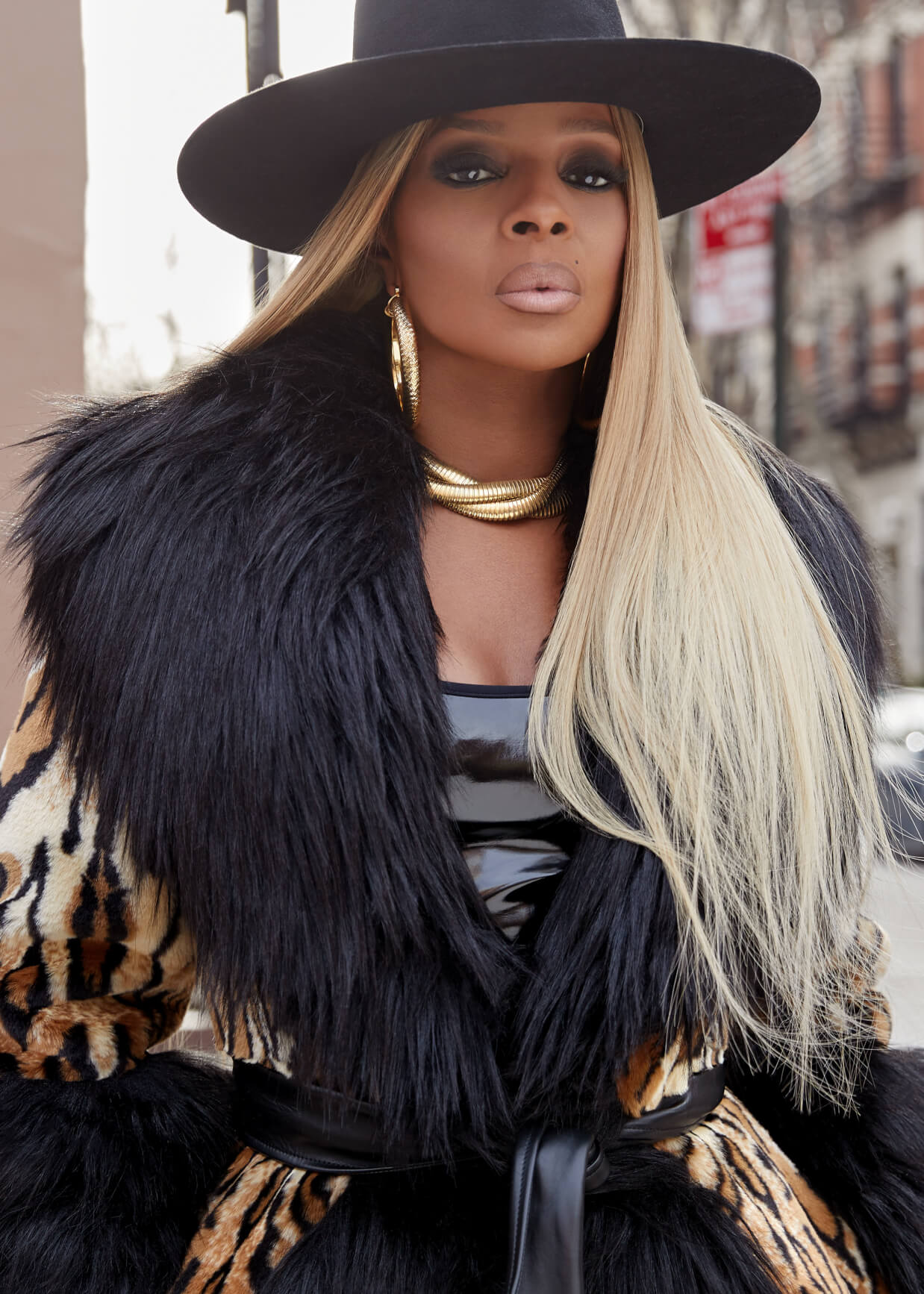
On Monday, November 23, a three-judge panel of the Second Circuit affirmed the dismissal of Tuff City Records’ lawsuit over Mary J. Blige’s “Real Love.” [Second Circuit] The label, whose legal name is TufAmerica, had argued that the 1992 single carried an uncleared piece of “Impeach the President,” the 1973 Honey Drippers record it holds the rights to. [MBW] Blige was never a party. The defendant was Universal’s publishing arm. [AllHipHop] Billboard first reported the decision. [Billboard]
The headline is that Blige’s hit is in the clear. The stranger fact is inside the order: the publisher did not dispute that copying happened, and it won anyway. [Second Circuit] That is possible because a sample touches two copyrights, and this case shows them pulling in opposite directions.
Three Records, One Break
“Impeach the President” was a self-released protest funk single, written by Roy C. Hammond and recorded by the Honey Drippers. [Courthouse News] [Wikipedia] Its opening drums became hip-hop raw material after Marley Marl rebuilt them for MC Shan’s “The Bridge” in 1986. [Wikipedia] The database WhoSampled counts more than 800 songs that have used the break. [Courthouse News]
The line to Blige runs through Brooklyn. In 1987, Milk Dee of Audio Two lifted the break’s kick, snare and hi-hat and, with Stetsasonic’s Daddy-O co-producing, came out with a different pattern. The two men remember the session differently. [Micro-Chop] In Stereogum’s telling, the lurching beat came from a playback mistake they decided to keep. [Stereogum] The result was “Top Billin’,” a B-side that outgrew its A-side. [Micro-Chop]
Five years later “Real Love,” from Blige’s debut What’s the 411?, reached No. 7 on the Hot 100. [MBW] Tuff City’s complaint traced its drums back through “Top Billin’” to the Honey Drippers. [Second Circuit]
What the Panel Decided
A copyright claim needs two things: proof that the defendant copied, and proof that what it took leaves the two works substantially similar. Songs of Universal did not contest the first, so the court assumed it and moved to the second. That question turns on how the works strike an ordinary listener. [Second Circuit]
Chief Judge Raymond Lohier and Judges Barrington Parker and Myrna Pérez found the overlap too thin. The songs share some percussion, the order says, but the hi-hats are open in one and closed in the other, and the snare and kick rhythms differ. Then the panel stepped back to the whole record: a male group, call-and-response, horns and guitars on one side, a woman’s voice over piano and percussion on the other. Its conclusion was that “the works as a whole are distinct.” [Second Circuit]
The panel leaned on its own 2024 decision that Ed Sheeran’s “Thinking Out Loud” did not infringe “Let’s Get It On,” a case the Supreme Court declined to hear in June 2025. [MBW] From it the judges carried over two points: notes, rhythms and chords are basic building blocks that generally cannot be owned, and overlap in some rhythmic elements alone does not make a claim. [Second Circuit]
That tracked Judge Dale Ho, who dismissed the case in September 2025 and wrote, “The songs do not sound the same.” He noted that the two drum segments Tuff City put side by side each ran under a second, in a track of nearly four minutes, and that the label’s hand-drawn transcriptions seemed to show the compositions were different. [S.D.N.Y.]
Settled as a Sound, Beaten as a Song
Every sample touches two properties: the recording, and the composition underneath it. Tuff City holds both for “Impeach the President.” [Second Circuit] On the recording side, the label’s own complaint said it had already reached an agreement with UMG Recordings over the sample on the “Real Love” master. [MBW] A trial-court order describes the sealed document in the case as that settlement. [S.D.N.Y.] The appeals court left it sealed, finding Tuff City forfeited its objection by not opposing the sealing requests when they were made. [Second Circuit]
So inside one corporate family, the recorded-music side came to terms and the publishing side fought and won. [Complex] Billboard’s legal coverage has framed the gap this way: sampling a sound recording directly calls for a license, while the rules for the composition underneath are less settled. [Rolling Out] The Second Circuit declined to say whether the two rights cover the same ground, because Tuff City sued only on the composition. [Second Circuit]
Here is this publication’s reading, not the court’s. The differences the panel leaned on, snare and kick rhythms that no longer match the original, are the kind of change a rearranged break produces. The more thoroughly a producer flips a break, the less the result resembles the song it came from, and resemblance is what composition law measures. Chopping is hip-hop’s craft. Here it also worked as a legal buffer.
The 3.15 Percent Question
One detail sits oddly beside all this. In 2014, TufAmerica sued Universal and its then-parent Vivendi over Frank Ocean’s “Super Rich Kids,” which the suit said sampled “Real Love.” [MBW] In that complaint the company said it owned 3.15 percent of “Real Love” itself, as “a consequence of a series of agreements relating to” the Honey Drippers record. [Music Times] Coverage at the time tied the stake to an earlier agreement over the sample in Blige’s song. [Complex]
Ten years later the same company told a court that the “Real Love” composition contained an uncleared sample and that Universal’s publisher had refused to negotiate. [MBW] No reporting reviewed for this piece explains how the two positions fit. They may fit easily. The 2014 share could attach to the recording, or to an agreement that has since ended, and the sealed settlement may hold the answer. The 2014 complaint was not obtained for this article, and nothing here suggests either filing was improper. It is a question the public record leaves open.
Thirty-Five Years of One Break in Court
Aaron Fuchs, a former music journalist, founded Tuff City in 1981, and the label made part of its living from records other people sampled. [Wikipedia] In 1994 he described the model to Billboard: “Here I was making money from sample clearances.” [SPIN] Tuff City first went to court over this break in 1991, over two Marley Marl-produced LL Cool J singles. [Yahoo] That case settled. [Complex]
The later record is mixed. Suits against Jay-Z and the Beastie Boys were thrown out in 2014 and 2015, and one against Kanye West settled. [MBW] The label has also been a defendant. Courthouse News reported that Hammond’s heirs sued Tuff City and Fuchs in 2021 over money they said the estate was owed, including royalties from “Impeach the President,” and that the sides settled on the eve of trial. [Courthouse News] The break has made money for decades. Who collects it has been argued from every direction.
What It Does Not Settle
The win is narrower than the headlines. It came as a summary order, which under the court’s own rules has no precedential effect. Tuff City’s argument that a different similarity test should apply was never reached, because the label had not raised it in the trial court. [Second Circuit] And the money is not finished. Judge Ho put off briefing on Universal’s attorneys’ fees until the appeal ended, with a status letter due seven days after the mandate issues. The original complaint asked for damages and profits, or statutory damages of up to $150,000, along with an order barring further use of the composition. Tuff City did not press that last request on appeal. [MBW]
Tuff City’s side deserves a plain statement. Its lawyer, Hillel Parness, told Rolling Stone the label will seek further review, and that the ruling would “upend decades of law” built around paying owners for samples even when the samples are reworked. [Rolling Stone] [V 101.9] The argument has force. The copying here is not disputed, and if a composition claim fails whenever a break is rearranged, the rights holders behind rap’s most-used drums have one less way to be paid. Against that, a rule that every borrowed half-second of rhythm buys a share of the new song would hand stakes in thousands of records to whoever holds a few old ones.
One Break, Two Bills
The plainest way to read Monday’s order is as a map of where sampling money can be collected. The sound of “Impeach the President” still has a price, and by Tuff City’s own account Universal’s label side came to terms over it. The song underneath has a price only when a listener can hear it, and three appellate judges, like the trial judge before them, could not. Hammond wrote a record about holding power to account. Fifty-three years later its drums are still being audited.
 Go deeper: ask our chatbot about “Real Love” and the “Impeach the President” break →