

An indictment is an accusation, not a finding of guilt. Rodarius Green, who performs as Rod Wave, has pleaded not guilty to every count described here and is presumed innocent. So is his co-defendant. Every allegation below is attributed and unproven.
A Fulton County grand jury turned a stop-sign arrest into three counts. Georgia law makes the gun count wholly dependent on the drug count, and the drug count rests on how one officer read one request.
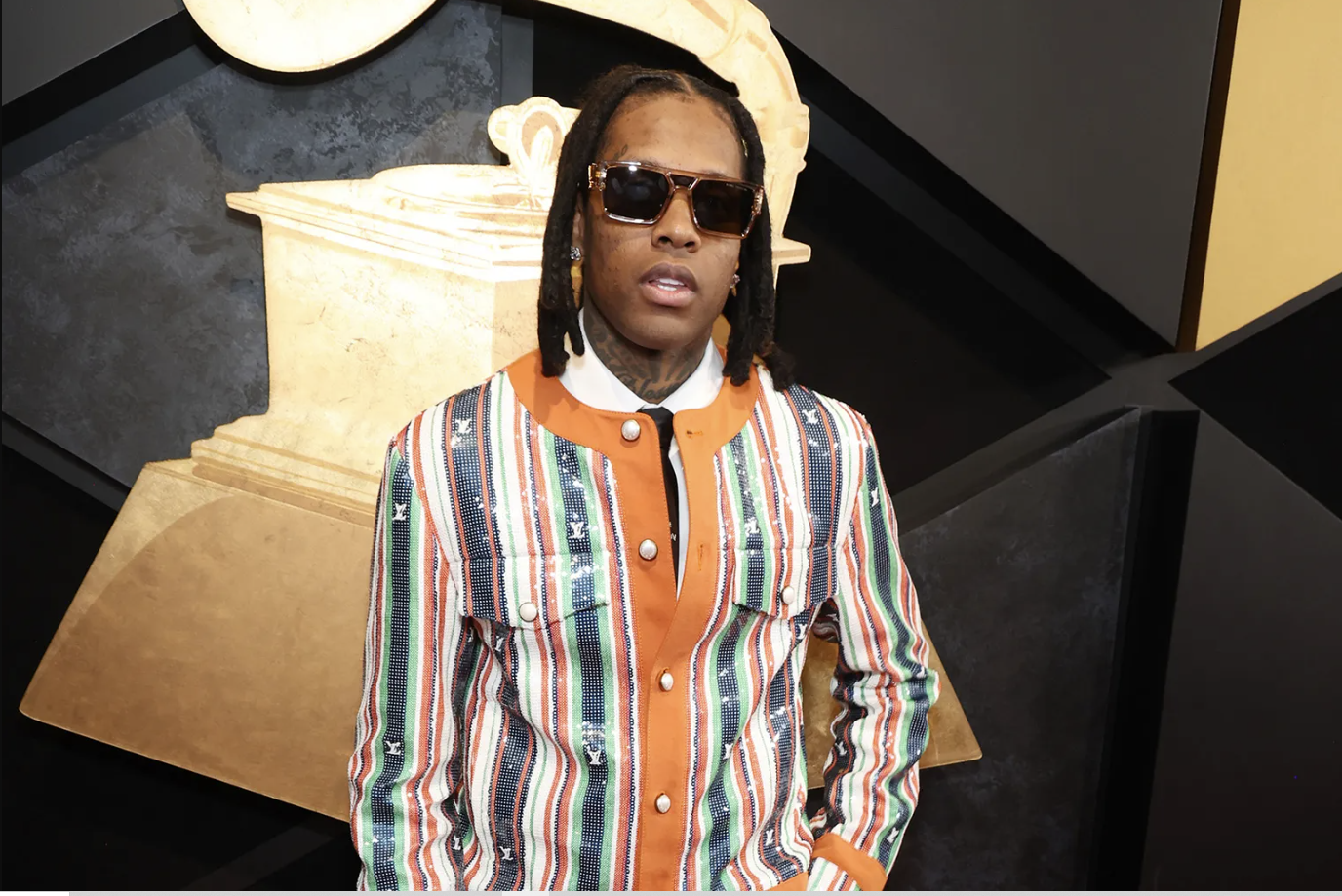
Rod Wave was booked to play State Farm Arena on Wednesday and Thursday night, in the same county where a grand jury indicted him three weeks ago. [State Farm Arena] Most coverage has treated that indictment as a rap sheet update. Read against the Georgia code and the original arrest warrant, it looks more like a chain with three links, and each link holds only if the one before it does.
I. What the Grand Jury Kept
The indictment, returned Oct. 30 and unsealed this month, charges Green with possession of a Schedule II controlled substance, possession of a firearm during the commission of certain felonies, and misdemeanor reckless driving. [Rolling Stone] He pleaded not guilty on Nov. 5, twelve days before TMZ broke the story. [MIIXTAPECHIICK] [TMZ] The indictment identifies the drug as oxycodone. [CBS News Atlanta]
Less noticed is what the grand jury never saw. Green was booked last November on a fourth charge, possession of a Schedule V substance, after an officer reported finding suspected promethazine. [Atlanta News First] Court records mark that count “not present to grand jury.” The same thing happened in his other Fulton County case: he was booked on 13 or 14 charges, depending on the outlet, including aggravated assault, and indicted on six, none of them assault. [MIIXTAPECHIICK] [Billboard] Twice now the booking sheet made the headline and the indictment told a narrower story.
II. The Count That Carries the Weight
Georgia’s firearm statute is blunt. Anyone who has a gun “on or within arm’s reach” while committing a felony that involves possessing a controlled substance commits a second felony, punished by “confinement for a period of five years,” served consecutively to any other sentence. [O.C.G.A. § 16-11-106] The indictment, as Rolling Stone describes it, borrows the statute’s own words, alleging a gun “within arm’s reach.” [Rolling Stone] Whether the gun is otherwise legal does not matter. Georgia has not required a carry license since 2022, the warrant says neither gun was found to be stolen, and no reported count alleges Green was barred from having one. [Office of the Governor] [Atlanta News First] Case notes published with the statute cite a Georgia appeals court finding “no exception” for a person in otherwise lawful possession.
The same notes carry the line that matters most here: a conviction on the gun count “must stand or fall in conjunction with the underlying felony.” [O.C.G.A. § 16-11-106] So the firearm charge is not really a second accusation. It is the first one with a multiplier attached. Simple possession of a Schedule II narcotic is graded by weight, starting at one to three years for less than a gram, and the weight in this case has not been reported. [O.C.G.A. § 16-13-30] At the low end, the count that depends on the pills is heavier than the pills. One caution: the statute’s explicit ban on suspending or probating the sentence sits in its subsection on repeat convictions. This is our reading of the code, not a sentencing forecast.
III. One Sentence in a Warrant
So what ties Green to the oxycodone? According to the warrant, as reported by Atlanta News First, a search of the car turned up the pills, a second handgun and “a black backpack that contained a large sum of cash wrapped in several bundles.” Asked whether he wanted his property released to anyone, Green said he would like to give “the backpack with the money and his vehicle” to his fiancée, who had come to the gas station. The officer wrote: “Based on this statement, Green made a spontaneous claim to the backpack with the suspected Schedule-II narcotics.” The same warrant says neither man claimed any of the suspected drugs. [Atlanta News First]
By this week that sentence had been compressed. TMZ wrote that Green “allegedly admitted the backpack was his.” [TMZ] AllHipHop kept the distinction, reporting that the officer “interpreted that request as claiming the backpack.” [AllHipHop] The gap between those two phrasings is the case. A man under arrest asking that his fiancée take his cash and his car is not obviously a man confessing to whatever else is in the bag, and a jury may be asked to decide which it was.
IV. The Passenger’s Heavier Count
Most of the national coverage we reviewed did not mention that Green was indicted alongside his passenger, Jamond Byner. Byner was booked that night on misdemeanor marijuana possession, a Schedule V charge and a firearm charge. [Atlanta News First] The grand jury indicted him for trafficking controlled substances and the same firearm offense. [Atlanta News First] Green is not charged with trafficking. [MIIXTAPECHIICK]
Trafficking in Georgia is defined by quantity and carries mandatory minimums; four grams of certain opiates is enough to trigger five years. [O.C.G.A. § 16-13-31] Which substance and what weight sit behind Byner’s count has not been reported, and neither has his plea. But the split is revealing. The state appears to have put the weight on the passenger and the bag on the driver, which leaves the backpack sentence as the only reported thread connecting Green to the pills at all. Byner is also the one person on record contradicting the officer, telling him the two “were not driving reckless.” [Atlanta News First] He now faces the heaviest count in the document.
V. Two Cases, One Argument
Green’s other case began in April 2025, when police came to his Milton home after a reported burglary and obtained a warrant covering the house and three of his vehicles. [MIIXTAPECHIICK] His lawyers have asked a judge to suppress the guns and ammunition found in them, arguing police had no reason to connect a gun allegedly seen in his GMC Denali to the burglary, and that a detective left out that the Denali arrived after the break-in. [Complex] [TMZ] As of Nov. 13 there was no ruling.
The traffic-stop case is headed the same way. The defense says the arresting officer belongs to the Atlanta Police Department’s Crime Suppression Unit and calls its approach “quota-driven,” a claim no judge has tested. [XXL] The warrant supplies material of its own: the officer wrote that he followed without lights or siren because “I had a suspicion that the vehicle would flee,” then made the arrest for reckless driving in a QuikTrip lot. [Atlanta News First] In both cases the defense is not disputing what was in the cars. It is disputing why police were looking.
The cases are also wired together. Green was out on a $50,000 bond that barred new offenses and weapons, and in June prosecutors moved to revoke it over the November arrest. [MIIXTAPECHIICK] A hearing was set for Sept. 28. We found no report of a ruling; jail records showed him out of custody Wednesday, and his team told DJ Akademiks the Atlanta shows would go on. [Atlanta News First] [HotNewHipHop] Note what that motion does not need: the backpack. The alleged Glock is enough to argue a violation on its own.
VI. A Statement Written for the Box Office
The defense’s response called the indictment “nothing but a formal charging document from an incident that occurred a year ago.” Then it changed the subject. “During the past year, Mr. Green has had an album that debuted at number one and a sold-out national tour,” it said, adding that the charges “are no more valid than they were a year ago.” [XXL] The album claim checks out: Don’t Look Down opened atop the Billboard 200 in September with 99,000 units, his fourth No. 1. [Billboard] The venue’s page still listed tickets on sale for both Atlanta nights when we checked Thursday morning, so we could not confirm the sellouts. [State Farm Arena]
A chart position is not a defense to a possession count. It is an answer to a different audience: promoters, insurers and ticket buyers who need to know he will show up. Green has been in a $27 million breach-of-contract fight with a former promoter over his Last Lap tour, and a revoked bond could stop this one. [HotNewHipHop] [MIIXTAPECHIICK] For a touring artist, the first cost of an indictment is counterparty confidence, and the statement was written to protect it.
The case and the career keep arriving on the same days. Green was arrested on the day he received his first Grammy nomination, and the indictment became public the day before a two-night arena stand in the county that is prosecuting him. [Atlanta News First] Nothing suggests the timing is deliberate. It is what a year-long case looks like for an artist who keeps working through it.
The Stop Sign
Some caution is owed. We did not obtain the indictment or the warrant; their details come from outlets that did. The pill weight, the basis of Byner’s count and the outcome of the bond motion are unreported. Outlets differ on whether the Glock was in a waistband or a pocket. The statutory reading above is ours, and no lawyer in the case has endorsed it.
Strip the case down and it starts with the smallest charge in it. A misdemeanor arrest for reckless driving produced the pat-down, the search and the backpack. The backpack produced the felony, and the felony is what makes the gun worth five years. Each link is contestable, and the defense has said it will challenge “the clear violations of Mr. Green’s rights in court.” [AllHipHop] None of that gets settled on a stage. The arena dates can sell and the tour can finish, and the case will still come down to a stop sign on Defoor Avenue and what a man meant when he asked that his fiancée take his bag.
 Go deeper: ask our chatbot about Rod Wave’s Atlanta case →