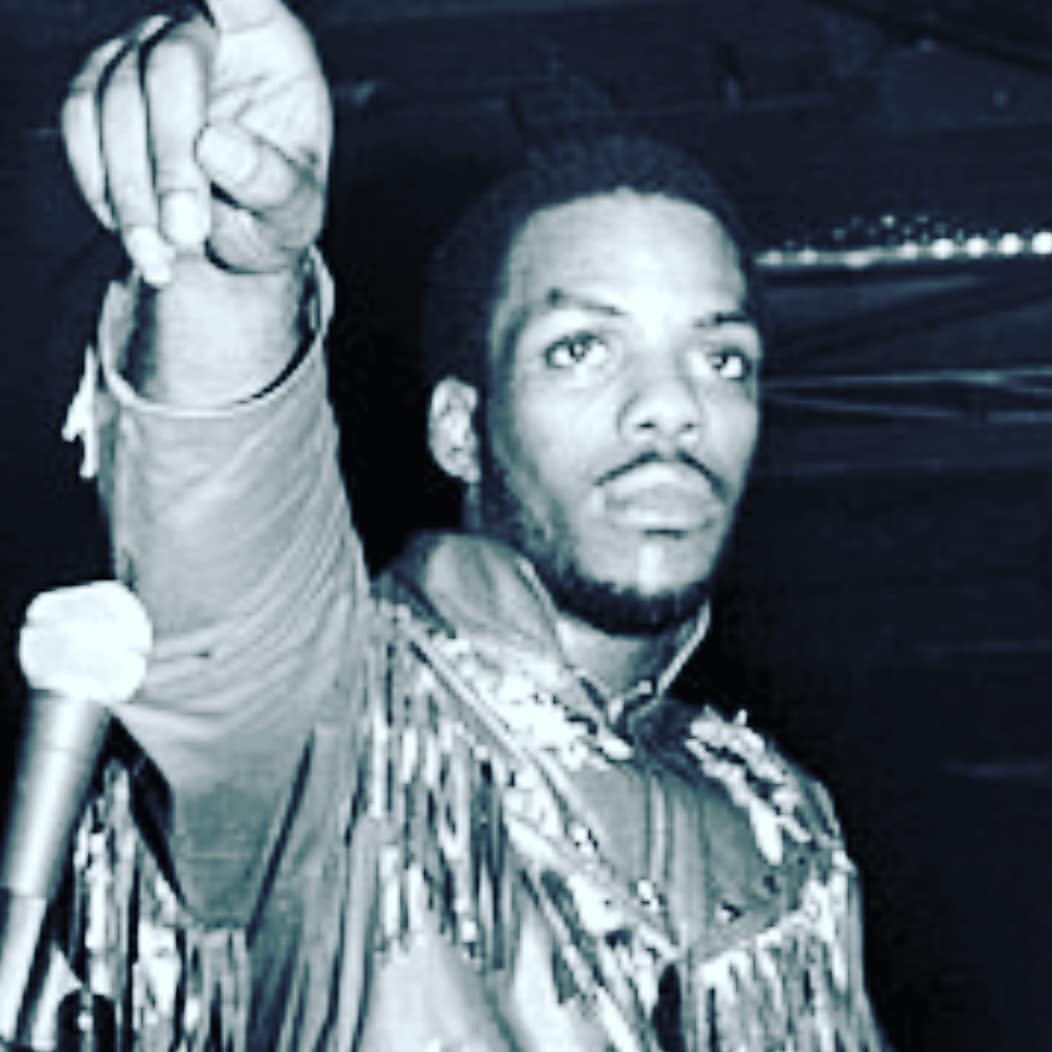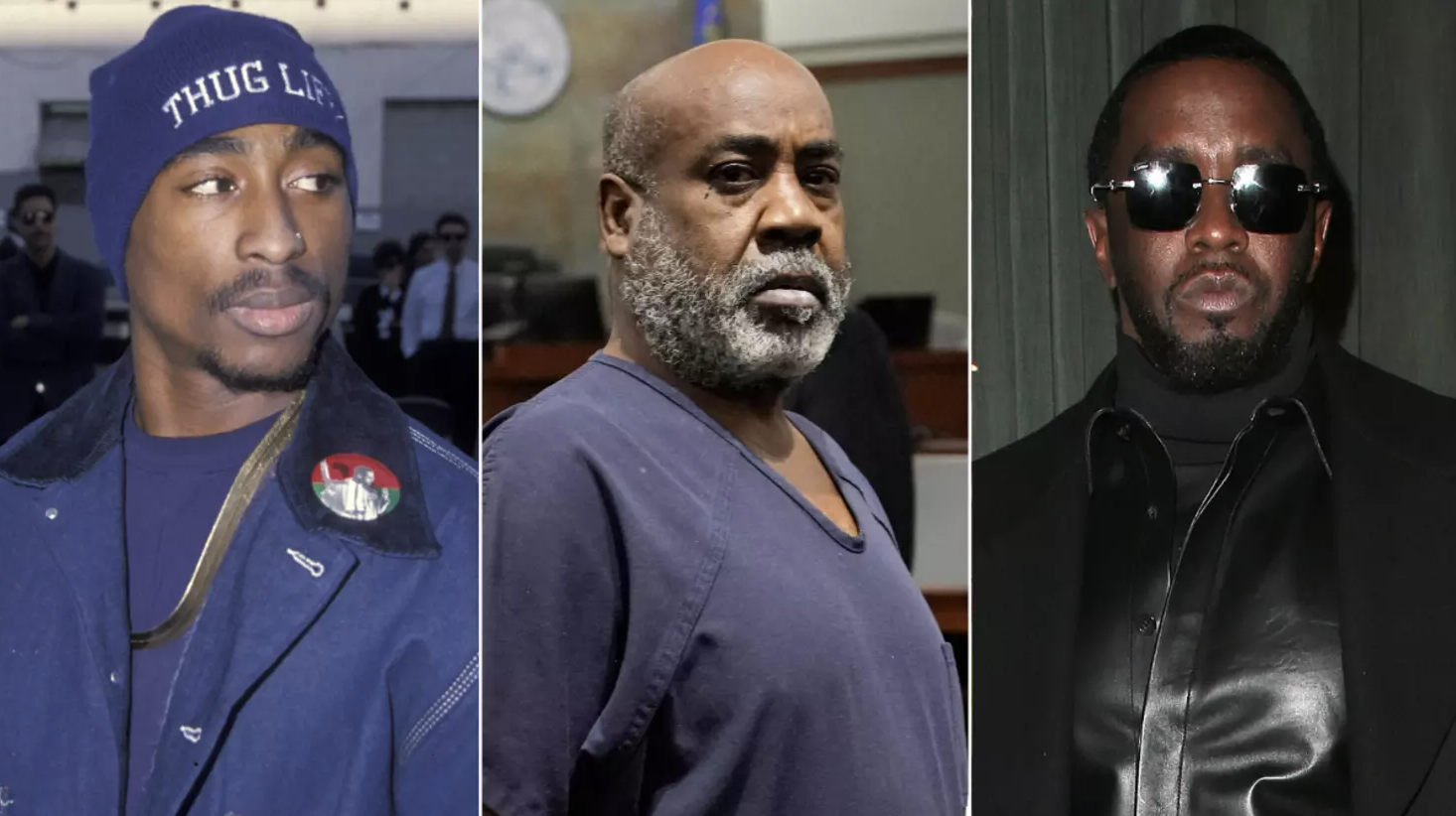

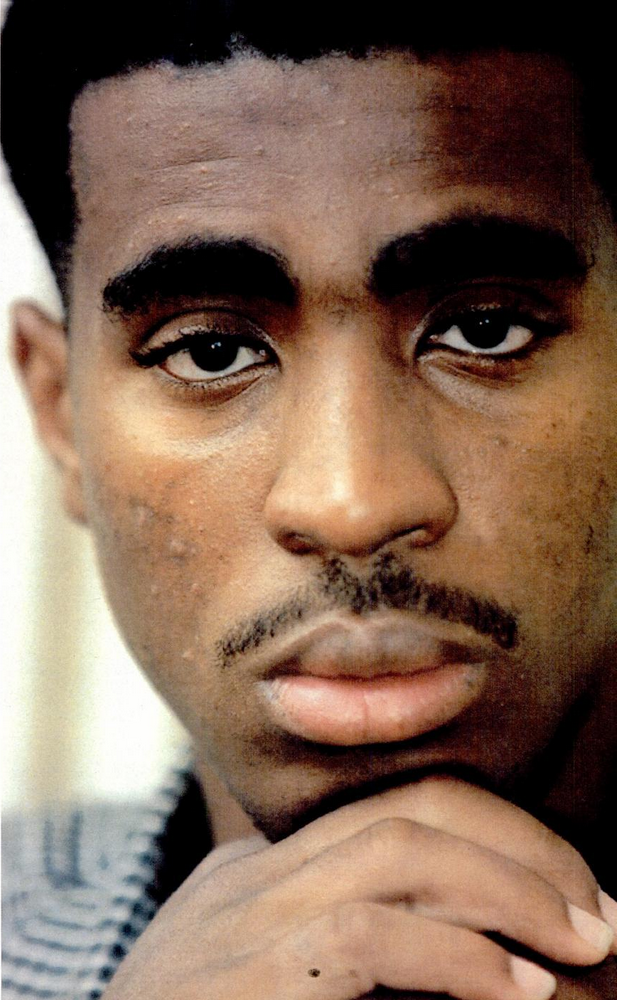
Orlando ‘Baby Lane’ Anderson was a 21-year-old Compton Crip widely identified by law enforcement, and later by his uncle Keefe D, as the man who fatally shot Tupac Shakur on the Las Vegas Strip on September 7, 1996. Anderson died in 1998 before ever being charged in the still-unsolved case.
Key Facts
- Real name: Orlando ‘Baby Lane’ Anderson
- Affiliation: South Side Compton Crips
- Allegation: Identified by police + uncle Keefe D as Tupac’s shooter (Sept 7, 1996)
- Died: 1998 (never charged)
- Status: Murder officially unsolved
Baby Lane and Keefe D: Inside Hip-Hop’s Most Consequential Unsolved Murder
Orlando Anderson was dead before he could be charged. His uncle has been talking for decades. Now the courts want answers.
Want to see what all the hip hop sites are saying about this? Ask it here
On the night of September 7, 1996, a chain-snatching, a lobby beatdown, and a white Cadillac connected into one of the most consequential hours in hip-hop history. Tupac Shakur was shot four times on the Las Vegas Strip at a red light, three hours after being beaten on security cameras at the MGM Grand. He died six days later. [The Source] The man allegedly beaten in that lobby — and, according to law enforcement and eventually his own uncle, the man who fired the shots — was Orlando “Baby Lane” Anderson, a 21-year-old South Side Compton Crip. [History.HipHop]
Anderson was never charged. He was killed in a separate Compton shootout in 1998. And for nearly three decades, Tupac’s murder remained officially unsolved — until Anderson’s own uncle, Duane “Keefe D” Davis, spent years telling the story publicly, then found himself indicted in 2023 for ordering the hit. [AllHipHop] This is how we got here.
Who Orlando Anderson Was
Orlando Tive Anderson was born August 13, 1974, in Compton, and raised primarily by his great-grandmother Utah Williams. [History.HipHop] His mother worked 12-hour shifts as a bookkeeper. By his half-brother Pooh’s account, he was a conscientious student who passed his exams at Taft High — the same school Ice Cube attended — before finishing at Dominguez Hills. He graduated in 1992, moved to Lakewood with his girlfriend Rasheena Smith (a nurse), and had three daughters. He dreamed about the music business.
He and Pooh co-founded Success Records and set up a small recording studio in a Compton garage. According to a business advisor named Greg Cross, the label was allegedly financed with settlement money from a lawsuit tied to a prior incident involving Death Row Records and Suge Knight. [History.HipHop] That prior incident is worth noting: Anderson had originally testified that Knight assaulted him at a studio, then flipped his story under circumstances that led a judge to conclude he was lying. Street rumor said he was paid to change his account. Whether or not that’s true, it shows a young man already orbiting the Death Row universe in complicated ways — years before Las Vegas.
Anderson was embedded in the South Side Compton Crips, no question. But the portrait his family painted wasn’t a stereotypical one: no drinking, no drugs, a father figure, an aspiring entrepreneur. [History.HipHop] That portrait doesn’t exonerate him from anything. It just makes the story more human than the shorthand allows.
The Chain That Started It
The chain that links Anderson to Tupac’s murder — literally — was a Death Row chain stolen months before Las Vegas. Death Row affiliate Trevon “Tray” Lane claimed Anderson and other Crips confronted him at a Lakewood mall Foot Locker and snatched his chain. [History.HipHop] Death Row chains weren’t just jewelry. They were markers of affiliation and status in the exact world where Suge Knight’s label and Compton street culture overlapped. Snatching one was a declaration. Lane remembered it.
September 7, 1996: The MGM Grand
Anderson drove to Las Vegas with Rasheena Smith for the Mike Tyson–Bruce Seldon fight. They checked into the Excalibur Hotel across from the MGM Grand. [The Source] After the fight ended, the sequence that set everything in motion unfolded in the MGM Grand lobby.
Trevon Lane spotted Anderson and pointed him out to Tupac. Security cameras captured what happened next: Tupac led a group assault on Anderson, attacking him in the lobby in front of witnesses. Multiple law-enforcement reconstructions describe Tupac as the one who “instigated” the attack. [History.HipHop] Anderson was beaten. Keefe D — his uncle, who was also in Las Vegas that night — would later say this was the moment that started the clock.
Roughly three hours later, Tupac was riding in a BMW driven by Suge Knight on Flamingo Road when a white Cadillac pulled alongside them at a light. Multiple shots were fired into the car. Tupac was hit four times. Suge was grazed. Tupac died at University Medical Center on September 13. [The Source] Two witnesses — Outlawz affiliates E.D.I. Mean and Yaki Kadafi — said they saw four men in the assailants’ vehicle. Kadafi died in a New Jersey housing project shooting two months later before police could secure his full cooperation. [The Source]
The Investigation That Stalled
The Las Vegas Metropolitan Police Department interviewed Anderson once. Briefly. Then effectively walked away from him as a prime suspect. [History.HipHop] Compton investigators placed his photo in mug-shot arrays and assembled enough informant testimony to identify him as “the Crip that Tupac attacked in the MGM Grand lobby hours before the shooting.” [The Source] At least one informant told police directly: Anderson was “the man who shot Tupac.”
LVMPD publicly “discounted” him despite that. No physical evidence tying him to the weapon was ever produced. No charges were ever filed. Anderson denied the shooting consistently — to VIBE magazine, to the Los Angeles Times, calling Tupac a “hero” he respected. [History.HipHop] In street terms, though, he had already been named. The reputation attached to him whether he wanted it or not.
May 29, 1998: Compton
Orlando Anderson never faced a courtroom over Tupac’s death. On May 29, 1998, the day his great-grandmother Utah Williams died after a fall, he went out with South Side Crip associate Michael Reed Dorrough to get food in Compton. They ended up at Rob’s Car Wash near Compton High School. [History.HipHop]
Anderson confronted a man named Michael Stone over a debt. Stone was with his nephew Jerry. A gunfight broke out between the two sides. Anderson shot Jerry Stone but was fatally wounded by Michael Stone. Dorrough, despite being injured, picked up Anderson’s gun and killed Michael Stone. Then he tried to drive from the passenger seat, crashed, and drew police attention from a nearby station. All four men were taken to Martin Luther King Jr.–Drew Medical Center. Only Dorrough survived. [History.HipHop] Orlando Anderson was 23 years old.
With Anderson dead, every narrative tying him to Tupac’s murder would have to be built on secondhand accounts, informant statements, and — crucially — his uncle’s words.
Keefe D: The Shot-Caller in the Room
Duane “Keefe D” Davis is Orlando Anderson’s uncle and a long-time South Side Compton Crips shot-caller. In the Crip organizational hierarchy of that era, Keefe was the decision-maker; Orlando was younger operational muscle. [AllHipHop] That chain of command is now central to the prosecution’s theory of the case.
Before any of this, Keefe already had a notable footprint in West Coast rap’s underworld. He played a role linking drug kingpin Michael “Harry O” Harris with Eazy-E during the early Death Row formation years, before Dr. Dre took the lead position. [History.HipHop] He and Suge Knight played Pop Warner football together as kids — Keefe as running back, Knight as center. His crew loaned a lowrider for an Usher video; Diddy, as the executive, paid to have it repaired afterward. [History.HipHop] These weren’t casual connections. Keefe sat at the intersection of Compton street power and industry proximity, which is exactly what made his position so volatile once September 7 happened.
The Proffer, the Book, and the Problem with Talking
In 2008 and 2009, facing serious federal drug-trafficking charges, Keefe D entered what he describes as a proffer agreement with a joint federal–LAPD task force. He says he offered information about the Tupac murder in exchange for immunity. In those sessions, he reportedly told investigators he was in the white Cadillac, that he orchestrated the retaliatory hit, and that Orlando Anderson fired the fatal shots. [HipHopDX] Courts have since found no binding immunity agreement exists. [AllHipHop]
Then — and this is where Keefe D’s story becomes its own kind of cautionary tale — he kept talking. He gave cryptic interviews to VLAD TV (“I’m not gonna go into details on that one. Keep the streets, homie.”). [The Source] In 2019, he published a memoir called “Compton Street Legend” that laid out his version of September 7 in explicit terms: he was in the passenger seat of the Cadillac, he “orchestrated the hit,” and his nephew Orlando pulled the trigger. He described the shooting as direct retaliation for the MGM Grand lobby beating. [AllHipHop] He then signed documentary deals. He did media tours. He monetized his proximity to one of hip-hop’s most famous unsolved murders for years.
Prosecutors now argue that everything he said publicly — outside any formal immunity context — is fair game. His own words, repeated freely across books and screens, became the backbone of the 2023 indictment. [AllHipHop] The irony is almost too clean: Keefe D’s decision to become a public raconteur is the precise reason he’s now facing murder charges.
The Diddy Thread
Complicating Keefe’s narrative — and arguably weakening it — is the “Diddy bounty” strand of his story. In some versions of his account, Keefe claimed that Sean Combs had allegedly offered a $1 million bounty on Tupac’s life, routed through Harlem figure Eric “Zip” Martin. [AllHipHop] He said he spent years trying to collect, even reportedly going undercover wired for authorities to try to prove the connection. [The Source] Federal prosecutors and Nevada officials have reportedly been collaborating on whether Diddy’s alleged ties to the murder have any evidentiary basis. [The Source]
The “Tupac: Cover-Up” documentary, directed by Richard Bond, pushes back on the Diddy angle directly. Bond argues that Keefe’s statements about Combs are inconsistent and likely self-serving, and that the long-standing “revenge hit” explanation — Crips retaliating for the MGM beating — remains far more supported by the evidence. [The Source] Bond also notes that Keefe has “recently disowned” his previous Diddy statements entirely. If Davis is lying and he’s the only surviving alleged eyewitness besides Suge Knight, there may be nothing reliable tying Diddy to any plot at all.
There’s a separate strategic logic to the Diddy thread worth naming: some reports suggest Keefe’s team considered calling Diddy as a defense witness, hoping a categorical denial from Combs would support the argument that Keefe’s confessions were fabricated for “fame and fortune” rather than reflecting reality. [HotNewHipHop] The more Keefe embellished over the years, the more material prosecutors have — but the more he contradicts himself, the easier it is for his defense to argue his statements weren’t credible confessions at all.
The 2023 Indictment
In September 2023, a Nevada grand jury indicted Duane Davis on one count of murder with use of a deadly weapon for orchestrating the 1996 killing. [AllHipHop] The theory: Davis, as a South Side Compton Crip shot-caller, ordered the fatal ambush in retaliation for the MGM Grand assault on his nephew. Prosecutors allege he was in the Cadillac and gave the green light for the shooting, though he didn’t personally fire the weapon.
The timing of the indictment wasn’t driven by new ballistics or new eyewitnesses. It was enabled by two things: Davis’s own years of public admissions, and the discovery of hotel records placing him in Las Vegas that night. [The Source] Detectives combing through old files found that a room at the Monte Carlo was booked under Keefe D’s wife, Paula Clemons, on September 7, 1996. An Excalibur room was booked under Orlando Anderson’s name. [The Source] Davis’s defense had claimed there was “no evidence placing him in Las Vegas” that night. The hotel receipts directly contradicted that.
Pre-Trial Chaos
The path to trial has been anything but straightforward. Davis picked up a jail-fight conviction at the Clark County Detention Center while awaiting trial, which got him transferred to High Desert State Prison — a sentenced prisoner awaiting a murder trial simultaneously. [AllHipHop] Multiple defense attorneys have withdrawn, with the jail incident cited as a contributing factor. Bond in the Tupac case has reportedly been set as high as $750,000, and judges have been skeptical of the financial arrangements presented to secure his release.
His defense strategy has focused on attacking the evidentiary foundation: lawyers argue prosecutors have nothing beyond his own statements, that too many witnesses are dead or imprisoned to mount a fair defense, and that the 2008 proffer agreement — which courts have thus far rejected as binding — should shield him from prosecution. [The Source] His team asked the Nevada Supreme Court to dismiss the charges outright. [AllHipHop] Lower courts have sided with prosecutors at every turn.
Meanwhile, the trial has been repeatedly delayed — from June 2024, to August, to March 2025, to an as-yet-unspecified date in 2026 — due to attorney turnover and the sheer volume of evidence: nearly 30 years of investigative files, media records, and forensics. [AllHipHop] [HipHopDX] Family members have publicly acknowledged another date change is likely. [The Source] Davis, for his part, signed a documentary deal promising extensive access to the trial — still monetizing, still talking, still the “Compton Street Legend.” [AllHipHop]
What This Case Actually Means
Nearly 30 years after a red light on the Las Vegas Strip, hip-hop’s most famous unsolved murder is finally heading toward a courtroom. The case the state has assembled is unusual: built almost entirely on the defendant’s own words, spoken freely and publicly over decades, with the anchor of hotel records tying him to the scene. [AllHipHop]
What makes it culturally significant goes beyond the legal outcome. This case is about the intersection of street codes, industry power, and the mythology that surrounds hip-hop’s most violent chapter. Orlando Anderson died without being charged, without trial, before any of this could be adjudicated. His name has been attached to Tupac’s death for nearly three decades based entirely on secondhand accounts and a beating caught on a lobby camera. [History.HipHop]
Keefe D’s decision to talk — to law enforcement in private, then to the world in public — is the through-line. He believed, for a long time, that he was untouchable. That the statute of limitations had run. That immunity covered him. That proximity to the story was a commodity, not a liability. [AllHipHop] He was wrong about at least some of that. How wrong the courts will decide.
The Tupac murder has never just been a cold case. It’s been a mirror for everything unresolved in rap’s most consequential era — the East Coast-West Coast divide, the Death Row empire, the violence at the edge of the industry. Whatever happens in a Nevada courtroom, the culture will be watching.
Want to see what all the hip hop sites are saying about this? Ask it here