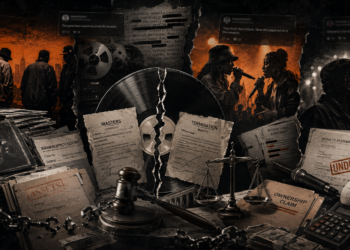

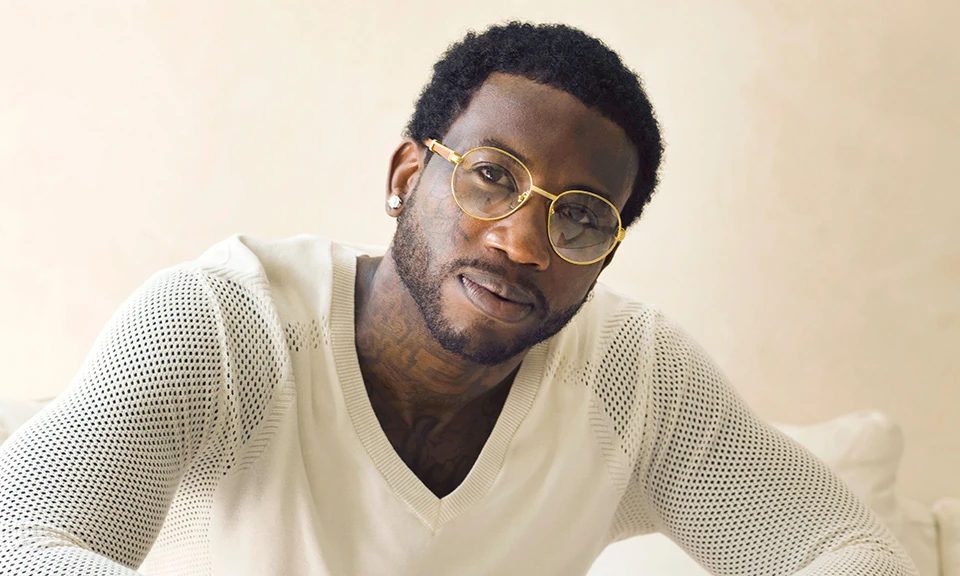
The online narrative says Gucci Mane cooperated with prosecutors against his 1017 artists Pooh Shiesty and Big30, violating the street code. This essay complicates that story, arguing court filings reveal a more tangled reality about what happens when trap music meets federal prosecution and label-distribution compliance, beyond a simple snitching label.
The feed called it a street code violation. The court filings tell a different story — one about what happens when trap music meets federal prosecutors and distribution deal compliance.
→ See what every outlet is actually reporting on the Gucci Mane situation →
What the Feed Decided in Under 24 Hours
The narrative locked in fast: Gucci Mane cooperated with police against Pooh Shiesty and Big30, a trap legend choosing prosecutors over the code, then releasing a diss record that sounds more like a corporate memo than a 1017 anthem. [AllHipHop] That’s the version making the rounds. It’s not wrong, exactly. It’s just incomplete in ways that matter.
The Question Nobody’s Actually Asking
What if this isn’t a story about a street rapper suddenly breaking code? What if it’s about how the state and the music business quietly reclassified Gucci from “participant” to “protected asset” — and are now using that shift to control the narrative?
The assumption fueling the outrage is that Gucci had a clean choice between staying silent and telling. The record across outlets suggests something else. Once the feds framed this as a kidnapping and contract-extortion play, they effectively turned Gucci into a corporate victim-witness. The streets are reacting to that structural move like it’s a personal moral failure. Those aren’t the same thing.
What the Evidence Actually Shows
What the court filings say about Gucci’s cooperation
We now have harder language on the record than we did a few days ago — and it cuts both ways. During a detention hearing in Dallas, FBI Special Agent Pamela Hanson testified that Gucci Mane did provide a statement to Dallas police about the alleged January 10 studio incident, and that “most of the complaint” is built on statements from him and the other alleged victims. [XXL] Officers were called to the studio by Gucci’s security that night. The paperwork leans heavily on what his side told them when they arrived.
A separate filing notes that “R.D.” — widely understood as Radric Davis — described Pooh as wearing a particular mask and outfit during the offense. That’s the line that locked in the “he identified them” narrative. [HotNewHipHop] At the same time, Hanson confirmed under oath that Gucci has not yet been interviewed by the FBI — those interviews are only “scheduled” — and the government currently has no physical copy of the contract release they say Pooh forced him to sign. [XXL]
The sharpest version of all this came from separate testimony coverage: investigators “relied” on Gucci and his people to charge this as a kidnapping and robbery in the first place. [HipHopDX] That framing matters. It’s not just “he spoke to police.” It’s the state openly saying their case was built on what the star and his circle told them.
How the culture read it — and what that misses
AllHipHop’s reporting from inside Atlanta jails captured the core reaction: the issue isn’t just that Gucci may have cooperated, it’s that he’s now being positioned as “the alleged victim” in a federal kidnapping — something that clashes hard with his historic image as a perpetrator, not a complainant. [AllHipHop] Viral clips showed inmates tossing his posters and books, treating the possibility of cooperation as a conviction in their own court.
But other coverage complicates that picture. One of Big30’s attorneys noted that Gucci has publicly stated he’s not cooperating with the government and won’t testify, and claimed an FBI agent told him he hadn’t actually heard from Gucci directly. [HotNewHipHop] Defense lawyer Bradford Cohen, representing Pooh in Texas, calls it a “he-said, he-said” situation and points to the absence of physical evidence: no contract, no gun, no jewelry recovered, no video of the alleged signing — just “five individuals, one of them being a very well-known individual” telling the government their story. [HotNewHipHop]
Those are contradictions, not clean lines. Federal testimony says Gucci’s statement underpins the complaint. Defense voices and some media say FBI agents have, at points, downplayed direct contact. That disconnect is exactly the space where “snitch” narratives thrive — not necessarily because of paperwork, but because the state is clearly incentivized to center Gucci as their most credible storyteller.
The business layer nobody’s counting
The thing most “street code” takes ignore is the contract and corporate context. Industry-side analysis of the DOJ complaint makes clear this entire case is framed around an alleged attempt to force a contract termination at gunpoint: nine men fly to Dallas, lure the label head into a studio under the guise of a business meeting, then allegedly force him to sign away Pooh’s 1017 obligations while others strip jewelry and block the exits. [Rap Industry] That framing also triggers Atlantic’s risk management machinery — a federal kidnapping indictment aimed at a flagship artist doesn’t stay in the streets.
In that ecosystem, Gucci isn’t just a rapper. He’s a corporate officer with contractual duties to report material legal developments concerning his roster and his own victimization. [Rap Industry] Once the feds frame what happened as a kidnapping to escape a contract, Gucci’s ability to stay silent — and still function as 1017’s CEO under a major distribution deal — shrinks fast. The code and the compliance manual don’t coexist cleanly.
Then he dropped “CRASH DUMMY.” A diss aimed straight at Pooh and Big30, released instead of a press conference. He raps that Pooh “went out like a real crash dummy” and “after all that” is “still signed to me,” explicitly comparing himself to Birdman running Cash Money. [HipHopWired] DJ Akademiks, reacting live, called the song the statement he thought Gucci would never make and questioned why someone who “signed killers and robbers” is moving like this is a Fortune 500 job. [HotNewHipHop] Akademiks was accidentally pointing at the real pivot: Gucci is acting like this is a Fortune 500 job. The diss isn’t just emotional — it’s him publicly reframing Pooh as an ungrateful, reckless employee who tried to extort his way out of a contract. That’s the narrative that makes Gucci legible to prosecutors, distributors, and insurers as a victim-boss. Not an accomplice.
What This Case Is Really Teaching the Industry
If you only see a legend “telling,” you miss the larger lesson. This case is showing the industry what happens when you try to run a street-coded label inside a corporate ecosystem that treats violence as a compliance issue, not a morality play. [Rap Industry]
The evidence across outlets shows Gucci being pulled into a role where his statements aren’t just personal choices — they’re part of a larger machinery. Federal prosecutors building a kidnapping case. Atlantic’s legal team protecting its exposure. A rap media economy that turns any contact with law enforcement into a referendum on your character. The uncomfortable takeaway is that the more rappers step into executive and ownership lanes, the less room there is to operate entirely by street codes when the feds arrive. Gucci might be the first high-profile example of that tension playing out in public. He won’t be the last.