
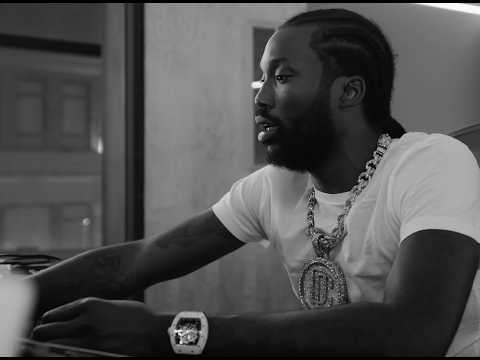
Meek Mill played his hometown arena on Tuesday. By Thursday morning the other five dates on his Dream Chasers Nights run were listed as canceled, and he had spent the night in between telling X he wants out of his Live Nation contract even if it costs him rapping. The dispute underneath is narrower, and more useful to understand. Meek and his sharpest critic agree he took money he has not finished paying back. They disagree about who has been controlling how fast that happens.
Three Days in November
Dream Chasers Nights was announced as a one-night Philadelphia homecoming with Live Nation Urban, then grew into a six-city run by late October. [AllHipHop] The November 24 show at Xfinity Mobile Arena went ahead. Los Angeles, Boston, Baltimore, Chicago and Atlanta were due to follow through December 20.
On Wednesday night Meek started posting. He said he felt “trapped and shelved behind this contract,” that he had tried to reach everyone he could, and that he would give up rapping to get free of the deal. [Complex] By Thursday morning Ticketmaster listed all five remaining shows as canceled. The Hollywood notice says the event organizer called the date off and gives no reason. Live Nation has not explained the cancellations or confirmed that the agreement has ended. [AllHipHop]
Meek’s version is different. In a post that came before the listings changed, he said the dates were being rescheduled, not canceled, and that he would publish his contract to show what the company was obligated to do. [ITSBIZKIT]
What He Says the Deal Did
His complaints sort into three. Routing: a run that jumped from Philadelphia to Los Angeles and skipped New York, where he says he has not played since he sold out Madison Square Garden. [Complex] That show was October 23, 2021. Marketing: he says the two sides were supposed to agree on a plan, that the tour was pushed on Instagram and little else, and that he does not believe a Los Angeles billboard he was told about exists. Money: he asked Live Nation CEO Michael Rapino to look at how the company charges artists, accusing it of “creating tabs and numbers that don’t make sense.” [Baller Alert]
He also called the arrangement “worst than probation” and said it felt like he had been paid to have his influence contained. [HotNewHipHop] None of it can be checked. The terms of the deal are not public. [Baller Alert]
A Bill, Not a Blackball
DJ Akademiks offered the competing account on his stream. In his telling, Meek and other artists took large advances from Live Nation coming out of the pandemic in exchange for future shows, and the company keeps the profits until the money is recouped. He put the number of artists with similar deals at six to twelve. On New York, he argued the deal was priced for an artist who fills 8,000-capacity rooms and that “Meek is rated for 3,500 people.” [ITSBIZKIT] DJ Vlad was blunter: “When you lend someone money and they invent reasons not to pay you back.” Even Akademiks, though, faulted the company for booking rooms bigger than Meek sells outside his home market. [Complex]
Neither man has produced the contract, and Meek has not confirmed their description of it. [HotNewHipHop] But read his posts again. Right after the probation line, he wrote that he is trying to pay it back. [HotNewHipHop] The advance is not really in dispute. What it bought is.
The Debt Only One Side Can Route
Here is this publication’s reading, and it is a reading, not a reported fact. A record advance recoups out of music the label decides how to market. A touring advance recoups out of shows the promoter decides how to book. If the deal is as exclusive as Meek describes, the party he owes also sets the cities, the rooms and the promotion that determine how quickly he can stop owing. That is why a touring dispute is being argued in a record-label word. Shelved is what happens to an album.
The numbers on the table do not resolve it. Meek says he can sell out Madison Square Garden or Barclays Center with “45 days of promo,” rooms of roughly 19,000 to 20,000. [Complex] Akademiks says 3,500. The one figure with a source attached sits between them: an April 11 arena show in Bridgeport, Connecticut, that sold out and grossed $520,526, according to Pollstar reporting. [AllHipHop] Meek’s other proof points, including $700,000 across two nights with independent promoters and a 13,000-seat sellout with DaBaby, are unverified. [Baller Alert]
He Has Used These Words Before
In October 2021, days after that Garden show, Meek wrote that he had not been paid from music and said he would reveal his deal. [Complex] In February 2022 he said Atlantic Records would not let him release music for nine months and that his album had been “blackballed.” [Complex] That July he left Roc Nation’s management after a decade, saying he wanted to handle his own business so he could “take risk and grow.” [PhillyVoice]
The vocabulary this week is the same: blackballed, shelved, a contract he says he will post. AllHipHop put “(Again)” in its headline. [AllHipHop] There are two ways to hear that. One is an artist who signs deals and then regrets them in public. The other is an artist who keeps finding the same structure in a different building: a company advances the money, controls the release valve, and the leverage only shows once he wants to move. Both can be true at once.
The Board Seat
What no other touring dispute has is REFORM Alliance, the probation and parole reform group Meek helped launch in 2019. [Baller Alert] Its website lists Meek and Fanatics founder Michael Rubin as co-chairs. The same board page lists Jay-Z, Roc Nation CEO Desiree Perez, Robert Kraft and Michael Rapino, identified as Live Nation’s chief executive since 2005. [REFORM Alliance]
Early Thursday, Meek wrote that he would pull out of the next REFORM meeting because he is in a contract with someone on the board. “I can’t do charity like that!” he said, and added that he was willing to step down as chairman. He named no one. [AllHipHop] By that afternoon he was asking people to keep the two issues apart, writing, “I shouldn’t be trapped in any system especially with anybody on the board.” [ITSBIZKIT] He credited Rubin by name, has not resigned, and is still listed as co-chair. [Baller Alert]
The probation comparison does not hold up as fact. One is state supervision with a prison cell behind it. The other is a commercial agreement he signed and can take to a lawyer. REFORM spent nearly five years pushing the Pennsylvania probation law, Senate Bill 838, that Meek stood at the podium to see signed. [Black Enterprise] But the comparison explains the REFORM posts. He built an organization on the idea that systems hold people past the point of fairness, and he now says he is contractually tied to someone at that table. He has not said who. The only Live Nation name on the board page is Rapino’s. If that is who he means, it is a conflict no nonprofit plans for: a co-chair in a commercial fight with a fellow director’s company.
The Verdict in the Background
There is a reason an artist calling Live Nation predatory lands differently this year. On April 15 a federal jury in Manhattan found the company liable for unlawfully monopolizing primary ticketing, large amphitheaters and concert promotion services. A law firm summary of the verdict puts Live Nation’s share of major concert promotion at about 70 percent and says jurors accepted that it tied artists’ use of its amphitheaters to its own promotion arm. [Manatt]
Live Nation said the verdict was “not the last word,” [NPR] has told investors it considers the result “legally infirm,” [SEC] and the remedies phase is expected to run into 2027. [Courthouse News] The limits matter too. No lawsuit has been reported. This is a private contract dispute, not an antitrust claim, and the verdict says nothing about touring advances. What it changes is the weight of his fallback plan. Going to independent promoters under a Dream Chasers banner, which he says he will fund himself, is a smaller door when one company handles most of the business. [AllHipHop]
What Nobody Has Shown
The contract. A statement from Live Nation. A reason for the cancellations, or a replacement date in any of the five cities. Proof of the Funk Flex scheduling conflict Meek says kept him out of New York, which no one involved has confirmed. [Baller Alert] An explanation of how a deal he calls exclusive coexists with the independent dates he cites as evidence. And a word from REFORM, which had issued no public statement as of Thursday morning. [Hip Hop Slime]
The Paper Settles the Money. Not the Rest.
If Meek posts the contract, the money question gets answered quickly: what was advanced, what has been recouped, what each side promised about routing and marketing. Akademiks predicts he never will. [ITSBIZKIT] Either way, the document cannot settle the larger thing he is pointing at. An artist whose public life since prison has been about getting people out of systems says he is inside one, and that someone on his own board is on the other side of the paper. The next REFORM meeting may say more than the next post.
 Go deeper: ask our chatbot about Meek Mill and Live Nation →