
Hip hop today is stretching in two directions at once: deeper into experiment and independence, and deeper into the criminal-legal and cultural battles that have shadowed the genre for decades. On one side, artists are bending format and genre on their own terms; on the other, the courts, media, and cultural institutions are still figuring out how to treat rap, Black women, and protest politics in public. Below is a quick run of the day’s key moves, with the past humming underneath all of them.
Quick Blurbs: What Happened in Hip Hop Today
Deante Hitchcock’s Junkie In The Sun: Southern Experiment, Post-Mixtape Mindset
Deante Hitchcock dropped Junkie In The Sun, a 15-track set that pulls from hip hop, indie rock, and electronic textures while keeping the pen grounded in Atlanta rap tradition.[hotnewhiphop] Features are sparse but targeted — Samara Cyn, 6LACK, Childish Major, Anna Field, J. Wes — which is very “album-as-statement,” not playlist fodder.[hotnewhiphop]
This sits in a lineage that runs from OutKast’s ATLiens to the blog-era loosies to the streaming-age “I can do everything” projects. The difference is the infrastructure: Hitchcock doesn’t need DatPiff or a trunk full of CDs to genre-hop; he’s doing it on DSPs that used to punish uncleared samples and non-conforming formats.[thesource] The mixtape ethos survived; the container changed.
Ovrkast.’s “Play This”: Underground Consistency in a Short-Attention Economy
Ovrkast. returned with “Play This,” a standalone single arriving on the heels of his 2025 album When the Iron Is Hot and follow-up track “Wata.”[hotnewhiphop] No album attached yet — just another precise drop in a catalog that’s been built on slow, intentional momentum.
In a world where streaming forced mixtapes into formal releases, loose singles like this function as the new corner tapes: frequent, low-friction touchpoints that keep an artist’s narrative alive without needing the old DatPiff model.[thesource] That’s how you maintain underground mystique in a system that wants everything “official.”
Yxng AVI’s Story Of My Life: Word Of Heart: DIY Craft Becomes Emotional Infrastructure
Yxng AVI’s new album, Story Of My Life: Word Of Heart, plants its flag in melodic hip hop built around feeling-first production and freestyle-heavy writing.[hiphopsince1987] He starts with beats that carry a specific emotion, then chases that into lyrics rooted in actual experience — most intensely on the closer “Memories Fade Away,” written after his grandfather’s death, which he calls the hardest song to write.[hiphopsince1987]
The real story is the technical arc: years of working on FL Studio and Pro Tools have taken his sound quality and vocal control to another level, purely off self-training.[hiphopsince1987] That’s the same energy that once made low-budget mixtapes so disruptive; only now the “cheap home setup” is powerful enough to compete with label rooms, and AI production tools are starting to lower the barrier even further for new artists to create original instrumentals without industry backing.[thesource]
Tie Bond’s “LA Nights” Visual: Genre Walls Keep Crumbling
Tie Bond revisited his record “LA Nights” with a visual that finally matches the song’s original ambition. The track itself is a quiet example of where the culture sits sonically: piano-driven, nightlife mood, with hip hop, pop, and R&B flowing through each other instead of in separate lanes.[hiphopsince1987] His delivery stays measured at first, then scales with the beat’s build, making the transitions feel intentional but unforced.[hiphopsince1987]
The content lives in that familiar rap liminal space — not fully autobiographical, not fully fictional, hovering between memory and aspiration.[hiphopsince1987] From recording covers on a camcorder as a kid to grinding through local shows, Bond’s path is classic DIY; the difference now is how much more self-directed and self-sustained that independence can be when you’re not relying on labels to underwrite visuals that match your records.[hiphopsince1987]
AZ’s “Uniqueness”: Veteran Lyricism in a Streaming-Era Trilogy
AZ dropped “Uniqueness,” the second single from Doe Or Die III, a deliberate return to the title that launched his solo legend and his position as one of New York’s cleanest pens.[blackouthiphop] The new album, due May 8, is being framed as both continuation and bridge — golden era codes refracted through a modern landscape.[blackouthiphop]
The move echoes a broader pattern of legacy artists weaponizing nostalgia without getting stuck there. In an era where streaming flattened discographies and the “mixtape vs album” line blurred, a Doe Or Die trilogy is a way for AZ to assert coherence and authorship over his narrative — a long arc that runs from being the first voice you hear on Illmatic to being a late-career anchor for New York lyricism.[blackouthiphop]
Lyrics on Trial: Weez Gotti and the Criminalization of Rap Imagination
Bay Area rapper Weez Gotti (Luis Rincon) is being kept in federal custody after prosecutors used his lyrics to argue he’s a public danger in a firearms case stemming from an Airbnb break-in.[hiphophero] In filings, prosecutors highlighted his 2021 track “BIG Steppa,” pointing to lines like “I got seven on my belt, bitch, I’m a real killer” and alleged detailed descriptions of shootings, framing them as confessions to seven murders and near “triple” homicides.[hiphophero] Judge Thomas Hixson cited his prior weapons convictions, parole status, and an active warrant in deciding to detain him — with the lyrics functioning as cultural evidence of risk, not just artistic expression.[hiphophero]
This is not just a case note. It’s part of the ongoing question of whether rap is afforded the same fictional license as film or literature. Earlier eras saw mixtapes raided and DJs charged with racketeering when the state decided the music economy itself was criminal.[thesource] Now, in the streaming era, the economy is mostly legit — but the words themselves are still being treated as literal confessions. The stakes are high: it’s about whether hip hop is read as art or affidavit.
Peewee Longway’s Guilty Plea: The Trap-Police Pipeline Persists
Atlanta veteran Peewee Longway (Quincy Williams) pleaded guilty to two counts — possession of a firearm by a convicted felon and conspiracy to possess with intent to distribute a controlled substance — tied to a September 2024 drug bust.[hiphophero] Three other counts were dismissed as part of a plea deal that positions him for a 10–14 year sentence.[hiphophero] This from an artist who signed to Gucci Mane’s 1017 in 2013, dropped the Money, Pounds, Ammunition collab with Wop, and never fully got the mainstream run his influence in Atlanta suggested.[hiphophero]
Longway’s arc — from Brick Squad affiliate with 2013’s Who Am I? to a 41-year-old with 352K monthly Spotify listeners now facing a decade-plus sentence[hiphophero] — underlines a persistent reality: the same trap narratives that defined mid-2010s Atlanta rap are still entangled with actual street cases, even as the music economy around them becomes more formalized. The system still knows how to pull an artist off the board.
Misogynoir’s Echo Chamber: Megan Thee Stallion, Again
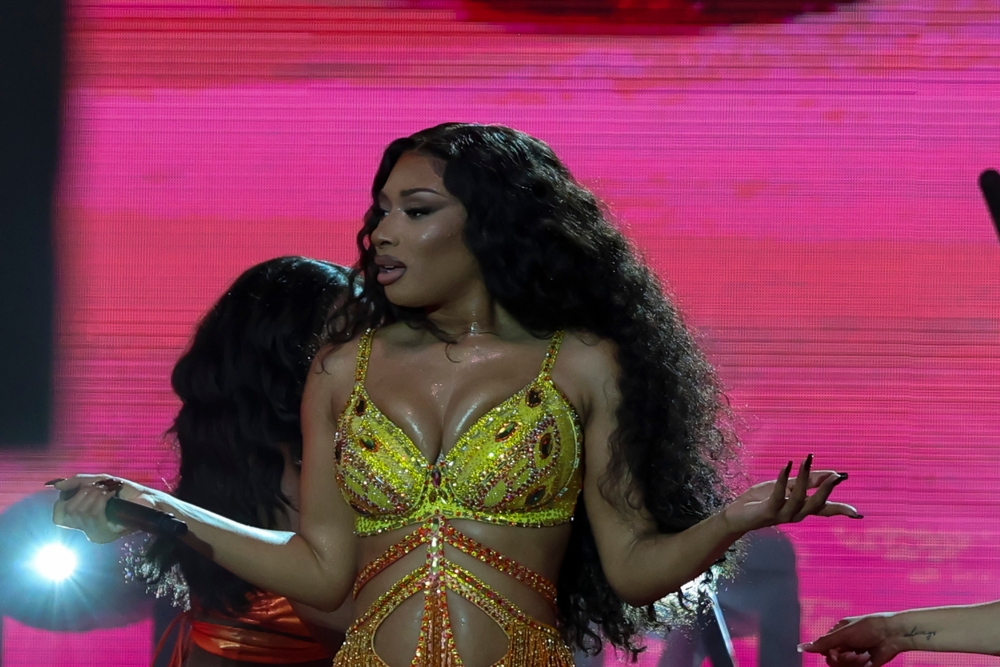
Megan Thee Stallion’s name is back in discourse, this time framed around her breakup with Klay Thompson and the way some corners of the internet spun it as karmic payback tied to distorted versions of the Tory Lanez case.[hotnewhiphop] The piece at hand lays it out plainly: the actual court record is clear, but the public conversation has been rebuilt on repetition, rumor, and misogynoir — “the gap between what Megan experiences and how people decide she should be treated afterward.”[hotnewhiphop]
This matters beyond gossip cycles. The way her pain keeps getting turned into punchlines or cautionary tales is an indictment of how the culture — and the commentary economy around it — still handles Black women’s harm.[hotnewhiphop] Hip hop has always been about narrative control; watching a woman who won in court still have to relitigate her validity says a lot about whose stories get believed even when the legal chapter is closed.
Protest at the Met Gala: Hip Hop Values vs. Red-Carpet Optics
Taraji P. Henson’s stance around the Met Gala — questioning what it means to attend a high-gloss fundraiser backed by Jeff Bezos-linked money in the middle of protest-heavy streets — has been circulating all day.[rollingout] A viral breakdown from commentator Meredith Lynch sharpened the critique, calling out the museum’s funding sources, Bezos’ perceived Trump alignment, and even the loaded symbolism of attendees potentially wearing “ICE Out” pins given Amazon’s cloud deals with government infrastructure.[rollingout]
Hip hop has spent decades negotiating its relationship to institutions — from MTV and Miami Vice in the Fat Boys era to fashion houses in the post-Watch the Throne world.[blackouthiphop] Henson’s “What are we doing?” hits that same nerve: what does it mean to bring Black cultural capital into elite spaces whose politics and funding streams are in direct conflict with the communities hip hop grew from?[rollingout] That’s not a side story; it’s central to where the culture’s conscience is right now.
From Beatbox to Big Data: Remembering The Fat Boys in a Streaming-First World
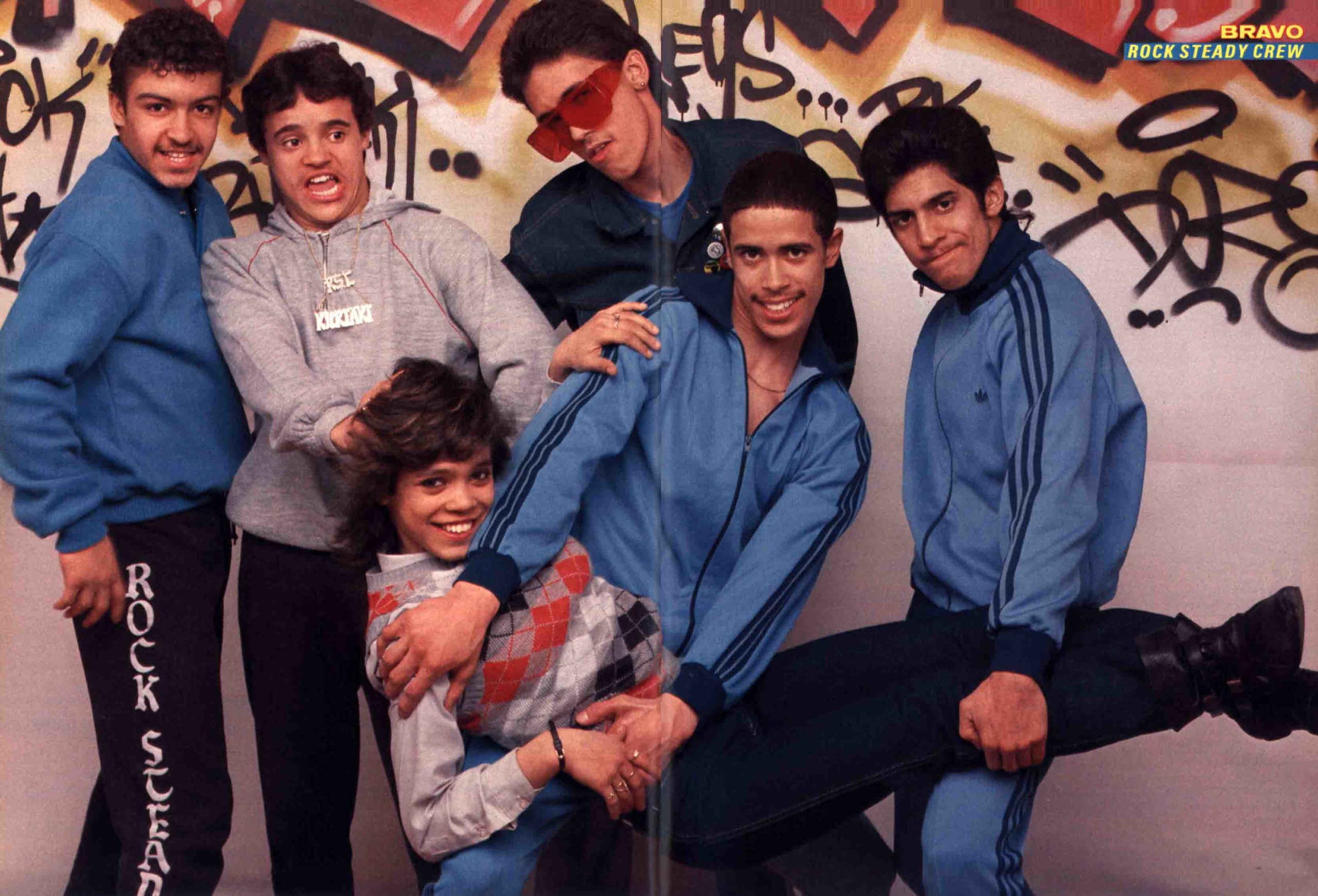
Amid all this, there’s also a 40-year look back at The Fat Boys’ 1986 album Big & Beautiful, reminding us of a pre-streaming, pre-DatPiff era when a rap trio could use humor and charisma to bulldoze into spaces that hadn’t made room for hip hop yet.[blackouthiphop] Their “Sex Machine” video was directed by Academy Award winner Zbigniew Rybczyński, pushing surreal, HDTV-pioneering visuals onto MTV, while cameos on Miami Vice, American Bandstand, and Soul Train made them omnipresent on mid-’80s television.[blackouthiphop]
That history reframes today’s fights over algorithm placement, playlisting, and content policing. The Fat Boys humanized a genre the mainstream treated like a novelty; now hip hop is the mainstream, and artists are trying to re-humanize themselves inside platforms and legal systems that flatten nuance — whether it’s a Bay Area rapper’s lyrics read as confession or a Houston star’s trauma turned into entertainment.[hiphophero]
The Mixtape Spirit, Rewired
Threading through all of this is the mixtape’s afterlife. The RIAA raid on DJ Drama and Don Cannon in 2007 signaled the end of the physical mixtape economy, only for DatPiff and the broader internet to explode the format globally.[thesource] Streaming then tried to domesticate that wildness, forcing clearances and formal submissions on what used to be lawless tapes.[thesource]
Today’s drops — Hitchcock’s genre mash, Ovrkast.’s single, AVI’s self-produced emotion diaries, Tie Bond’s hybrid nightlife record — embody that same spirit without the same legal risk, especially as AI generators make original, customizable production cheap and fast for independents.[thesource] The core remains: make and release music outside gatekeepers. The tools just look different.
Bottom Line
Today’s hip hop news cycle is a microcosm of the genre’s current phase: formally legit but still structurally contested, endlessly experimental but still haunted by old power dynamics. The mixtape spirit is alive in Hitchcock, Ovrkast., AVI, Bond, and even AZ’s late-career trilogy; the criminal-legal system’s distrust of rap is alive in Weez Gotti’s detention; the culture’s unresolved relationship to Black women and protest is alive in conversations around Megan and the Met Gala. The through-line: hip hop keeps finding new tools to tell its stories — the real question is whether the systems around it are evolving fast enough to listen in good faith.