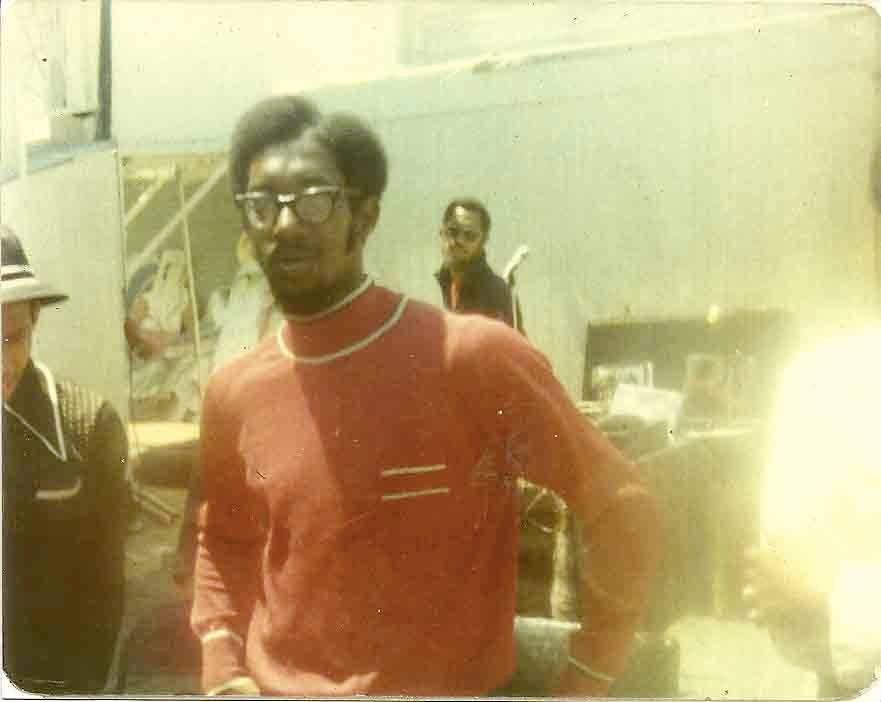

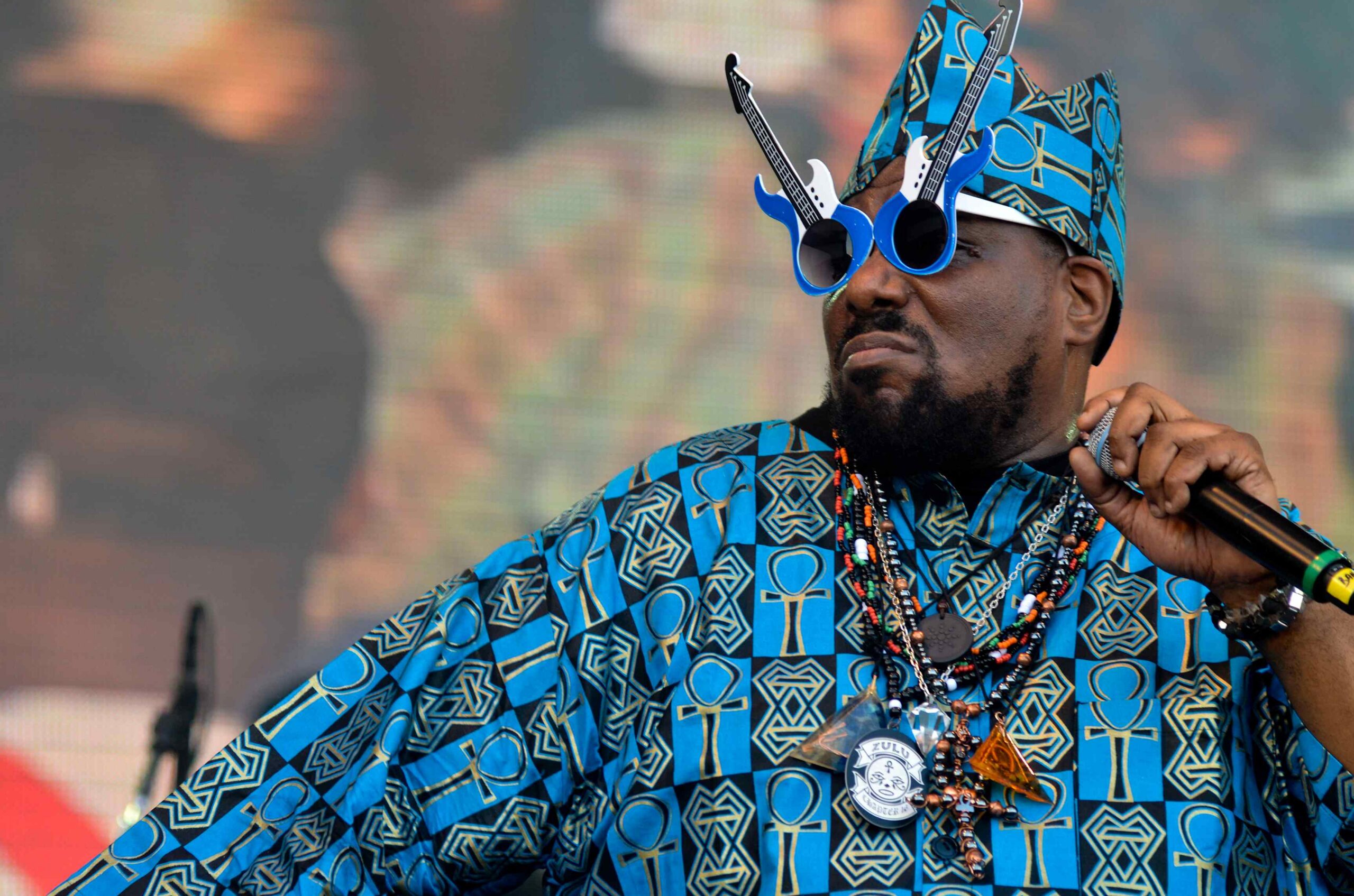
Afrika Bambaataa, the Zulu Nation founder and godfather of electro, died in Pennsylvania in April 2026 from prostate cancer complications at 67. This piece wrestles with his complicated legacy, honoring his foundational role in building hip-hop’s culture while refusing to ignore the serious abuse allegations that shadow his name.
Key Facts
- Subject: Afrika Bambaataa (d. April 2026)
- Age: 67–68 (reports vary)
- Cause: Prostate cancer complications
- Place: Pennsylvania
- Legacy: Zulu Nation founder; contested by abuse allegations
The godfather of electro and founder of Zulu Nation died in April 2026. The culture is left with a legacy it can’t clean up and can’t put down.
→ See how every hip-hop outlet is covering the full Bambaataa story →
The Death Hip-Hop Couldn’t Simply Mourn
Afrika Bambaataa died in Pennsylvania in April 2026 from prostate cancer complications. He was 67 — or 68, depending on which outlet you read. [HipHopDX] [Billboard] His passing has forced hip-hop to sit with the full contradiction of a man who helped architect the culture’s spiritual framework while spending his final decade under a cloud of disturbing abuse allegations. This is the piece the eulogies are struggling to write. It isn’t two separate stories. It’s one.
What He Built Before the World Knew His Name
The earlier chapter covers the arc from Bronx gang structures to the Universal Zulu Nation — from Black Spades warlord to would-be cultural statesman. That arc matters even more now that his story has a hard endpoint. He came out of the same South Bronx networks that turned block tension into block parties. Bambaataa didn’t just DJ in the neighborhood; he re-routed the energy of a gang era into an art collective that tried to formalize hip-hop’s values: peace, unity, love, having fun — plus a fifth element of Knowledge. [Billboard] [The Source]
Zulu Nation was his experiment in turning that outlook into infrastructure. The crew and its offshoots helped codify the four elements — DJing, MCing, breaking, graffiti — and carried them beyond the boroughs. [Billboard] Musically, “Planet Rock” blew the doors off. That electro blueprint — Bronx chants over Kraftwerk-inspired programming — became a skeleton key for everything from Miami bass to early club rap. The sound of hip-hop realizing it could hijack any global rhythm and still feel like the block.
That’s the version of Bambaataa that earned him “godfather” status — part of what’s often called the holy trinity of early hip-hop DJs alongside Kool Herc and Grandmaster Flash. [Billboard] It’s also the version the eulogies leaned on the moment news broke.
What the Tributes Said — and What They Couldn’t Avoid
Kurtis Blow — now executive director of the Hip Hop Alliance — called him a “foundational architect” and credited his vision with helping transform the Bronx into a global culture rooted in “peace, unity, love, and having fun.” [HipHopDX] [Billboard] That language is the Bambaataa doctrine in concentrated form: hip-hop as healing technology, as organizing principle, not just a sound.
But the Alliance’s statement went out of its way to say the quiet part out loud. His legacy is “complex” and has been the subject of “serious conversations” inside the community. Any remembrance, they wrote, has to “hold space for all voices while continuing to uplift what empowers and protects the people.” [HipHopDX] That’s the duality in one paragraph. The architect of the culture’s ethos and a symbol of how far those ideals can be betrayed by the person who preached them.
Ronald “Bee Stinger” Savage — the first accuser to go on record in 2016 — embodies that split in real time. After recanting his allegations in 2024, saying he’d reconsidered the framing of their encounters, Savage reconnected with Bambaataa, found what he describes as spiritual closure at a Bronx tribute event, and stayed in contact until the end. [AllHipHop] After his death, Savage called his heart “heavy,” extended condolences to Zulu Nation, and argued that “without his vision, the global stage that Hip-Hop stands on today would not exist.” He asked the culture to focus on the foundation — even while acknowledging “the complexities of history.” That’s not a neat redemption arc. It’s someone who once blew the whistle, later walked it back, and still insists the work doesn’t disappear.
Hassan Campbell — another longtime accuser — went the other direction entirely. On Facebook, he called Bambaataa “the greatest child predator who ever walked this earth,” framed his death as a kind of dark justice, and reminded viewers that many other men had accused him of abuse and trafficking over the past decade. [HotNewHipHop] His reaction makes clear how unresolved the trauma is for people who say they were harmed — and how little the legal system ever gave them.
This Isn’t Two Separate Films
With the obits rolling in, there’s a pull to treat Bambaataa’s story as an origin myth with a late-career scandal tacked on in the credits. The coverage from 2016 onward says otherwise. Multiple men came forward with allegations of abuse going back to the ’70s and ’80s. He denied everything. There were no criminal convictions. But the pressure was enough to force him out of Zulu Nation leadership in 2016. [HipHopDX] [AllHipHop]
In 2021, an anonymous John Doe filed suit alleging abuse and trafficking in the early ’90s. Last year, that case ended in a default judgment — Bambaataa never responded in court. [HipHopDX] The “actually…” here is this: hip-hop didn’t wait for a formal conviction. Promoters stopped booking him. Zulu publicly distanced itself. He became persona non grata in many circles — the culture imposed a community sentence years before his body failed. [HipHopWired] His death doesn’t resolve that. It freezes it. We’re left with a record where the same man who helped define the five elements is also at the center of one of hip-hop’s most painful abuse sagas, and there’s no verdict to tidy up the story.
What Comes After a Founder With a Fractured Legacy
What Bambaataa’s death really forces is a generational decision about how we handle founders who leave behind fractured legacies. The Hip Hop Alliance’s statement leans into “truth, accountability, and preservation” in the same breath, insisting we can mourn and critique simultaneously. [Billboard]Savage is arguing for the foundation; Campbell is saying there’s no peace without naming the alleged harm for what it is. [AllHipHop]
The duality isn’t a side note — it’s the whole point. Bambaataa leaves behind a culture that still runs on his early coding: global-facing, peace-talk, knowledge-heavy. And a parallel record of alleged harm that directly contradicts those same values. How we write about him now is a test of whether hip-hop can tell its own origin story in full color — without sanding down the parts that hurt.