

Drill is not one genre but a traveling template. It was born on Chicago’s South Side in the late 2000s and early 2010s as a minimal, menacing offshoot of trap, broke through nationally with Chief Keef, then mutated in South London (Brixton) into a faster, grime-inflected “UK drill,” and bounced back across the Atlantic as Brooklyn drill, where Pop Smoke carried it onto the Billboard Hot 100 and into a Grammy nomination. Today it is a global system that hybridizes with Latin trap and other styles, even as police, prosecutors, and politicians keep treating its lyrics as evidence. The three scenes – Chicago, UK, and Brooklyn – are distinct in lyrics, production, law, and commerce, yet each remixes the one before it.
Key Facts
|
|
|
|
|
|
|
|
|
|
 It is tempting to treat drill as one thing: a single, menacing rap sound that crime reporters point to whenever a young artist is arrested. But drill is not a genre so much as a system, a template that travels, mutates, and feeds back on itself. Chicago wrote the source code in the early 2010s. South London reprogrammed it. Brooklyn ran the London software on New York hardware and pushed the result onto the Billboard charts and into the Grammys. Understanding how these three scenes diverge, lyrically, sonically, legally, and commercially, is the only way to see drill for what it actually is: one of the clearest examples of how Black youth culture can globalize an idea and flip it into new forms almost overnight. [MasterClass]
The Source Code: Chicago’s South Side
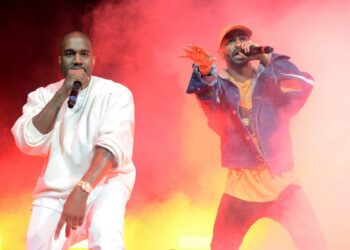
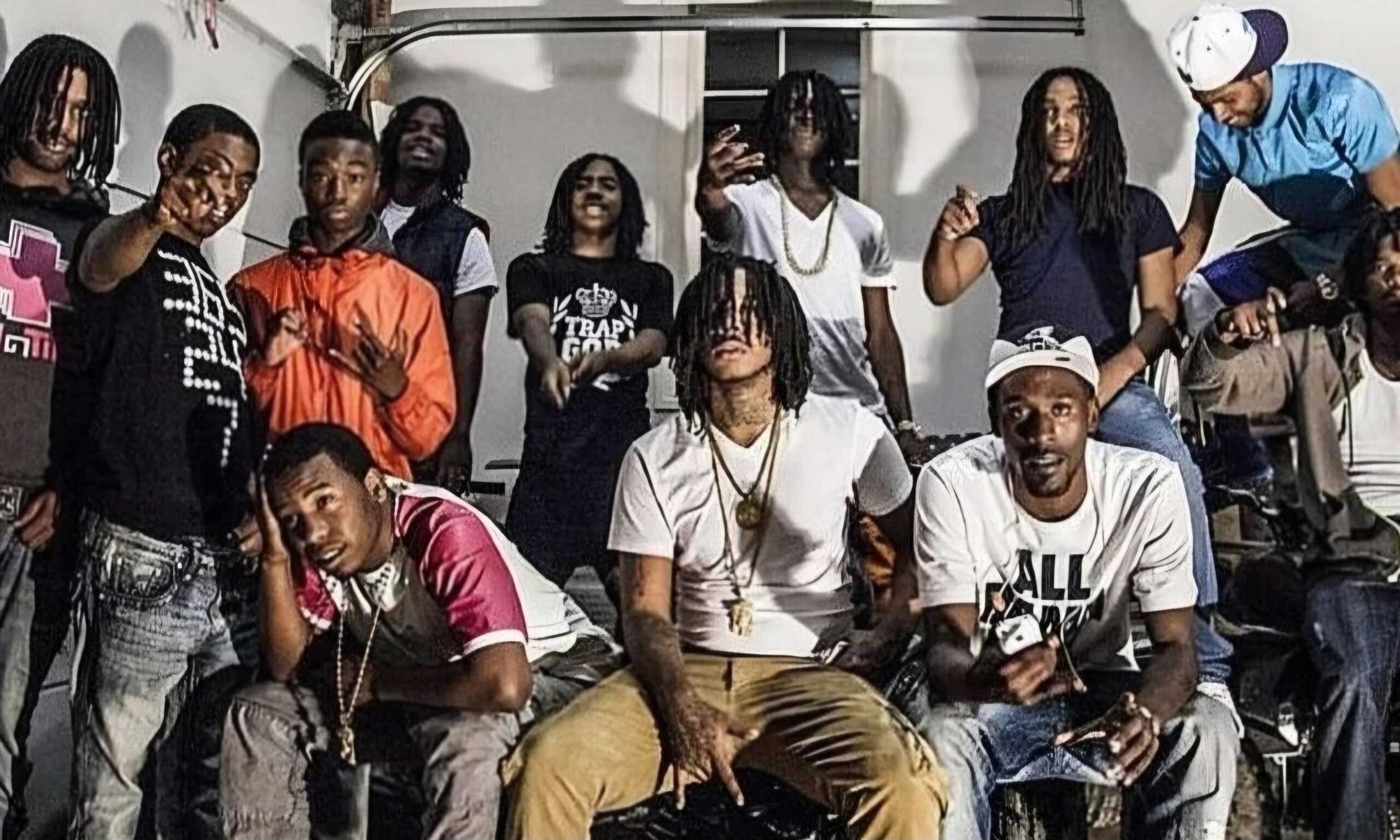
Drill is repeatedly described as having been “birthed in Chicago” in the late 2000s and early 2010s, an aggressive, minimal cousin of Southern trap that channeled local street violence into dead-eyed, stripped-down rap. [FACT] The turning point was Chief Keef. His single “I Don’t Like” became his first entry on the Billboard Hot 100, and a high-profile G.O.O.D. Music remix, “Don’t Like,” featuring Kanye West, Pusha T, Big Sean, and Jadakiss, dragged the South Side sound out of YouTube obscurity and into national circulation. A bidding war followed, and Keef signed with Interscope. [Wikipedia]
Keef was the breakout, but he was part of a cohort (Fredo Santana, G Herbo, Lil Bibby, King Louie) that collectively established the sound and the narrative template, attracting major-label interest before the industry cooled on drill’s commercial prospects in the middle of the decade. [Wikipedia] What made early Chicago drill distinct was its language. Artists discarded metaphor and clever wordplay in favor of what reads like “unemotional reportage or recollection”, lyrics delivered with a flat, numbed affect that only amplified the bleakness of what they described. [MasterClass]
The production matched the words. Chicago producers like Young Chop locked in a template close to trap, heavy 808s, a 60-to-70-BPM half-time swing, skeletal arrangements, and melodies drenched in brooding menace. That sparse design left air for the flat, mantra-like flows that became the city’s signature. [MasterClass]
Chicago’s Second Life: From Local Heat to Global Blueprint
Even as drill’s first commercial wave cooled in the United States (Keef was eventually dropped by Interscope), the sound seeded new geographies and new hustles. [Wikipedia] The most instructive Chicago story is not about a hit record but about a pivot. Lil Bibby built a promising rap career in the 2010s, then shifted his focus to the business side, co-founding Grade A Productions in 2017 and investing in new talent, most notably Juice WRLD. When Juice WRLD became a global streaming phenomenon, Bibby’s role as executive, manager, and label co-founder proved far more profitable and durable than chart success of his own. [The Root]
That move embodies a drill-generation lesson that recurs across all three cities: ownership and infrastructure can outlast viral notoriety. [The Root] But Chicago drill has always lived in a contested zone between art and evidence, and that tension followed the sound everywhere it traveled. The debate over whether violent lyrics simply chronicle reality or actively feed cycles of retaliation has never been settled, and, as later sections show, it would be reproduced almost verbatim in London and New York. [WBEZ]
Brixton Rewrites the Code: UK Drill
The first major reprogramming happened in South London, specifically Brixton, where Chicago’s sound was filtered through existing British genres (grime and UK garage) and grafted onto the city’s established “road rap” tradition. [Wikipedia] By 2017, FACT’s on-the-ground reporting was already describing drill as the dominant sound in South London youth culture, spreading via SoundCloud clips and smartphones. “It’s what we’ve grown up around,” one student in Elephant & Castle put it. [FACT]
Crucially, the people making the music insisted the borrowed name no longer fit. Brixton Hill producer Carns Hill, who steered the sound alongside the crew 67, argued that “the name was just thrown on there because people at the time were listening to Chicago music.” The way of spitting, he said, “is faster now, we’ve got our own formula… Personally, I think it needs a new name.” [FACT] Even the violence was localized: “If Chicago drill is a gun,” one teenager told FACT, “ours is a knife.” [FACT]
Sonically, UK drill carved out its own identity. The bass was likened to “the deep shudder of a double-decker London bus engine,” its beats stitched from tinny 808 drums and moody melodic figures, constantly reworked with delicate bells or stretched Eastern vocals. [FACT] Thematically it functioned as British gangsta rap, mapping London’s estates and postcodes the way Chicago drill mapped sets and blocks. And it eventually exported: artists like Digga D and Central Cee carried UK drill into the global rap mainstream, landing on the charts and drawing American stars into the orbit of the sound. [GRAMMY]
The Transatlantic Loop: Brooklyn Drill
Brooklyn drill is the moment the loop closes. Wikipedia defines it bluntly as a regional subgenre “that began as derivative of the drill music scene in Chicago and later became derivative of UK drill with its 808 percussion and sliding notes by producers from the UK drill scene.” [Wikipedia] The chain is literal: Chicago to Brixton to Brooklyn.
The scene first flashed with Bobby Shmurda’s “Hot N—-” around 2014, alongside early contributors like Rowdy Rebel, Envy Caine, Bam Bino, Dah Dah, and Curly Savv. [Wikipedia] But the sound truly crystallized with 22Gz’s “Suburban” (2016) and Sheff G’s “No Suburban” (2017), two viral records credited with the rise of Brooklyn drill, and both built on beats from UK producers like 808Melo, AXL Beats, and Ghosty, who shipped the sliding 808 basslines of UK drill directly into New York. [Wikipedia]
Pop Smoke took it global. His “Welcome to the Party,” “Dior,” and “Gatti” reached the Billboard Hot 100, and “Dior” earned a 2021 Grammy nomination, proof that a once-marginal, hyper-local style now sat inside the industry’s most conservative institution. [Wikipedia] After his 2020 murder in the Hollywood Hills, the groundwork he laid let the broader Brooklyn drill scene keep evolving, with records like Staten Island rapper CJ’s “Whoopty” carrying the same sonic DNA. [Wikipedia]
Newer Brooklyn acts now treat drill as a launchpad rather than a cage. Complex’s profile of the trio 41 notes that Pop Smoke “laid the blueprint for transcending Brooklyn drill,” and that 41 have “quietly become reliable hitmakers” by moving beyond their drill origins (including the infamous “Notti Bop”) and exploring a wider palette of sounds. As member Kyle Richh put it: “Drill has a ceiling. There’s only so far you can go with it.” [Complex]
Three Lyrical Worlds: Reportage, Road Rap, and Viral Taunts
The clearest way to tell the three scenes apart is to listen to how they talk. Chicago’s first wave is almost numb in its lack of figurative language, lyrics that read like case files or first-person incident reports, a starkness that is exactly what makes the music chilling. [MasterClass] UK drill keeps the brutality but merges it with the coded slang and faster, more intricately structured delivery of road rap, mapping specific estates and beefs with a distinctly British cadence. [GRAMMY]
Brooklyn keeps the violent, gang-focused content but pairs it with big, boisterous, sometimes party-ready delivery: New York variants that can read as either “party music or aggressive, depending on the borough.” [Wikipedia] Brooklyn rappers weaponize catchiness, building hooks for clubs and TikTok that coexist with bars about shootings, a jarring blend of fun and fatalism. [Wikipedia] The core content stays constant across all three (poverty, hyper-local territoriality, violence), but each city codes it differently in slang, pacing, and emotional temperature.
Production DNA: BPMs, Basslines, and the Atlantic Exchange
The sonic lineage is just as traceable. Chicago drill stems from trap: 808-heavy beats in the 60-to-70-BPM zone, skeletal arrangements, ominous melodic loops, with Young Chop’s work on Chief Keef’s records becoming the foundational template. [MasterClass] UK drill amps up the tempo and rhythmic complexity, layering its tinny 808s and moody melodies with the grime and garage influences that, as Carns Hill argued, make it arguably a separate genre. [FACT]
Brooklyn drill is openly described as a combination of trap, Chicago drill, and UK drill, with UK producers providing many of its signature beats. The sliding 808 basslines and drum programming of UK drill became standard, while New York’s love of recognizable vocal samples helped push the sound onto wider playlists. [Wikipedia] If Chicago is minimal and heavy and UK is textural and syncopated, Brooklyn is the fusion: Chicago’s weight, London’s bounce, and New York’s sample instincts in one palette.
Policing, Panic, and the “Evidence” Question
Wherever drill has gone, the moral panic has followed. The central question recurs in every city: is the music driving violence, or just telling truths polite society would rather not hear? In Chicago and beyond, scholars and youth educators argue that the fervor over links between drill and violence actively obscures the message of loss and frustration coming from the young artists making it. [WBEZ]
The line between music and street life is real but messy, and prosecutors have learned to exploit it. In a Jacksonville murder trial (Jacksonville being a parallel U.S. drill hotbed), a gang detective testified that drill videos were frequently posted “immediately after rival gang members were shot and killed,” and that the more views and clicks those videos earned, the more money the artists made. His testimony explicitly connected drill content to gang structure and monetization. [AllHipHop]
London has seen censorship drives, with authorities removing videos and equating the genre with rising knife crime, moves that artists and advocates argue scapegoat Black youth while ignoring austerity, policing, and poverty. [Wikipedia] New York has done much the same: even as Pop Smoke’s “Dior” earned a Grammy nomination, the broader sound was framed as a driver of city violence, a contradiction in which the Recording Academy honored a style that political discourse coded as dangerous. [Wikipedia] That shared pressure shapes the art itself, pushing some artists to double down on shock value and others, like 41, to break away from the tag entirely. [Complex]
Regionalism in the Streaming Era: Micro-Scenes, Macro Network
Zoom in and “drill” stops being one thing at all. As Complex’s COVID-era analysis of hip-hop put it, the skeptic who wants to dismiss drill has to answer a question first: “Which drill are you talking about? Philly drill… DMV drill… New York drill?” [Complex] That fragmentation is even sharper across the Atlantic, where Chicago, London, and Brooklyn are not three flavors of the same thing but three distinct ways of turning structural abandonment into sound. And these are lived cultures, not just algorithmic categories. Brooklyn’s post-pandemic nightlife, with underground venues incubating punk and hip-hop side by side, gives drill a physical place to keep evolving. [Rolling Out]
The same network that let a Chicago teenager influence kids in Brixton and Brooklyn now enables rapid cross-pollination with Latin trap, Afro-diasporic styles, and club forms. A recent crossover single by Brooklyn drill’s Fivio Foreign, Loui Paso, and Puerto Rican trap pioneer Jon Z, “Untouchable,” explicitly fuses “the dark, heavy bass-lines of New York drill with the frantic, rhythmic cadence of Latin trap”, reinforcing, in the words of The Source, that genre boundaries are “completely obsolete in the modern streaming era.” [The Source]
Chicago, UK, and Brooklyn drill aren’t just regional flavors; they’re three distinct ways of turning the same raw material (poverty, territoriality, and the constant nearness of violence) into sound. Chicago’s numb reportage, London’s road-rap noir, and Brooklyn’s club-ready menace each remix the last, proving how fast Black youth culture can globalize an idea and flip it into new forms, from Billboard hits to Latin drill hybrids. [The Source]
And as the music evolves, the same fights keep circling back: police and politicians trying to treat art as evidence, labels chasing the sound’s heat and then bailing, and artists using drill as both a survival toolkit and a launchpad to broader careers. [The Root] The tension between documentation and exploitation isn’t going away. But neither is drill’s role as one of this era’s clearest, rawest mirrors, a sound that, from South Side YouTube uploads to London bus-engine bass to Canarsie club anthems, keeps showing us exactly what it inherited and exactly what it refused to keep.
The Drill Diaspora: A Timeline
Chicago to Brixton to Brooklyn to the world. Tap any event to expand. Filter by scene.