
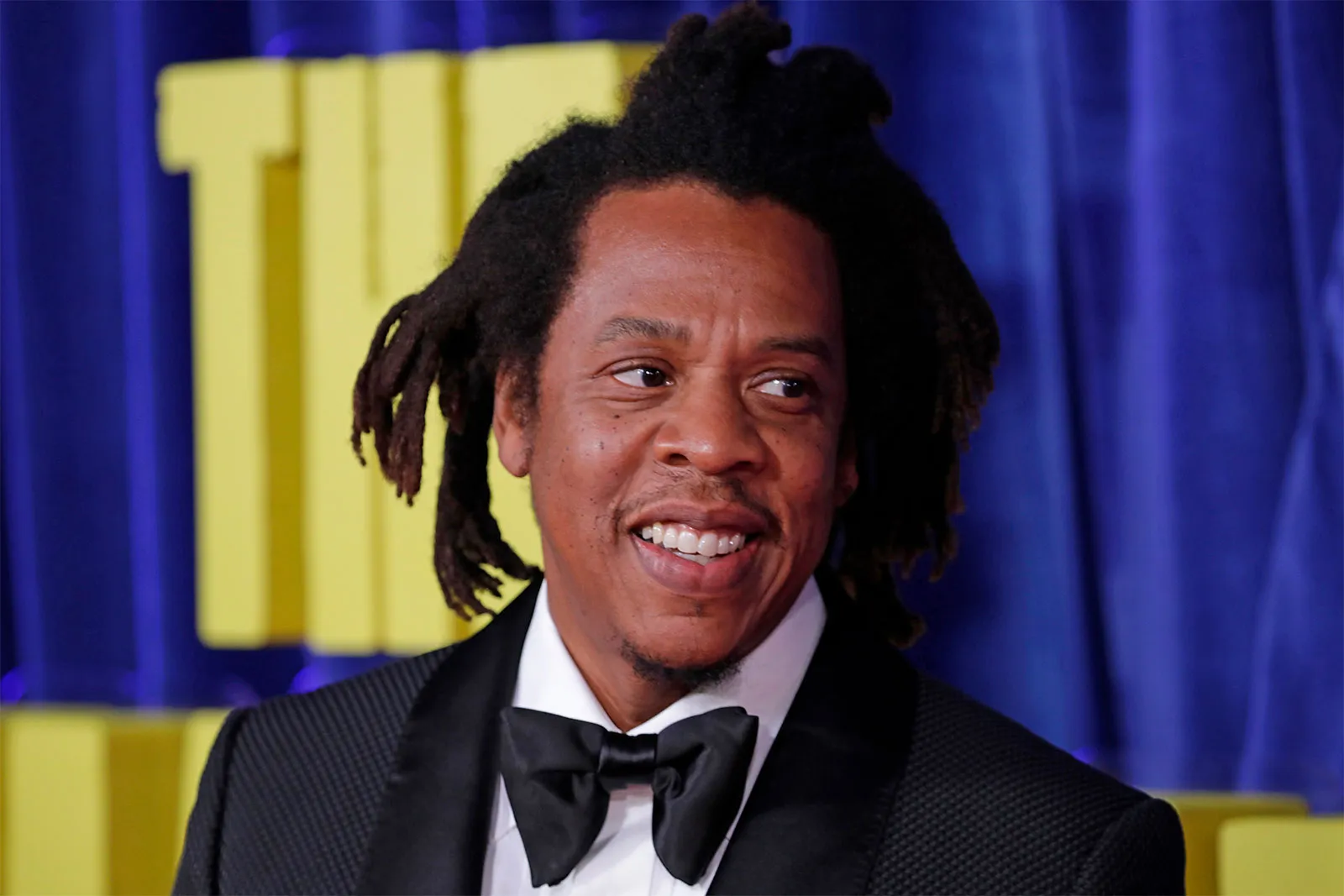
For thirty years, Jay-Z has sold one idea harder than any single song: own the thing. Own your masters, own the building, own the table everyone else is fighting for a seat at. It is the throughline from a Marcy Projects kid who couldn’t get signed to a $2.5 billion businessman whose catalog now lives in the Library of Congress. [Variety] [Britannica] So there’s a particular irony in the deal that has him trending this month, and it’s worth sitting with, because it exposes the tension underneath the entire empire.
The Album That Built the Myth
Reasonable Doubt turns thirty this year, and to mark it Jay-Z cut a Target-exclusive collector’s edition: a white-vinyl 2LP with commemorative packaging, announced June 1 and on shelves June 26. [Complex] [Target] On its own, a legacy-act retail exclusive is the most ordinary move in music. The friction comes from which album it is, and which store it’s in.
Reasonable Doubt is the origin text of Jay-Z’s ownership gospel. He made it after the majors passed on him, so he and his partners built Roc-A-Fella Records and put it out themselves, the independent move that later “became a blueprint for artists seeking equity instead of simple endorsement checks.” [AllHipHop] The record was inducted into the Grammy Hall of Fame, and The Blueprint later entered the National Recording Registry. [Britannica] The album is, in other words, a monument to doing it yourself, without a corporation’s permission.
Now it’s the centerpiece of a corporate exclusive, and not a neutral one. That’s the move that turned a vinyl reissue into a referendum.
The Boycott He Walked Into
In January 2025, Target rolled back its diversity, equity, and inclusion commitments, ending hiring goals, exiting an industry racial-equity program, and dropping out of the HRC’s corporate index, days after a federal executive order took aim at corporate DEI. [The Independent] The response from Black America was organized and sustained. Atlanta pastor Jamal Bryant launched a 40-day “Target Fast” timed to Lent that drew well over 100,000 sign-ups, built on a simple instruction: divest from Target, spend with Black-owned business instead. [Washington Post] Target’s foot traffic slid, its market value took a measurable hit, and its CEO ended up across the table from Black faith and civil-rights leaders. [Fortune]
And the boycott never cleanly ended. Organizers like Nina Turner and Tamika Mallory kept it running well into 2026, framing it as ongoing economic pressure rather than a one-time protest. [The 19th] So when Jay-Z’s Target exclusive arrived in June 2026, it didn’t land after the fight. It landed in the middle of it. [theGrio]
The backlash was immediate and came overwhelmingly from inside the culture. Critics accused him of crossing a picket line and handing Target exactly what it needed: Black cultural validation to win shoppers back. [Black Enterprise] One commentator’s framing, the “brother billionaire wants y’all back in Target,” captured the sting: that a man whose brand is Black self-determination was being used to repair a brand Black organizers were trying to pressure. [EURweb] Supporters pushed back with his own logic, arguing that exclusive retail deals are industry standard and that he’s not the boycott’s enforcement arm. [AllHipHop] As of mid-June, neither Jay-Z nor Roc Nation had answered the criticism directly. [HotNewHipHop]
He also wasn’t the first. Months earlier, Target’s partnership with Kai Cenat’s AMP drew the same charge, and the journalist Jemele Hill had all but predicted the playbook, warning that Target would eventually “give the right Black celebrity a check” to galvanize shoppers back through the doors. [EURweb] The Jay-Z deal read, to a lot of people, like the check she was talking about.
From Label to Infrastructure
To understand why the Target deal hit a nerve, you have to see how big the machine behind it actually is. Jay-Z didn’t stay a label boss. In 2008 he folded his business into a joint venture with Live Nation, a roughly $150 million, decade-long arrangement that turned Roc Nation from a record company into a full-service entertainment platform spanning management, publishing, touring, and sports. [Variety] [CNBC] The company is run by a tight inner circle of Jay-Z, vice chairman Jay Brown, and CEO Desiree Perez, a structure that keeps decision-making close to home. [Billboard]
Its pitch to artists is ownership itself. Roc Nation’s distribution arm advertises an 85/15 split in the artist’s favor and lets acts keep their masters, the explicit inverse of the deal a young Jay-Z couldn’t get. [Roc Nation] That’s the brand: not a label that owns you, but infrastructure you can plug into and still own yourself. [Music Business Worldwide]
The catch is that the infrastructure runs through Live Nation, the most contested company in live music. In 2024 the Justice Department and 30 states sued Live Nation and Ticketmaster for monopolizing the concert business, and a jury later found it had operated as an unlawful monopoly. [U.S. DOJ] [CNN] The same pattern keeps surfacing: the empire that markets liberation is wired into the institutions that concentrate power.
Giving Up the Jersey
The clearest proof that Jay-Z thinks in leverage, not trophies, was the Nets. He bought a sliver of the team around 2003, reportedly about $1 million for a stake so small the press could never agree on it, somewhere between roughly 0.067% and 0.15%. [Billboard] [NetsDaily] He never had real control. The stake was a branding platform, the face of the move to Brooklyn and the Barclays Center opening. [Washington Post]
Then in 2013 he sold it, because NBA rules barred him from owning any piece of a team while becoming a certified players’ agent. [CNN] He traded a famous-but-powerless equity sliver for Roc Nation Sports, launched that April with CAA and signing Robinson Cano as its first client. [Variety] The agency model has its own limits, since union caps hold commissions to 4% in the NBA and 3% in the NFL, so the real money is in the brand deals stacked on top, and its own friction, including a negligence suit from former boxing client Daniel Franco. [Billboard] [ESPN] But the logic was vintage Jay-Z: a small ownership badge was worth less than a business that could represent the owners-to-be.
The Allocator
The most recent phase is the most telling. Jay-Z stopped only building his own companies and started deciding which other companies get built. In 2018 he co-founded Marcy Venture Partners with Jay Brown and investor Larry Marcus, closing an $85 million first fund and a $325 million second one before merging into MarcyPen Capital in 2024. [TechCrunch] [Black Enterprise] Marcy led a round in Rihanna’s Savage X Fenty and sits alongside his personal bets, including an early Uber stake, Impossible Foods, and Therabody, that helped push his fortune past two billion. [Billboard] [Hypebeast]
This is a different kind of power than owning your masters. The man who preached ownership to artists is now a gatekeeper of capital, deciding whose vision gets the co-sign and the check. [The Root] It raises the question the Target fight only sharpened: when the model scales from “own yourself” to “allocate everyone else’s capital,” who does it actually serve?
The NFL Deal Was the Rehearsal
None of this is new. The Target controversy is a sequel, and the original ran in 2019, when Roc Nation became the NFL’s live-entertainment and social-justice partner under the “Inspire Change” banner. [Roc Nation] The timing was the problem. The deal came almost exactly three years after Colin Kaepernick’s first kneel, with Kaepernick still effectively blackballed from the league. [Washington Post] When Jay-Z said the moment had moved “past kneeling” toward “actionable items,” a lot of people heard a billionaire giving the league permission to move on. [CNN]
The criticism, again, came from his own. Safety Eric Reid, who’d knelt beside Kaepernick, said Jay-Z was choosing a “business move” and accused him of hiding behind his Black face. [ESPN] Kaepernick’s partner Nessa Diab said plainly that wrong is wrong, and his attorney called the deal a crossing of the “intellectual picket line.” [NBC News] [ABC News] Jemele Hill’s Atlantic headline said the quiet part out loud: “Jay-Z Helped the NFL Banish Colin Kaepernick.” [The Atlantic] NPR framed it as the limit of a “don’t hate the player, hate the game” capitalism that swaps the face at the top without changing the system underneath. [NPR]
His defenders weren’t nonexistent. T.I. argued the deal bought a seat and real influence, and Roc Nation did route significant money toward criminal-justice causes. [ABC News] A later ESPN investigation revealed Patriots owner Robert Kraft helped broker the partnership, and paired the hundreds of millions raised with a blunt internal verdict that the rollout was “a mess.” [Boston.com] The reported NFL ownership stake that supposedly sweetened the deal never materialized. [Variety] Kaepernick never played again. The pattern that critics named then is the exact one they’re naming now.
Chairman of Culture
What makes this moment louder is that Jay-Z is everywhere again. He returned to the stage at the 2026 Roots Picnic after a long hiatus and delivered a four-minute freestyle that the culture immediately treated as a state-of-the-union, with one outlet calling him a “chairman of culture” with the standing to “set the tone” and “put things back in order.” [LA Sentinel] He used it to position himself above the field, rapping “don’t talk success to me, you n***as is workers in perpetuity,” the bars of an owner reminding everyone who signs the back of the check. [theGrio]
That’s the contradiction critics keep circling: a man who frames his fight as one “against the system” while sitting near the top of it. [HotNewHipHop] The objections to Jay-Z in 2026 aren’t about whether he can still rap. They’re about power, and about whether the most powerful Black man in the music business can keep playing insurgent and institution at the same time.
The Real Question Underneath
Strip away the Target headline and the question is the one that’s shadowed Jay-Z since the NFL deal, since the Nets, since the venture fund: ownership for whom? His empire is real, and so is the cultural shift it drove. Hip-hop now talks about equity, masters, and generational wealth in language Jay-Z helped write. [AllHipHop] But when ownership and solidarity collide, Kaepernick versus the league, the boycott versus the exclusive, the business has tended to win, and the loudest accountability has come not from outside the culture but from within it.
That’s the tell. The same community that made Jay-Z the proof of concept for Black ownership is now the one asking him to define its limits. A Target-exclusive Reasonable Doubt is a small thing. What it forces into the open is not: an empire built on the promise of owning the block, doing business with the store the block is boycotting. Until he answers that, in a statement, a freestyle, or the next deal, the contradiction is the story.