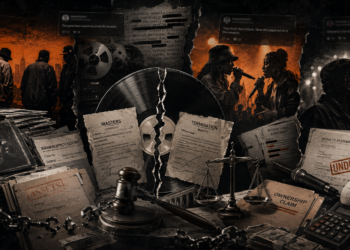

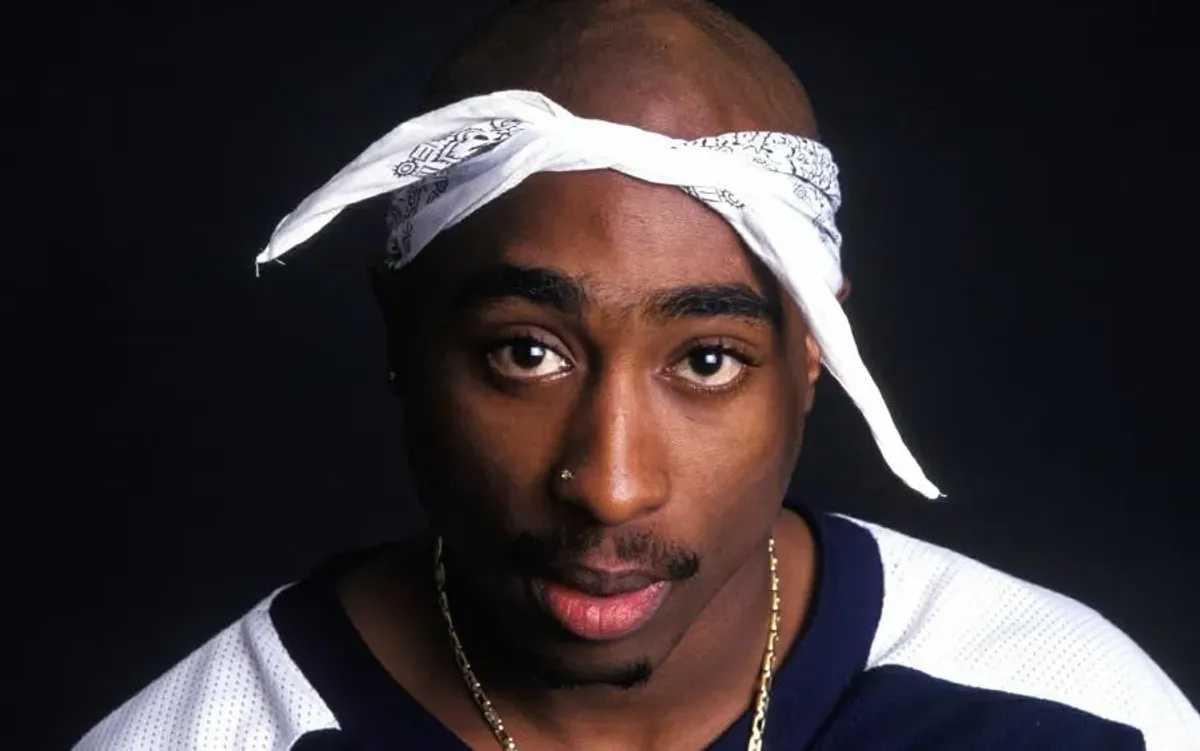
On September 7, 1996, the biggest rapper alive was shot four times at a Las Vegas intersection in front of dozens of witnesses, and for twenty-seven years nobody was charged. That gap — between a crime committed in public and a case that wouldn’t close — is where everything else grew: the Suge Knight theories, the crooked-cop theories, the Diddy bounty, the forged FBI files that fooled a major American newspaper. This is the full map of the investigation: what law enforcement actually knew and when, which narratives collapsed under scrutiny, and why the man finally facing trial this August was charged largely on the strength of his own mouth.
Key Facts at a Glance
|
|
|
|
|
|
|
|
|
On September 7, 1996, the biggest rapper alive was shot four times at a Las Vegas intersection in front of dozens of witnesses, and for twenty-seven years nobody was charged. That gap — between a crime committed in public and a case that wouldn’t close — is where everything else grew: the Suge Knight theories, the crooked-cop theories, the Diddy bounty, the forged FBI files that fooled a major American newspaper. This is the full map of the investigation: what law enforcement actually knew and when, which narratives collapsed under scrutiny, and why the man finally facing trial this August was charged largely on the strength of his own mouth.
Three Hours in Las Vegas
The chain of events that ended Tupac Shakur’s life began with a piece of jewelry. In the summer of 1996, members of the South Side Compton Crips snatched a Death Row Records medallion from Trevon Lane, an affiliate of the Mob Piru Bloods — the Compton set that supplied Suge Knight’s label with its security muscle. Among the men involved was a 22-year-old Crip named Orlando Anderson. [LA Times] [Wikipedia]
On fight night at the MGM Grand — Tyson vs. Seldon, over in 109 seconds — Lane spotted Anderson in the casino. What followed was captured on hotel surveillance video that would be replayed for decades: Shakur, Knight, and a knot of Death Row personnel stomping Anderson on the casino floor before security broke it up. Anderson declined to press charges. Roughly two and a half hours later, around 11:15 p.m., a white Cadillac pulled up alongside Knight’s black BMW at the corner of Flamingo Road and Koval Lane and opened fire — at least a dozen rounds. Shakur, in the passenger seat, was hit four times. Knight was grazed in the head. [Review-Journal] [Las Vegas Sun]
The convoy had been headed to Club 662, where Shakur was due at a benefit for a local boxing nonprofit — an anti-violence charity event, an irony Las Vegas never forgot. Outlawz member E.D.I. Mean, riding in the car behind, later described watching “a gun come from the back seat out through the driver’s front window” of the Cadillac. Knight described grabbing Tupac and pulling him down as the shots kept coming. Neither man identified a shooter. [Las Vegas Sun] [LA Times]
Six Days at University Medical Center
Shakur was rushed to University Medical Center, where surgeons removed his right lung. For six days the world watched the hospital. The Las Vegas Sun reported on September 13 that his condition had “improved slightly” — hours before he died of respiratory failure and cardiac arrest that afternoon. He was 25. [Las Vegas Sun] [Washington Post]
The investigation was troubled almost immediately. Witnesses from the Death Row entourage — men who had been feet from the shooting — gave police little or nothing. Within days, Las Vegas papers were already reporting a retaliation theory tied to the casino fight, and within weeks Compton erupted: a Crips-Bloods war that Compton police chronicled in a 29-page affidavit, followed by massive multi-agency raids in October 1996. That affidavit named Orlando Anderson as a suspect in Shakur’s murder. He was arrested in the sweep — but on an unrelated local case, never for Las Vegas. [NPR] [LA Times]
The Suspect Who Was Never Charged
Anderson is the hinge of the whole case. Compton detectives considered him the primary suspect within weeks — informants told them he wasn’t shy about what had happened in Vegas. Ex-Death Row security chief Reggie Wright Jr. put the street consensus bluntly: “We all knew it was retaliation.” Yet the Las Vegas Metropolitan Police Department interviewed Anderson exactly once, and no charges ever came. [Slate]
Anderson himself denied everything. In his one major press interview, he told the Los Angeles Times that Shakur “was his hero, not his victim,” and he filed suit against Tupac’s estate over the MGM beating even as Afeni Shakur filed a wrongful-death claim against him. [LA Times] [LA Times] The litigation outlived him: on May 29, 1998, Anderson was killed in a Compton car-wash shootout that police publicly called unrelated to the Tupac case. The cross-suits settled with his estate in 2000. He died uncharged, undeposed, and unable to ever answer the accusation that now sits at the center of the state of Nevada’s theory of the crime. [LA Times] [Las Vegas Sun]
Why the Case Went Cold
The official explanation has been consistent for decades: police believed they knew the broad outline almost immediately, but belief isn’t evidence. When Duane Davis was finally indicted in 2023, Chief Deputy DA Marc DiGiacomo said the “broad outline of facts” had been known since 1996 — what was missing was admissible evidence tying specific people to the car. Clark County Sheriff Kevin McMahill, pushing back on the perception that Las Vegas never cared about a murdered Black superstar, insisted the case was never shelved. [Review-Journal]
The family never bought it. Afeni Shakur said in 1997 that it was clear to her “from day one” that Las Vegas police never intended to solve her son’s murder. [NPR] The truth sits somewhere in the gap between a gang code of silence that left detectives without a single cooperative eyewitness and an investigation that, by its own account, knew the answer for a quarter century and couldn’t write it into a charging document. That vacuum is what the theories rushed to fill.
The Reporter Who Got It Right — and Wrong
No journalist shaped — and warped — the public record more than the LA Times’ Chuck Philips. His September 2002 series “Who Killed Tupac Shakur?” reconstructed the night in granular detail and landed on what is now essentially the prosecution’s theory: a Southside Crips retaliation hit, with Anderson as the gunman. But the series also alleged that Notorious B.I.G. had offered the Crips $1 million and supplied the murder weapon — a claim the Wallace family immediately answered with documentation and sworn statements that Biggie was in a New Jersey recording studio that night. [LA Times] [AllHipHop]
Six years later Philips went further, alleging in a 2008 story that associates of Sean Combs were behind the 1994 Quad Studios shooting of Shakur — based on what were presented as FBI records. The Smoking Gun proved the documents had been forged by James Sabatino, an imprisoned con man, and the LA Times issued a full retraction and apology. [The Smoking Gun] [LA Times] The episode matters beyond one reporter’s downfall: it is the clearest demonstration in this entire saga of how “secret documents” narratives can outrun verification — and why no official investigation has ever treated Biggie as anything but a later victim. [NPR]
The Theories That Wouldn’t Die
The Suge Knight theory — that Knight orchestrated the hit on his own artist, who was preparing to leave Death Row — has circulated since the 1990s, amplified by LAPD detective Russell Poole’s belief that corrupt officers moonlighting for Death Row connected both the Tupac and Biggie murders, and by Randall Sullivan’s book LAbyrinth, which built that theory into a unified narrative. [PBS Frontline] The problems are structural: Knight was in the car, took a head wound, and has never been treated by any agency as anything but a victim and uncooperative witness. Critics picked apart Sullivan’s single-source reliance on Poole years ago, and no charging document has ever named Knight. [Salon] [Slate] Knight, for his part, has spent the current case insisting he won’t testify and disputing the official account — from prison, where he’s serving 28 years on an unrelated voluntary manslaughter conviction. [FOX5 Vegas]
The federal record is thinner than the mythology suggests. The FBI’s released file on Shakur concerns death threats and an extortion investigation during his life — not his murder. [FBI Vault] The most consequential federal-adjacent effort was actually an LAPD task force re-examining Biggie’s murder in the late 2000s — because that’s the investigation that produced the confession that would eventually crack the Tupac case.
The Man Who Couldn’t Stop Talking
Duane “Keffe D” Davis was a Southside Crips figure, Orlando Anderson’s uncle, and — by his own telling — the front-seat passenger in the white Cadillac. In 2008-09, facing federal drug charges, he gave a proffer to detective Greg Kading’s task force, describing the shooting in exchange for what he understood as protection. Kading’s 2011 book Murder Rap and a 2015 documentary put that confession into the public bloodstream. [Rolling Stone] [Slate]
Then Davis kept going — far beyond the proffer’s protection. A 2018 confession on BET’s Death Row Chronicles prompted Las Vegas police to take a “new look” at the open case. [Deadline] In 2019 came VladTV interviews and a memoir, Compton Street Legend, in which he described a New York drug dealer named “Zip” handing him a .40-caliber Glock — “It’s time to get the money” — against an alleged $1 million bounty he attributes to Sean Combs, and placed himself in the Cadillac as the shots were fired from the back seat. [USA Today] [CNN]
The Combs allegation deserves precision, because it has metastasized online: it rests entirely on Davis’s word. No law-enforcement agency has charged or publicly named Combs as a suspect in Shakur’s murder; Combs has always denied it, and Tupac’s stepbrother Mopreme Shakur has recounted Combs personally calling him to deny any involvement. [Snopes] [Vibe] Davis himself says no money was ever paid. An uncorroborated claim from a self-confessed participant selling a memoir is evidence of exactly one thing: what Davis was willing to say.
Nevada v. Duane Davis
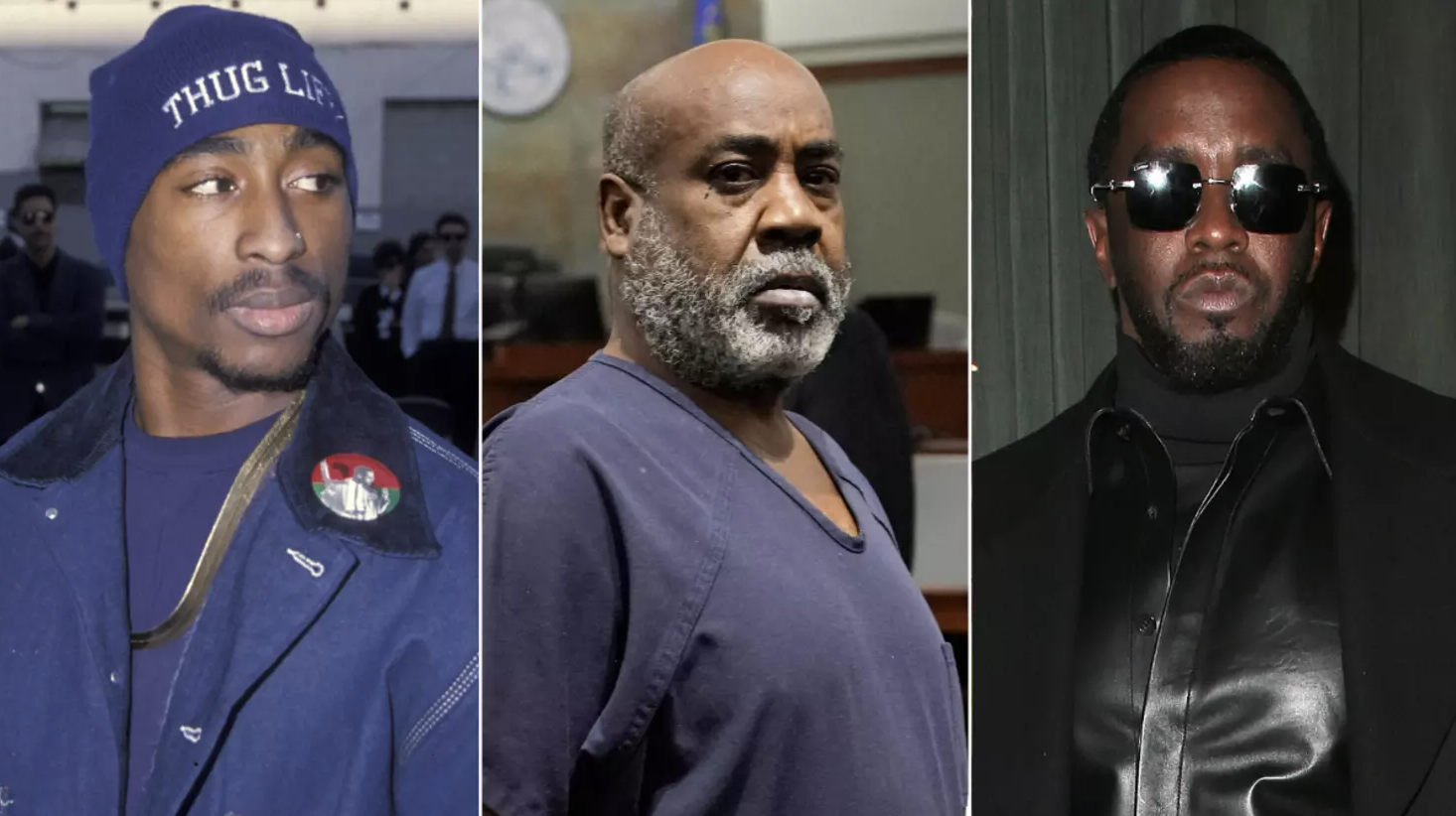
In July 2023, Las Vegas police served a search warrant at the Henderson home of Davis’s wife, seizing laptops and a copy of the memoir. On September 29, 2023, a Clark County grand jury indicted Davis — by then the last living man alleged to have been in the Cadillac — for murder with use of a deadly weapon with a gang enhancement. Police called him the “shot caller”; prosecutors’ theory holds that Anderson, in the back seat, likely fired the fatal shots. [AP] [Review-Journal] McMahill credited the break to one thing: Davis’s “own words.” [Rolling Stone]
That is also the case’s central vulnerability, and the pretrial fight has been about exactly that. Davis’s lawyers moved to dismiss, arguing his 2008-09 proffer carried immunity; Judge Carli Kierny rejected it in January 2025 — “the state of Nevada never gave him immunity” — and the defense took the question to the Nevada Supreme Court. [News 3 LV] [Rolling Stone] Bail was set at $750,000, but when music executive Wack 100 put up the deposit, Kierny refused to release Davis, unconvinced the funds were legitimate and noting the obvious profit motive around his life rights. He has been in custody since the arrest. [AP/KTNV] [Black Enterprise]
And Davis has executed a full reversal: in a March 2025 jailhouse interview with ABC, the man who confessed on cable television, on YouTube, and in hardcover now insists he’s innocent — that the stories were “entertainment,” hustled for clout and money. [ABC News] After repeated delays — a trial date pushed from late 2024 to February 2026 over “voluminous” discovery, then reset again amid attorney turnover — trial is currently scheduled for August 10, 2026, before Judge Kierny. [News 3 LV] [FOX5 Vegas] The jury will be asked to convict a man almost entirely on statements he now disavows. Tupac’s sister Sekyiwa called the arrest “a pivotal moment” after “the silence of the past 27 years.” [Rolling Stone]
What We Still Don’t Know
Even if Davis is convicted, the documented record will have holes a serious reader should keep in view. Nobody has ever proven who pulled the trigger: Davis’s accounts pointed to Anderson, grand jury testimony reportedly named others in the car, and the alleged gunman has been dead since 1998. [8 News Now] The alleged bounty remains a one-source story. The full LVMPD homicide file, Davis’s complete proffer transcripts, and the question of whether Las Vegas could have charged this case in 1997 with the evidence it had — all of that remains sealed, contested, or unasked under oath.
The Bottom Line
Strip away three decades of mythology and the story law enforcement now tells is brutally simple: a stolen chain, a casino beatdown caught on tape, and a carload of Compton Crips who found Tupac Shakur at a red light. What took twenty-seven years wasn’t solving the mystery — by every account, there barely was one — it was converting street knowledge into courtroom evidence, a conversion that only happened because one man in the car couldn’t stop telling the story. In August, a Las Vegas jury finally gets to decide whether that story was a confession or a hustle. Either verdict will say as much about how this case was investigated, reported, and mythologized as it does about what happened at Flamingo and Koval.
The Tupac Murder Case: 1996–2026
Click any event to expand. Filter by phase.