
Who Owns the Stage: Macklemore, Robert Kraft, and the Leverage Nobody Talks About
A rapper lost eight tour dates over two words. The more revealing story is who had the power to take them — and why stadium touring made that power invisible until now.
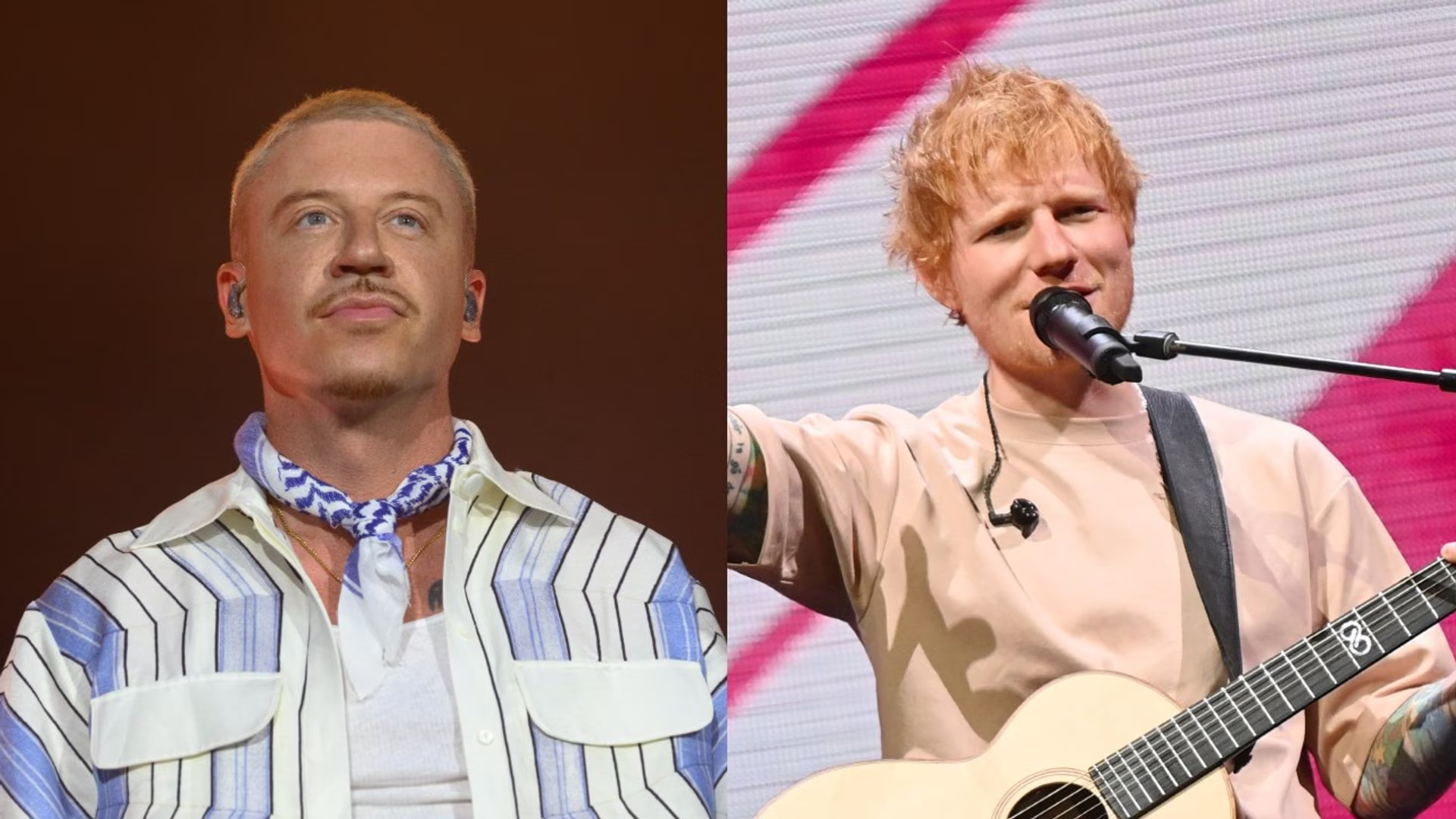
On September 14, Macklemore posted that he had been removed from the remaining U.S. dates of Ed Sheeran’s Loop Tour after saying “Free Palestine” from the stage at MetLife Stadium. Within hours, the promoter confirmed the removal, and New England Patriots owner Robert Kraft confirmed — in a detailed on-the-record statement — that Gillette Stadium had refused to host him. Both men are now publicly arguing about hate speech, advocacy, and responsibility. But underneath that argument sits a quieter fact about how the modern live-music business actually works, and it has almost nothing to do with either man’s politics.
What Actually Happened
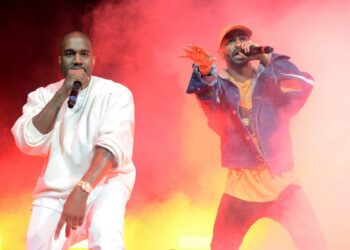
The sequence is short and unusually well documented. On September 4, opening for Sheeran at MetLife Stadium in New Jersey, Macklemore told the crowd that one of the reasons he joined the tour was “because I wanted to stand up here on stages and stadiums across America and say two words that are very near and dear to my heart: Free Palestine.” He performed “Hind’s Hall,” his 2024 protest song, with footage from Gaza on the screens behind him. [HotNewHipHop]
The following night he addressed Jewish audience members directly, saying his criticism of the Israeli government was “in no way a criticism” of them. The Israeli-American Council launched a petition calling for his removal, arguing that “this was an Ed Sheeran concert, not a political rally.” [HotNewHipHop] Nine days later, he was off the tour.
What changed in those nine days is the part worth slowing down on. It wasn’t a petition. It wasn’t a label. It was a phone call between two men who own things.
The Promoter’s Version
Messina Touring Group, which promotes the Loop Tour, did not frame this as an artistic decision or a moral one. Its statement was closer to a logistics memo: “We have been notified by venues on the upcoming US tour dates that they will not allow a concert to take place with Macklemore on the lineup.” [Al Jazeera] A representative confirmed he “will not be performing on the remaining support dates,” a figure reported as eight. [Complex]
Read that statement again and notice what it concedes. The promoter is not saying it disagreed with Macklemore. It is saying it was notified. In a stadium tour, the promoter is the party with the most money at risk and, it turns out, one of the smallest votes. The buildings decided; everyone else received the decision.
Kraft, on the Record and at Length
Robert Kraft did not hide behind a spokesperson, and that is itself notable. In a full statement provided to GBH News, he confirmed the Gillette Stadium decision and explained it: the venue has “a longstanding commitment to providing a welcoming environment for all guests and ensuring that events held at our venue do not provide a platform for hate speech.” Citing Macklemore’s “recent actions, material shared from the stage during Ed Sheeran’s shows in New Jersey, and a broader history of antisemitic rhetoric and imagery that we believe has been deeply offensive and hurtful to the Jewish community,” he said the September 25 and 26 concerts would “cross that line.” [GBH News]
He also went out of his way not to sound like a man banning speech about Palestinians. “This decision is not about diminishing the suffering of innocent Palestinians or denying anyone the right to advocate on their behalf. Their pain and loss are real,” he said, adding that advocacy “should not come at the expense of the Jewish community or obscure the responsibility of Hamas.” He said he had “directed resources to Palestine” over decades, and closed by offering to meet: “I would welcome the opportunity to sit down with Macklemore and discuss the facts, because ultimately our goal is the same — peace for all people, an end to suffering, and an end to all hate.” [GBH News] The Israeli-American Council backed the outcome, saying “freedom of speech is not freedom from responsibility.” [JTA]
Whatever a reader thinks of the reasoning, the statement is doing something unusual for this kind of dispute: it is claiming the decision rather than laundering it through a scheduling conflict. That candor is the reason the story has legs.
The Claim Kraft Did Not Dispute
Macklemore’s account goes one step further than “a venue said no.” He says Sheeran told him Kraft had called personally, and that Kraft then “rallied some of the other stadium owners and collectively they gave him an ultimatum: if Macklemore stays on the tour, you will not be allowed to play in our venues.” [The Source]
That is an allegation about coordination among venue owners, and it is the single most consequential claim in the story. It is also the one that remains unproven. Kraft’s statement addresses his own stadium and his own reasoning; it does not confirm or deny organizing other owners. The Boston Globe noted he did not dispute Macklemore’s account. [Boston Globe] Al Jazeera reported it had not independently verified the account. [Al Jazeera] No other named stadium owner has spoken publicly.
Hold that distinction, because the coverage keeps blurring it. “A stadium declined to host a performer” is ordinary, if contentious. “Stadium owners acted together to keep a performer out of an entire circuit” would be something else — and nobody has shown it yet.
The Leverage Hip-Hop Keeps Rediscovering
For twenty years the conversation about artist power in hip-hop has been about masters. Own your publishing, own your catalog, get off the deal that takes 80 percent. That fight produced real wins, and it trained a generation of artists to think of leverage as something you negotiate in a contract.
Touring quietly became the place where the money moved, and the ownership conversation never followed it there. An artist can own every master they ever recorded and still need a building that seats 65,000 — and there are only so many of those, most controlled by a small set of sports-franchise owners and two or three promoters. Macklemore built one of the most successful independent careers in rap history, Grammys and all, largely outside the major-label system. None of that mattered on September 14. The thing he didn’t own was the room.
That’s the structural lesson, and it has nothing to do with the politics that triggered it. A venue-side veto works the same way regardless of what an artist says onstage. Hip-hop has been on the receiving end of that veto for decades — canceled dates, insurance refusals, “security concerns” that follow certain audiences and not others — usually without anyone putting their name to it. The difference here is that someone did.
Sheeran’s Silence Is a Position
The artist at the center of the tour has said nothing. As of September 15, Ed Sheeran had not publicly responded. [The National] Macklemore, notably, has not attacked him for it. He described Sheeran as being in “a f***ed up position,” acknowledged his longtime apolitical stance, and said he hoped their thirteen-year friendship survives. [XXL]
He did push on one point: “There is no neutral position between the oppressor and the oppressed.” [The National] That’s a moral claim, and reasonable people land in different places on it. The practical version is less debatable: a headliner with a stadium routing has enormous leverage and almost no incentive to spend it, and silence is the cheapest available option. Whether that’s cowardice or professionalism depends entirely on who you ask, which is why Sheeran isn’t answering.
What Macklemore Is Not Claiming
The easiest version of this story casts a rapper as a martyr, and he has declined to write it. In his September 15 statement he moved the frame off himself: “The victims are the Palestinian people. The men, women and children who have been killed, starved, displaced and forced to live through unimaginable violence.” [The National] He has also rejected the antisemitism characterization, arguing the charge is used to deflect criticism of Israel — a rejection Kraft plainly does not accept. [XXL]
This is not a new position for him. “Hind’s Hall” arrived in May 2024, named for a Palestinian child killed in Gaza, with proceeds pledged to UNRWA USA. [HotNewHipHop] He took the stance long before it cost him a stadium run, which is the part that makes the “political stunt” reading hard to sustain — and also the part that made the collision predictable to anyone who looked at the routing.
The Building Is the Gatekeeper
Strip out the politics and a plain fact remains: in 2026, the last editorial decision about what gets said from a stadium stage is not made by the artist, the label, the promoter, or the audience. It’s made by whoever holds the lease. That’s been true for a long time. It usually gets exercised quietly, in bookings that never happen and dates that never get announced, and the artist is rarely told why.
What’s different this week is that the decision has a name attached to it, a four-paragraph rationale, and a counterparty willing to describe the phone call. Both men, to their credit, are arguing in public under their own names. The disagreement between them will not be settled here, and this piece isn’t the place to settle it.
But the next artist who plans to say something from a stadium stage now knows exactly where the veto lives — and that is a more useful thing to know than it is a comfortable one.
Reporting as of September 15, 2026. Macklemore’s account of a coordinated effort among stadium owners is his own characterization and has not been independently confirmed; Robert Kraft’s statement addresses Gillette Stadium’s decision and does not confirm or deny organizing other venues. Ed Sheeran has not publicly commented. Characterizations of the conflict in Gaza quoted here belong to the speakers, not to Today in Hip-Hop.
TIMELINE TRACKER
Nine Days: From a Stadium Mic to a Stadium Ban
Click any event to expand. Filter by phase.
Timeline compiled from outlet reporting as of September 15, 2026. Claims about coordination among stadium owners are attributed to Macklemore and remain unverified.