
Every allegation described here comes from federal charging documents and reporting on them. An indictment is an accusation, not a conviction; Eugene Henley has denied wrongdoing and is presumed innocent unless and until proven guilty at trial. Nipsey Hussle’s murder was separately prosecuted in state court, where Eric Holder Jr. was convicted; no charge in Henley’s case alleges his involvement in that killing.
Two names from the same few blocks of South Los Angeles have come to mean opposite things. Nipsey Hussle is the martyr-entrepreneur the culture canonized after 2019 — the man who bought back his block. Eugene “Big U” Henley is the power broker that same culture once called a godfather, and that the federal government now calls the head of a criminal enterprise. Their lives were genuinely, documentably intertwined. And because both names carry so much weight, the temptation to staple them into one dark story is enormous. This piece resists that, on purpose. The record is heavy enough without the myth.
The Studio Downstairs
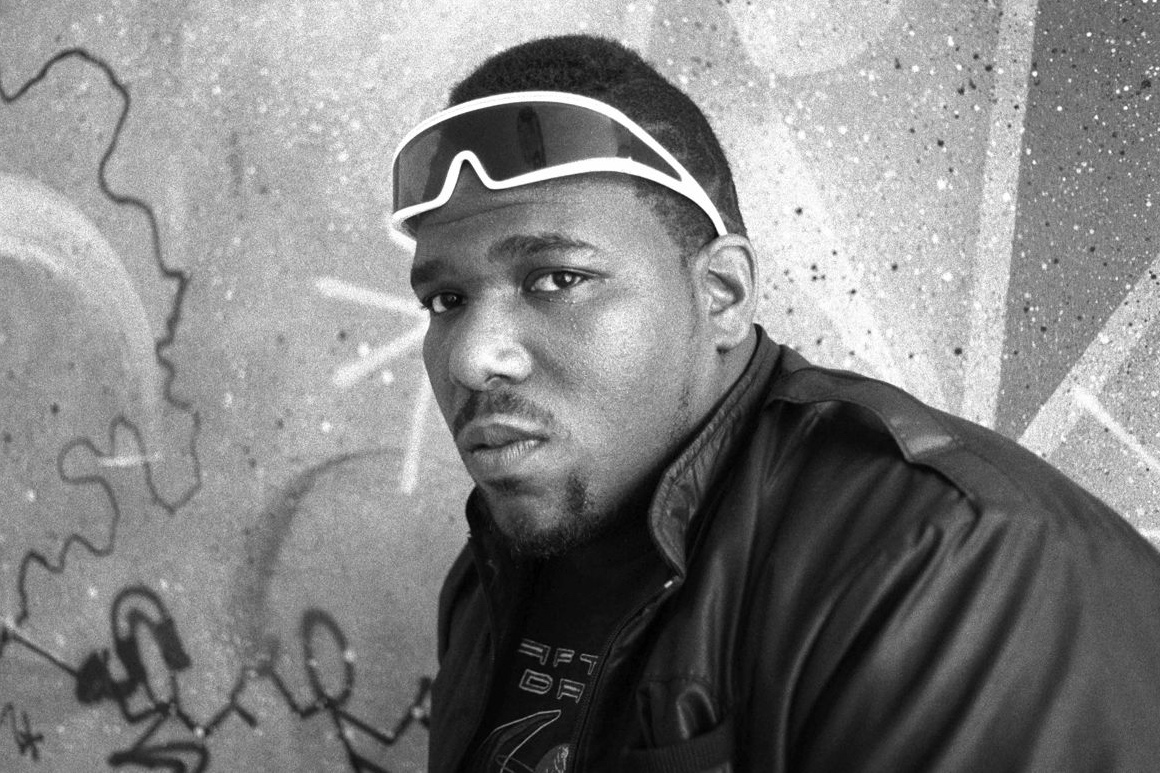
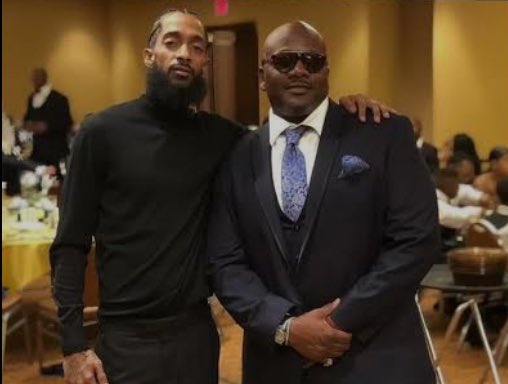
Before he was a symbol, Nipsey was a kid with talent and a mentor with a reputation. Both came out of the Rollin’ 60s Neighborhood Crips, and Henley — already a music manager who’d worked with Kurupt and moved in Death Row circles — took him in early. By Henley’s own account, Nipsey was signed to him for production, lived with Henley’s family, and cut some of his first records in a studio in their home. [Vibe] The Los Angeles Times would later describe Henley flatly as the man who helped launch Nipsey’s career, a figure some in the city called rap’s “godfather.” [LA Times]
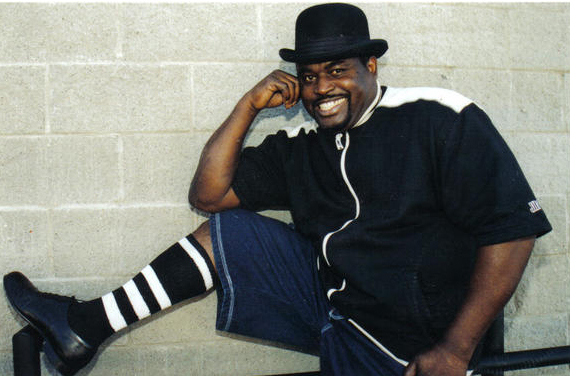
That mentorship sat inside a bigger reinvention. After serving 13 years for a 1991 robbery, Henley re-emerged in the mid-2000s and built a public identity as a reformed man — founding the anti-gang nonprofit Developing Options, drawing celebrity donations, and eventually appearing in the 2021 FX docuseries Hip Hop Uncovered as an OG who’d turned toward peace. [CBS LA] Hold onto that image of the mentor-turned-activist. The entire federal case is an argument that it was a mask.
The Equipment and the Diss
The relationship didn’t end in myth. It ended in something small and human. According to court documents reviewed by the Los Angeles Times, the two fell out around 2011 over recording equipment — Henley wanted some of Nipsey’s gear, and the dispute curdled the bond. [AllHipHop] Nipsey answered the way rappers answer: he recorded a diss aimed at his former mentor, “U Don’t Got a Clue.” [AllHipHop]
Prosecutors say Henley took it personally — that he read the song as a shot and didn’t forget it. This is the documented “fallout” that so much online speculation gestures at without naming: not a murder plot, but a mentor and protégé whose partnership broke over gear and pride. It matters because it’s real, and because it’s so much smaller than the legend the internet has built on top of it.
March 31, 2019
What happened to Nipsey Hussle is not an open question, and that fact has to anchor everything else. On March 31, 2019, Ermias Asghedom — Nipsey, 33 — was shot and killed outside his Marathon Clothing store in South Los Angeles; two others were wounded. [Fox News] The killer was Eric Ronald Holder Jr., an acquaintance who had spoken with Nipsey that day, left, and returned with a gun. [Yahoo News]
Holder was convicted of first-degree murder and sentenced to 60 years to life in state prison. [The Source] The motive that emerged at trial was personal and small: a conversation, a perceived slight, a man who came back to settle it. No gang order. No enterprise. No Big U. That is the settled, adjudicated truth, and any responsible telling of this story starts and ends there.
The Enterprise the Feds See
Six years after Nipsey’s death, the government came for his old mentor — not over that killing, but over a life prosecutors say was never what it appeared. In March 2025, federal authorities charged Henley in a 43-count indictment anchored by a RICO conspiracy, describing a “Big U Enterprise” that operated like a mafia from roughly 2010 onward. [Billboard] Alleged victims — including professional athletes and musicians — were expected to “check in” with Henley when they came through Los Angeles. [LA Times]
The murder inside that racketeering count isn’t a famous one. Prosecutors allege that in 2021, an aspiring rapper signed to Henley’s label — later identified as Rayshawn Williams — was killed and left in the Nevada desert after recording a song that disrespected him. [LA Times] The government’s wider theory is that the anti-gang activist persona was cover: that Henley used his standing as an OG, his podcasts, and his documentary appearances to project reform while, prosecutors say, invoking beatings and armed enforcement in private. [Courthouse News] He has denied all of it.
The Word “Discipline”
This is the section that requires the most care, because it’s where Nipsey’s name re-enters the federal file — and where headlines have badly outrun the facts. In a February 2026 superseding indictment, prosecutors added overt acts drawn from calls intercepted in late 2022 and early 2023, years after Nipsey was already dead. [HotNewHipHop] On those calls, prosecutors say, Henley boasted that he was “bigger” than Nipsey, claimed he had “disciplined” him, called himself the “hunter” of the Rollin’ 60s, and delivered general kill-rhetoric about anyone who crossed him. [AllHipHop]
Read carefully, because some outlets didn’t. A man cannot threaten to kill someone who died three years earlier. What prosecutors are actually offering is retrospective bravado — Henley allegedly using his past authority over Nipsey to advertise his own dominance, which the government frames as evidence of a violent racketeering posture. [GenZHipHop] The purpose of the language, in the government’s telling, is to show how he talks about power — not to connect him to a murder the state already solved. That is a crucial distinction, and it is the one the rumor mill erases.
What the Record Does Not Say
So let’s be as plain as the documents are. The federal government does not accuse Eugene Henley of any role in Nipsey Hussle’s 2019 murder. [The Source] Even the reporters who broke the wiretap details said so in the same breath, and noted the transcripts had already restarted old conspiracy theories they could not verify. [AllHipHop]
This is where the culture has to discipline itself. Two heavy facts sitting next to each other — a mentor with a fearsome reputation, a protégé who was murdered — feel like they should connect. They don’t, on the record. Holder killed Nipsey over a personal grievance and is serving 60 to life for it. Collapsing “the feds intercepted Big U talking about Nipsey” into “Big U had something to do with Nipsey’s death” isn’t analysis; it’s internet math, where two scary things are assumed to equal one scarier thing. Repeating it doesn’t just wrong a man awaiting trial. It disrespects what’s actually known about how Nipsey died.
The Case Builds
Whatever the myth does, the docket keeps moving — and lately, against Henley. Prosecutors have repeatedly expanded the case through superseding indictments, adding witness tampering, solicitation of violence, and an interstate sex-trafficking count. [Courthouse News] The gravest new allegation: that from federal custody in June 2026, Henley tried to arrange for two inmates to kill or harm a witness before trial. [AllHipHop]
The human cost has piled up alongside the legal one. In October 2025, Henley’s 34-year-old son, Jabari “Baby Uiie” Henley, was fatally shot in South Los Angeles. [LA Times] Henley and several co-defendants are now set for a joint trial in early 2027, where the racketeering count alone carries a potential life sentence. He maintains his innocence, casting the case as a campaign against a Black man who tried to help his community. [AllHipHop] A jury will decide which version of Big U is the real one.
The Line Between the Record and the Rumor
In the end, this is a story about who gets to write an ending. The culture wrote Nipsey’s: hero, builder, martyr, the man whose marathon continues. The state is trying to write Henley’s: not a godfather, but a predator who wore reform like a costume. Those two projects are happening at once, in the same few square miles, over two men who once shared a house and a dream.
The rumor mill wants a third story that fuses them — that makes Nipsey’s death the dark secret at the center of Big U’s empire. But that story isn’t in the indictment, isn’t in the verdict that convicted Eric Holder, and isn’t ours to invent. If hip-hop takes its own history seriously — and it should, because outsiders rarely will — then the discipline is simple. Report what’s proven. Attribute what’s alleged. Refuse what’s only rumor. Big U will get his trial. Nipsey already got his killer. Everything else is just content, and the culture deserves better than content dressed up as truth.
One Neighborhood, Two Fates
The documented arc — mentorship, fallout, loss, and the federal reckoning. Tap any moment; filter by phase.
Sorting the Story: Proven · Alleged · Rumor
The same set of claims, filed by how much the evidence actually supports them. Switch tiers.
Big U mentored Nipsey
Nipsey was signed to Henley, lived with his family, and recorded early tracks in their home studio. Both were Rollin’ 60s; the LA Times calls Henley the man who helped launch his career.
The 2011 fallout was real
Per court documents, the two fell out around 2011 over recording equipment; Nipsey responded with the diss “U Don’t Got a Clue.”
Nipsey was murdered by Eric Holder Jr.
Holder shot Nipsey on March 31, 2019 over a personal dispute, was convicted of first-degree murder, and sentenced to 60 years to life.
Big U is federally charged
Henley faces a 43-count RICO indictment filed in March 2025, later expanded by superseding indictments. He has pleaded not guilty.
A “mafia-like” enterprise
Prosecutors allege Henley ran the “Big U Enterprise,” extorting celebrities and businesses who had to “check in” with him in LA.
The Rayshawn Williams murder
The RICO count is anchored to the 2021 killing of an aspiring rapper signed to Henley’s label, allegedly over a disrespectful song.
“I disciplined Nipsey”
2022–23 wiretaps allegedly catch Henley boasting he was “bigger” than Nipsey and had disciplined him — retrospective bravado prosecutors use to show a violent posture, NOT a role in Nipsey’s death.
The jailhouse plot
A 2026 superseding indictment alleges Henley tried, from custody, to pay inmates to kill or harm a witness before trial.
That Big U was involved in Nipsey’s death Unsupported
No charge, filing, or verdict connects Henley to Nipsey’s 2019 murder. Holder acted alone over a personal grievance. Even reporters who broke the wiretap story said the transcripts do not support this.
“Foreknowledge” conspiracy theories Unsupported
Online claims that Henley knew of or foresaw the killing are not backed by any evidence in the case and were not part of the state prosecution of Holder.
The viral “LAX chase” and similar clips Unsupported
Resurfaced anecdotes stitched onto Henley’s federal case have no police reports, court filings, or contemporaneous coverage behind them.