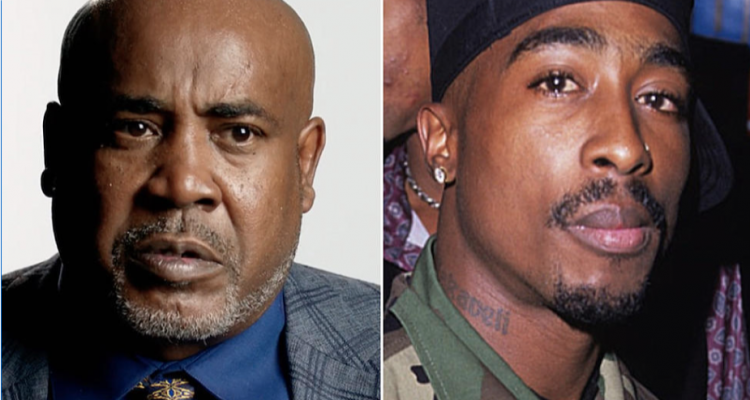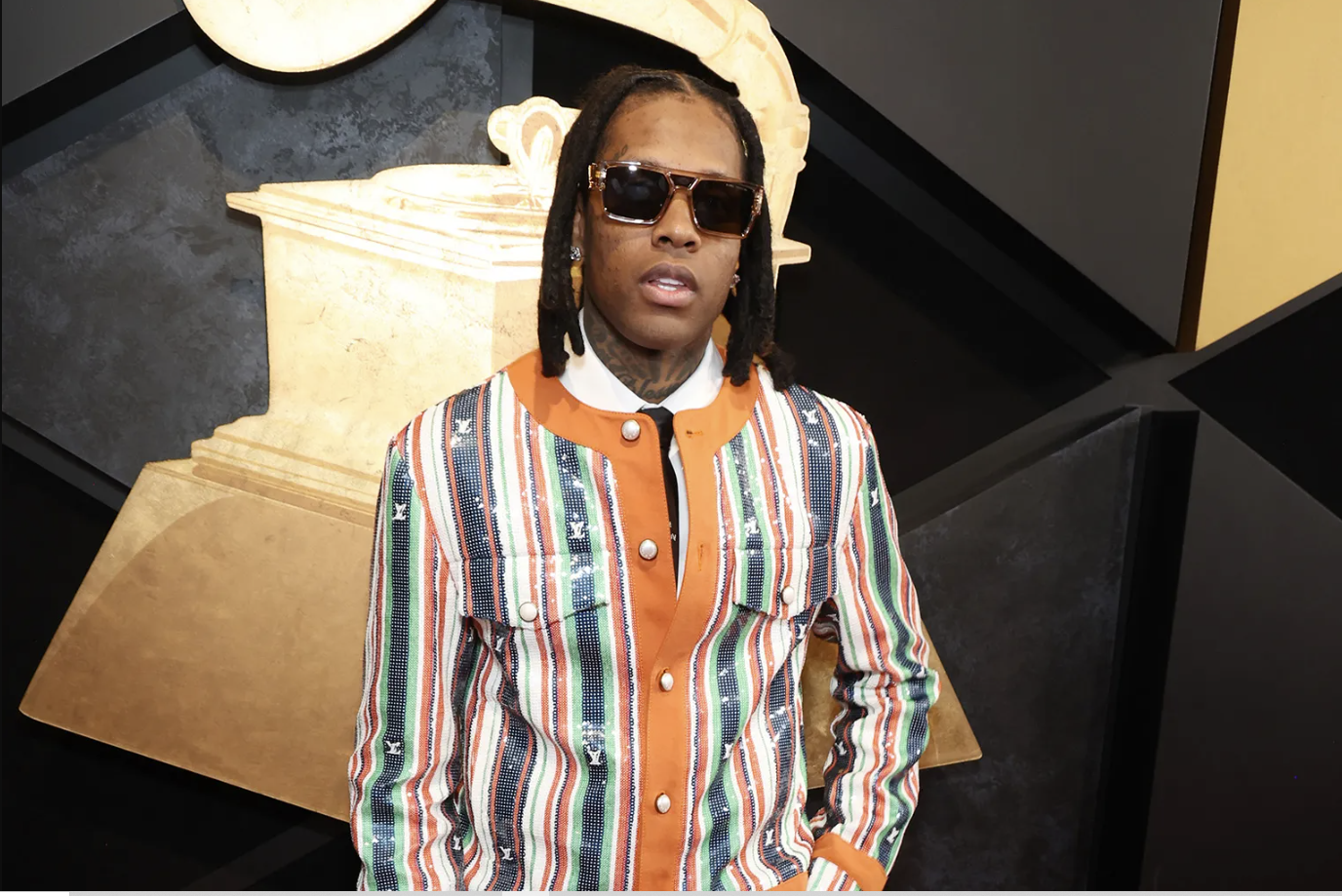

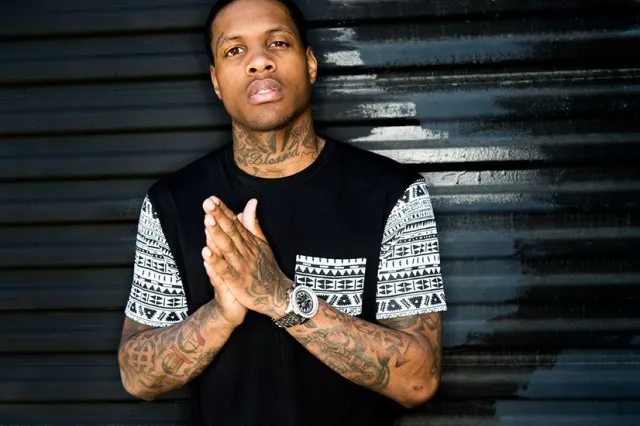
On Friday, September 11, a jury in the Central District of California returned not guilty on all five counts against Durk Banks. He cried; his wife, India Royale, steadied his mother. Outside the First Street federal courthouse, people cheered. [XXL] [HipHopWired]
Then he was taken back into custody. He is still there. And the more interesting story is not the verdict — it is the structure the government built around it, and why an acquittal on five counts bought Durk fewer weeks of daylight than almost anyone celebrating on Friday assumed.
What the jury actually decided
The counts were narrow and specific: conspiracy to commit stalking, stalking with a dangerous weapon, stalking resulting in death, conspiracy to use interstate commerce facilities in a murder-for-hire, and the substantive murder-for-hire count. [XXL] All of them attached to a single afternoon: August 19, 2022, outside the Beverly Center in Los Angeles, where gunfire aimed at Quando Rondo’s vehicle killed his cousin, Saviay’a “Lul Pab” Robinson.
The government’s theory was retaliation — that Banks ordered and financed a hit on Rondo in response to the November 2020 killing of King Von, and that Robinson died as the unintended result. Prosecutors said Banks paid for flights and ski masks and offered cash to the men who carried it out. [UPI]
The jury took three days and roughly eight hours of deliberation. It asked to see the digital evidence on day one. On day two it came back with a question about the legal definition of intent. [XXL] That question is the whole case in miniature: nobody disputed that Robinson was killed, or that men connected to Banks were there. What the government had to prove was that Banks directed it. It could not get twelve people to that line.
The government was not short on evidence — it was short on the last inch
This was not a thin prosecution. Roughly 35 witnesses. Over 230 gigabytes of discovery and some 20,000 pages of documents, enough to push the trial date back three separate times across two years. [Wikipedia]
The centerpiece was a cooperating witness: Kacey Hester, known as OTF Jam, who identified himself as one of the shooters and testified across two days in late August. He described being summoned to San Diego the day before the shooting, said another defendant fired first from distance, and placed a third in the getaway car on the phone with Banks. He also testified about receiving $10,000 after recording with Banks. [Wikipedia]
Around that testimony the government stacked the kind of circumstantial material that usually closes a case. Prosecutors presented hotel and ski-mask purchases they said were charged to a Banks credit card, and a text they attributed to Banks the day before the shooting reading “Don’t book no flights under no names involved wit me.” [Wikipedia]
All of it circles the act without landing on the order. That is the gap defense attorney Drew Findling worked, and his closing line — “game, set, match. That is the easiest pathway to reasonable doubt” — was less a flourish than an accurate description of where the case sat. [AllHipHop] A cooperator who admits to firing the shots is powerful and compromised in the same breath, and juries have gotten noticeably better at holding both thoughts at once.
The trial where the media coverage was the exhibit
The detail most worth sitting with is what the court let the government put in front of the jury. In an evidentiary ruling two days before jury selection, prosecutors were cleared to present two DJ Akademiks interviews — one with Banks himself, one in which 6ix9ine and Wack 100 criticized him for not avenging King Von — plus music videos, a 911 call, texts, footage of Rondo’s reaction to the shooting, clips from a podcast appearance, and photographs pulled from Banks’ iCloud. [XXL]
Read the logic there. The government’s motive argument was not built primarily on what Banks did. It was built on what commentators said about him — the accusation that he hadn’t slid for Von — and on the theory that being talked about that way was itself the pressure that produced a killing. Blog beef, entered into the record as proof of state of mind.
That is a meaningful escalation of a fight the culture has been having for a decade about rap lyrics as evidence. The lyric references, notably, were stripped out of the case in a 2025 superseding indictment. [Wikipedia] The commentary economy that grew up around the lyrics stayed in. The industry spent years arguing that a verse is not a confession and largely won that argument on paper; nobody built the same defense for the interview, the livestream, or the reaction video. Friday’s verdict does not resolve that — the jury acquitted, so no appellate court will now review whether admitting it was right. The precedent survives untested.
Akademiks himself, who covered the trial daily and had suggested a twenty-year sentence would count as a win for Banks, appeared visibly stunned on stream as the acquittal came in. [The Source] [HotNewHipHop] Meek Mill spent the weekend urging people to mute him. [Complex] The fight over who gets to narrate a rapper’s legal exposure is not a sideshow to this case. It was Exhibit A.
Acquitted on Friday, still in a cell on Monday
Banks did not walk. His legal team confirmed he stays in federal custody through a second trial scheduled to begin October 5 in the same district; Complex reports prosecutors said the same. [NBC Los Angeles] [Complex] [Complex]
That trial exists because of a sequence worth tracing. In June 2026, more than eighteen months after Banks was first charged, prosecutors filed a third superseding indictment adding counts under VICAR — Violent Crimes in Aid of Racketeering. The filing alleges Banks operated a criminal enterprise the government calls the “Banks Gang Enterprise,” and that he placed bounties on rivals, rewarding participants with cash, jewelry, video appearances and studio opportunities, while funding drug purchases in Chicago and Georgia to hold the crew together. [Complex] Those allegations are unproven and have not been tried.
Among the predicate incidents is the killing of Stephon Mack, shot on January 27, 2022 in Chicago’s Roseland neighborhood. Two Chicago men, Anthony Montgomery-Wilson and Preston Powell, were charged federally in December 2023 with conspiring “to murder Stephon Mack in exchange for money”; that indictment does not name Banks. [U.S. Attorney, N.D. Ill.] Complex reports both men have since pleaded guilty and admitted acting on the promise of money from a bounty prosecutors attribute to Banks — a claim this piece could not confirm against the docket. [Complex] [Complex] On July 14, 2026, those VICAR counts were severed into their own case. [Wikipedia]
The severance is the move. Split into two trials, the government gets two chances at the same defendant on overlapping conduct, and the acquittal in the first does not clear the second — because the second is not charging the same thing. The first case asked whether Banks ordered one shooting. The second asks whether he ran an organization for which ordering shootings was ordinary business. Answering no to the first question does not answer the second.
The two co-defendants tried alongside him did not fare as well, and the split is instructive. Deandre Wilson and David Lindsey were convicted of stalking and conspiracy to commit stalking, and acquitted of the murder-for-hire counts. [NBC Los Angeles] [XXL] The jury, in other words, accepted that a coordinated pursuit of Quando Rondo happened. It declined to find that Banks bought it.
The enterprise theory is the actual story
Strip away the names and this is a template. Charge the incident. When the incident proves hard to pin on the principal, recharge the same facts as a pattern and let the pattern do the work the incident could not. Under a racketeering frame, the government no longer needs a jury to believe Banks picked up a phone on a specific August afternoon. It needs them to believe the organization existed and that he sat at the top of it.
The evidentiary bar shifts accordingly. Association, money movement, group iconography, who appeared in whose video, who got paid after what — material that reads as ambiguous in a single-incident case becomes structural in an enterprise case. For a genre whose business model is built on crews, imprints, loyalty branding and collective identity, that is a uniquely bad fit. OTF is a label and a fan community and a set of relationships that predate both. A racketeering prosecution asks a jury to read all three as one thing.
Friday’s verdict, then, is a real and significant win — and a narrow one. It says the government could not prove a specific order. It says nothing about whether the enterprise theory works. That gets tested on October 5, and that test matters well past this defendant.
The case in full
Six years from the killing that the government says set it in motion to the trial that will decide what remains. Filter by phase; click any entry to expand.
Case Tracker
United States v. Banks
The federal case against Durk Banks, from the killing prosecutors called the motive to the trial that will decide what is left of it. Companion to Acquitted Is Not the Same as Free. Current as of September 14, 2026.
- Murder-for-hire case
- Acquitted, all 5 counts
- Custody status
- Still in federal custody
- Next court date
- Oct 5, 2026 — VICAR trial
Full case timeline: November 2020 – October 2026
Fifteen dated events across three phases. Phase names are printed on every entry, so the timeline reads without relying on color.
-
The death of Banks' OTF associate becomes the event prosecutors would later describe as the motive for everything that followed.
Origins -
At least 18 rounds are fired at a vehicle carrying Quando Rondo near the Beverly Center in Los Angeles. Rondo survives. His cousin, Saviay'a Robinson, does not.
Origins -
Kavon Grant, Deandre Dontrell Wilson, Keith Jones, David Brian Lindsey and Asa Houston are charged on four murder-for-hire conspiracy counts. Banks is not yet named.
The federal case -
Banks is arrested near Miami International Airport. UPI reports he was attempting to board a private plane to Italy; he is held without bond and later transferred to Los Angeles.
The federal case -
A November 8 superseding indictment brings Banks into the case. He enters a not guilty plea on November 14.
The federal case -
Prosecutors add a stalking-resulting-in-death count and remove references to Banks' music lyrics from the indictment — a notable retreat given how central lyrics had been to comparable federal cases.
The federal case -
The government charges all defendants under the Violent Crimes in Aid of Racketeering statute, alleging Banks ran a criminal enterprise that prosecutors' filings refer to as the "Banks Gang Enterprise." The allegations remain unproven.
The federal case -
The racketeering counts are split off. The structural consequence: an acquittal in the murder-for-hire case will not dispose of them.
The federal case -
Prosecutors are cleared to show the jury two Akademiks interviews, music videos, a 911 call, texts, podcast clips and iCloud photographs — media commentary entering the record as evidence of motive.
Trial & aftermath -
Jury selection opens after three postponements. Discovery had run past 230 gigabytes of digital material and roughly 20,000 pages of documents.
Trial & aftermath -
Hester, known as OTF Jam and identified as one of the shooters, gives the government its most direct account — and hands the defense a cooperator with an obvious incentive to cross-examine.
Trial & aftermath -
After three days and roughly eight hours of deliberation, the jury acquits Banks on every count. Co-defendants Deandre Wilson and David Lindsey are acquitted of murder-for-hire but convicted of stalking and conspiracy to commit stalking. Outside court, Drew Findling tells reporters: "Twenty-two months ago, Durk and I made an agreement that we would make history with the greatest verdict in this country, and it happened today."
Trial & aftermath -
He remains jailed pending the severed VICAR case. His legal team confirms he will not come home before it is resolved; the October 5 date is set in the Central District of California.
Trial & aftermath -
"Against all odds, we're stronger together. Allah doesn't make mistakes... Now let me be free to help save our kids and bring unity back to our communities." The post carries a photo of his legal team.
Trial & aftermath -
Banks faces racketeering murder and firearms counts in the Central District of California, including allegations tied to the January 2022 killing of Stephon Mack in Chicago. Untried and unproven.
Trial & aftermath
Sources: XXL, AllHipHop, Complex, HotNewHipHop, HipHopWired, NBC Los Angeles, UPI, the U.S. Attorney's Office for the Northern District of Illinois, and the public case record. Dates reflect reporting available as of September 14, 2026. Every allegation in the pending racketeering case is unproven.
What the reaction told on itself
The response was immediate and broad — Drake posted a selfie with him, 21 Savage posted a photo, Ye reposted the news, Meek sent praying hands, Young Thug offered “thank me later,” Cordae compared Brian Steel to Johnnie Cochran, 50 Cent praised Findling. [HotNewHipHop] Two days later Banks posted for the first time himself, closing with the word freedom three times. [HotNewHipHop]
Notice what almost none of it was about. Very little of the celebration concerned Banks’ innocence. Most of it was about the lawyers — Steel, Findling, the fact that Thug had sent his own attorney to help. That is a scene that has learned something specific over the last five years of federal prosecutions: the outcome tracks representation, and representation tracks money. The praise going to defense counsel rather than to the verdict is an honest read of what people think is actually determining these cases.
It also flattens something. Saviay’a Robinson is dead, and two men now stand convicted of stalking the man he was riding with. No verdict for Banks changes either fact, and a weekend of victory posts is a strange container for them.
October 5 is the trial that matters
The clean version of Friday — jury acquits rapper, culture celebrates — is true and incomplete. Durk Banks beat a case built around one afternoon in Los Angeles. He now faces one built around the proposition that the afternoon was a symptom.
If the enterprise theory holds in three weeks, the acquittal will read in hindsight as the government losing a preliminary round of a fight it structured to win anyway. If it doesn’t, this becomes something larger than one artist’s freedom: a signal that federal prosecutors can no longer convert a rap crew into a racketeering enterprise just by charging it as one, and every OTF, every imprint, every group of people who came up together and put a name on it gets a little more room to exist as what it says it is.
Either way, the case that decides it starts October 5, and Durk Banks will be in the room for it — the same room, the same district, three weeks after the best day of his legal life. Acquitted is not the same as free.
Nothing in the pending racketeering case has been proven. Durk Banks has not been tried on those charges and is presumed innocent of them.