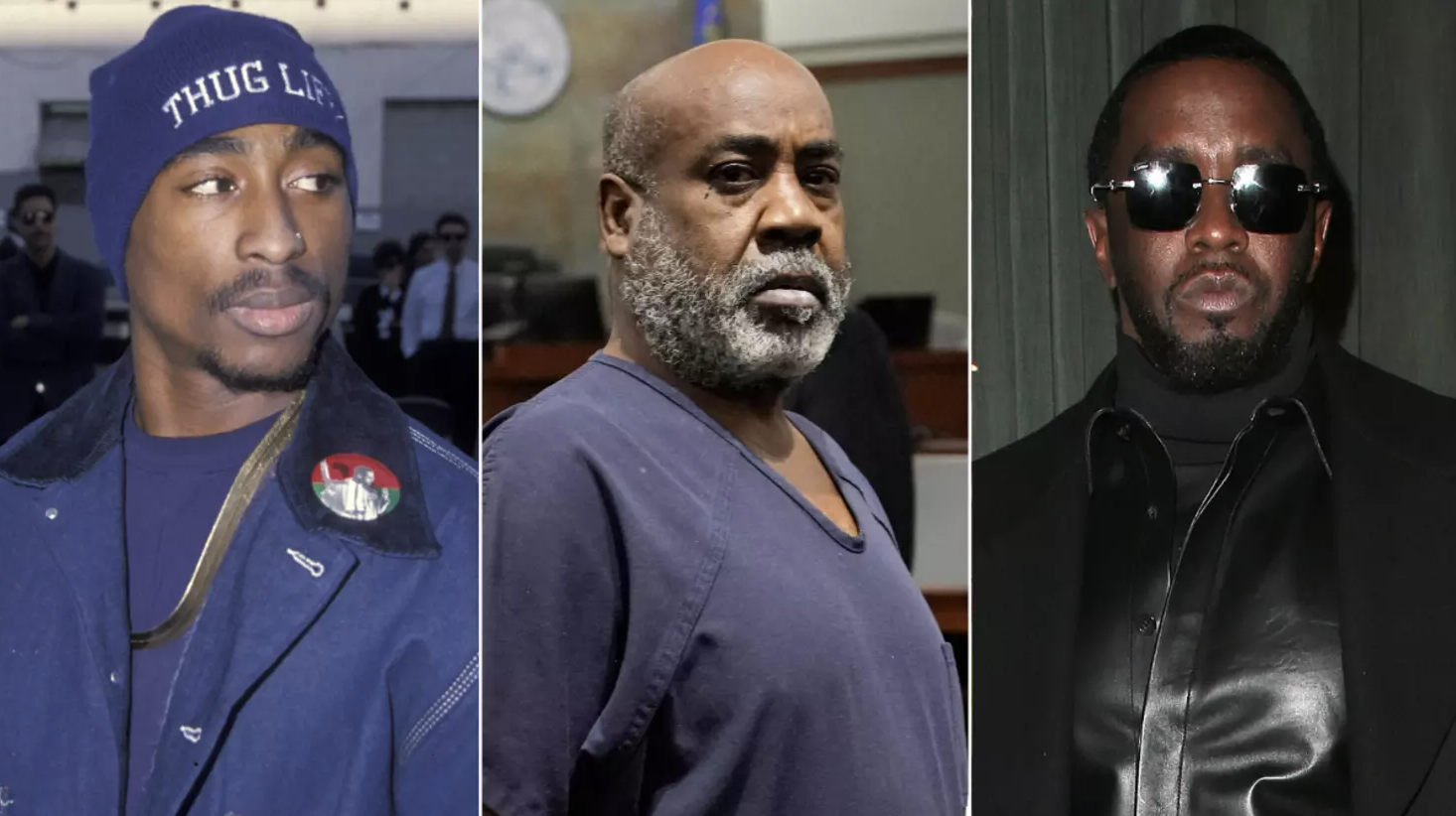

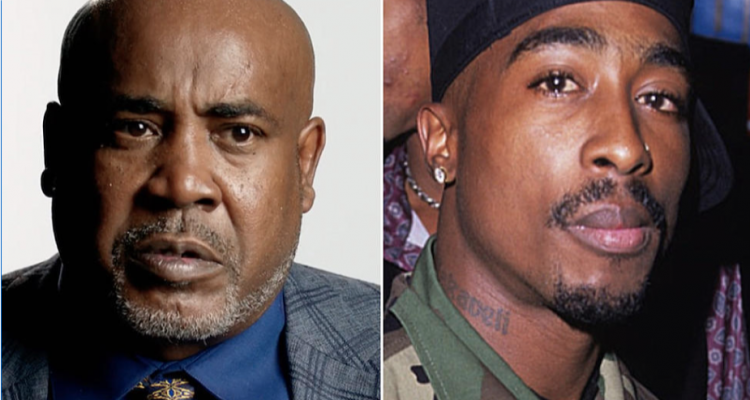
On September 23, Sky confirmed it had commissioned a feature documentary about the Las Vegas murder trial of Duane “Keffe D” Davis, the only person ever charged in connection with the 1996 killing of Tupac Shakur. The film is directed by Marian Mohamed, produced by Passion Pictures, Propagate Content and West Buttermilk, and set for Sky Documentaries and NOW in 2027. [Sky Group] The detail worth sitting with is not the commission. It is who commissioned it, whose cooperation it was built on, and the fact that a case argued in a Nevada courtroom currently has no American distributor attached to its most complete filmed account. [Hot 97]
What Sky Actually Bought
The project is untitled. It runs as a feature rather than a series, directed by Mohamed, a BAFTA-winning and Emmy-nominated filmmaker, with Charlotte Rodrigues producing for Passion. The executive producer list stretches across three companies: Hamish Fergusson, Will Anderson and David Moulton for Passion Pictures; Ben Silverman, Howard T. Owens, Drew Buckley and Taylor Levin for Propagate; James Packer for West Buttermilk. Propagate is handling worldwide sales. [Sky Group] [AllHipHop]
What they bought is access, and the access is specific. Filmmakers were in the building for the trial, and they filmed alongside Shakur family members as the proceedings moved. They have Mopreme Shakur, Tupac’s brother, along with people from the inner circle. And they have an archive: personal footage and photographs from family and confidantes that has not been shown publicly. [Sky Group] [Dork]
The film’s structure follows the case from opening evidence through verdict and sentencing, which means it is still shooting. Davis is scheduled to be sentenced on October 13. [Paste] A documentary that has not finished gathering its ending is an unusual thing to announce. Announcing it now is itself a claim: this is the version of record, stake your interest accordingly.
The Trial Underneath the Film
A Las Vegas jury convicted Davis, 63, of first-degree murder with a deadly weapon. Deliberation took under three hours. [Al Jazeera] Under Nevada law prosecutors did not have to prove he fired the shots. Their case was that he organized the retaliation after his nephew Orlando Anderson was beaten in a confrontation with Shakur at the MGM Grand, that he supplied the weapon, and that he directed the shooters from a white Cadillac. [The Source] [SPIN]
Prosecutor Binu Palal put it to the jury in the language of obligation: “So what did he do? He acquired a firearm, got his group together and went hunting for Mr Shakur.” Defense attorney Michael Sanft attacked the evidentiary base rather than the narrative, arguing that the case rested almost entirely on Davis’s own accounts of himself and that those accounts were invention. “You’re reading a book that is fiction and not fact,” he told jurors. [Al Jazeera]
That argument matters to the film more than it might look. Davis spent years narrating his own proximity to the killing, in a memoir and on camera, and the prosecution used those narrations as its spine. Speaking from the Clark County Detention Center after the verdict, he reversed himself entirely: “I’m innocent, man. They got an innocent man sitting in jail,” maintaining he was not in Las Vegas that night. [The Source] He told the judge he intends to appeal. [Al Jazeera] The conviction is a fact. Its finality is not, and any documentary landing in 2027 will be published into a live appellate record.
Two Films, Two Kinds of Access
Sky’s is not the only Tupac trial documentary in production, and the other one was built from the opposite direction. In February, Pioneer Productions, working with Tinopolis Group and producer Jon Aubrey Divens, announced a documentary centered on Davis himself, tracking him from his 2023 arrest through the legal process. Divens had reportedly established trust with Davis and with his son. [HipHopWired]
So there are two projects circling the same courtroom, and each one’s central asset is a person the other cannot have. One has the family that spent thirty years without an answer. The other has the man the state says supplied it. Neither is likely to be wrong about the facts of the docket. They will simply be arguing about whose interior life the case belongs to.
This is the quiet structural story in true crime right now. Access is the product, and the participants know it. Exclusivity with a grieving family and exclusivity with a convicted defendant are both scarce goods, priced accordingly, and they produce films that cannot be reconciled by a fact-check. The viewer will be asked to choose a perspective and will probably experience that choice as a choice about evidence.
The Family as Author
Mohamed’s framing of her own film is the most revealing line in the announcement. “I want this film to give a voice to a family who are not just grieving, but who have taken back agency in how the murder of Tupac is viewed.” [Sky Group] She has also said she wants audiences to connect emotionally “with not just the story of how Tupac died but with who he was.” [Dork]
Agency is the operative word, and it is a precise description of what the Shakur estate and family have been doing for a decade: moving from subject to steward. The archive is the mechanism. When the previously unseen footage and photographs come from the family rather than from a network’s stock library, the family is not a source in the film. The family is the film’s condition of existence.
That is leverage, and it is worth naming plainly rather than sentimentally. It also carries a cost the piece should not dodge: a documentary that exists because a family granted access is a documentary with a natural ceiling on how hard it will press that family’s own account. Thirty years of speculation are what this film is meant to answer. The risk is that it answers them with a different, better-sourced authority rather than with genuine friction.
Why the Record Is British
Sky Documentaries and NOW are the commissioners. Sky is a UK broadcaster. Propagate is selling the film worldwide, and as of the announcement no U.S. distributor, final title or specific 2027 date has been set. [Hot 97] [AllHipHop]
Read that against what the case is. An American rapper was killed in an American city. An American jury took thirty years to reach a verdict, and a substantial part of the delay is a story about how that city’s police handled the investigation. The most thoroughly documented account of the resolution was greenlit by a British pay-TV service, and the country where it happened is currently a sales territory.
There is nothing sinister in that. British commissioners have funded a large share of the serious documentary work about American crime and American music for years, partly because the UK public-service and pay-TV ecosystem still writes checks for single feature documentaries that U.S. streamers increasingly reserve for multi-part series with a franchise hook. But it does mean the audience with the deepest stake in the material, hip-hop listeners in the U.S., will wait on a deal rather than a premiere date. Ownership of the culture’s own record keeps ending up as a licensing question.
Thirty Years of Myth, and What Replaces It
Sky’s head of documentary commissioning, Hayley Reynolds, set the film’s premise directly: “For thirty years, Tupac Shakur’s murder has been surrounded by myth, speculation and conspiracy.” [Sky Group]
She is right, and the vacuum was not neutral. The absence of a prosecution is what allowed the conspiracy economy to grow around the killing: the sightings, the coded-lyric readings, the cottage industry of documentaries that could never end because the case never did. A verdict changes the terms. It does not dissolve the mythology, but it gives anyone arguing against the mythology something official to point at for the first time since 1996.
Which is why the competition for the filmed record is not a trivia question about production credits. For three decades the story of Tupac’s death was told by people with theories. It is about to be told by people with transcripts, and the first well-funded film to do that will shape what a generation understands the case to have been. The family understood this. That is what buying agency looks like.
What Is Not Settled
Several things in this story are still open, and a draft that pretends otherwise is doing the same thing the conspiracy economy did.
The verdict date is reported inconsistently. Sky’s own release and AllHipHop place the conviction on August 31; Al Jazeera, reporting it as a Monday, dates its piece September 1, as do NPR and other U.S. outlets. [Sky Group] [Al Jazeera] The likeliest reading is a late Las Vegas verdict on Monday, August 31, reported into September 1 news cycles, but no primary court record was retrieved to settle it.
Beyond that: the Pioneer project’s status since February is unconfirmed, and nothing surveyed says whether it survived the trial or found a broadcaster. No runtime, title or U.S. distribution has been announced for the Sky film. And Davis’s appeal has not been filed or heard, which means the trial this documentary is built around is not yet a closed chapter of anything.
The Record and Who Keeps It
Thirty years is long enough for a killing to stop being a crime and start being a genre. What ended in that Las Vegas courtroom was not really the uncertainty, since most people had already picked a story years ago. What ended was the excuse for the uncertainty. And the thing being built now, with family footage and courtroom access and a British broadcaster’s money, is the document that every future argument will have to work against.
The Shakur family spent three decades as the subject of other people’s versions. They are now, functionally, the publisher of the official one. That is a real victory, and it is also the reason to watch how the film handles its own sources. The story of Tupac’s death has never lacked for authority. It has lacked for accountability, and those are not the same thing.
 Go deeper: ask our chatbot about the Tupac murder trial →
Thirty Years From Flamingo Road to a Verdict
Twelve documented events in the Tupac Shakur murder case and the two documentaries now built around it. Click any card to expand. Filter by phase.
Sources: Sky Group, Al Jazeera, The Source, AllHipHop, SPIN, Paste, Dork, Hot 97, HipHopWired. Conviction is under appeal. Verdict date is reported as Aug 31 or Sept 1, 2026 depending on outlet.